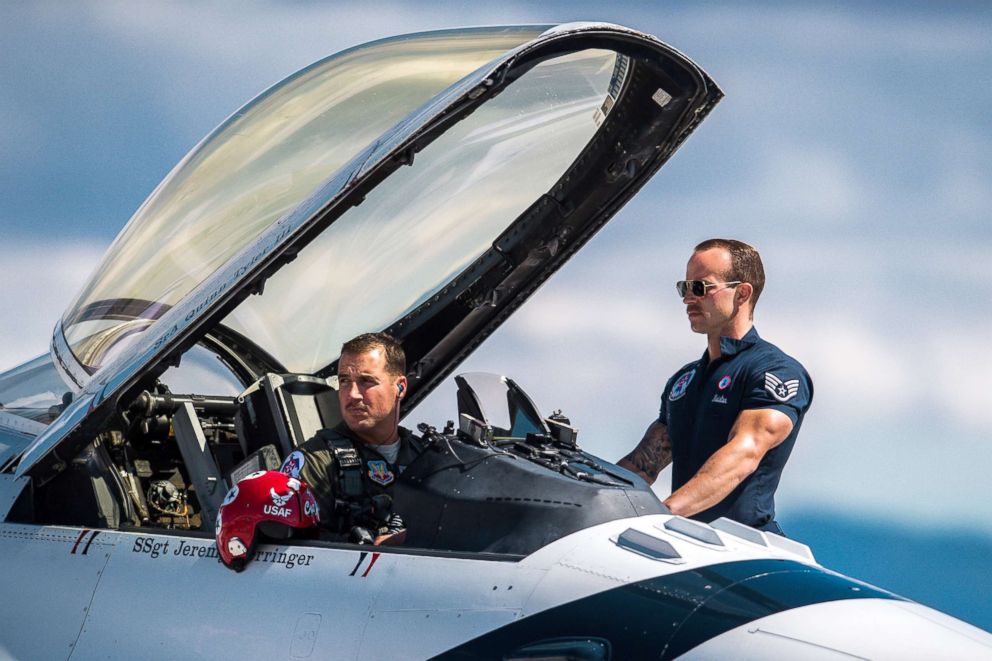
The United States Air Force Thunderbirds have long represented precision, discipline, and the extraordinary skill required to operate high-performance fighter aircraft. Their demonstrations are designed to show the public what military aviators can accomplish when training, teamwork, and technology come together at the highest level. But behind every breathtaking maneuver is a significant element of risk.
On April 4, 2018, that risk became tragically real when U.S. Air Force Major Stephen Del Bagno, a Thunderbird pilot, was killed during a routine aerial demonstration training flight at the Nevada Test and Training Range near Creech Air Force Base, Nevada. His F-16CM Fighting Falcon crashed during a demanding maneuver, ending the life of an experienced military aviator and deeply affecting the Thunderbirds community. (Air Combat Command)
The accident was particularly devastating because Del Bagno was not an inexperienced pilot. He had accumulated more than 3,500 hours of flight time in more than 30 different aircraft and had previously served as an F-35A evaluator pilot. His experience illustrated the reality that even highly trained and highly experienced fighter pilots can face dangers that develop within seconds. (Air & Space Forces Magazine)
A Routine Training Flight Turns Tragic
The flight on April 4 was not a public air show. It was a training mission designed to prepare the Thunderbirds for their demanding demonstration schedule. Del Bagno was flying Thunderbird No. 4, the slot position within the team’s diamond formation.
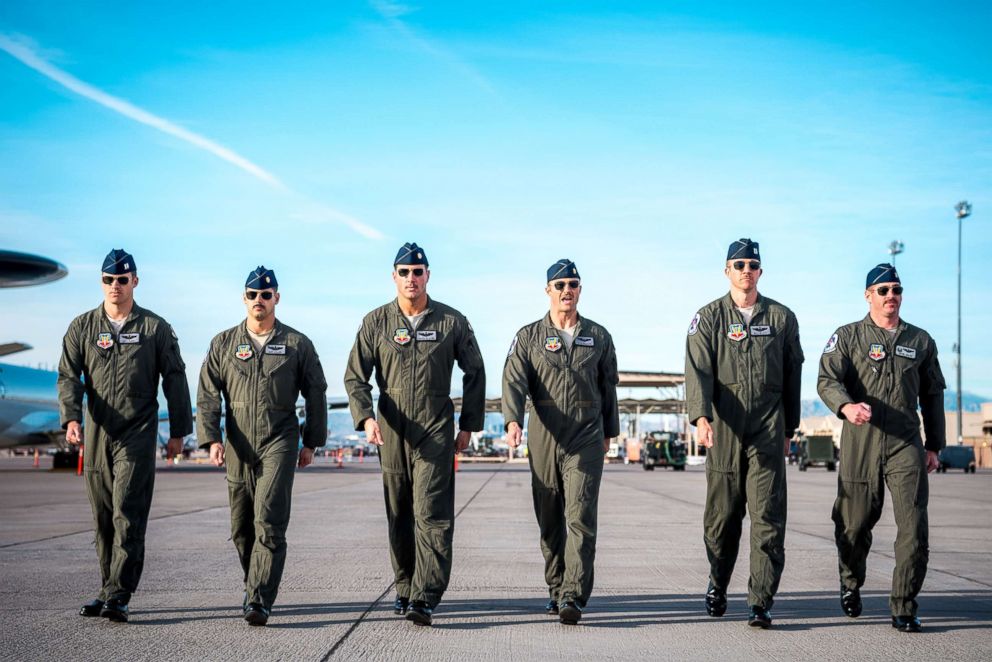
The Thunderbirds formation normally consists of six F-16 aircraft during its demonstration routine. Each pilot has a specific position and responsibility, and the aircraft operate extremely close to one another while performing complex maneuvers.
On this particular day, the pilots were practicing the “High Show” version of the Thunderbirds’ aerial demonstration. The training was taking place over the Nevada Test and Training Range, an area used extensively by the U.S. military for advanced aviation training.
The environment provided a large area away from populated communities, allowing the pilots to practice maneuvers that would be extremely dangerous if performed over a densely populated area. Nevertheless, the maneuvers themselves involved intense physical forces and very little margin for error.
During the practice, Del Bagno entered the maneuver known as the “High Bomb Burst Rejoin.” It was during this sequence that the situation began to deteriorate.
The Demanding High Bomb Burst Rejoin
The High Bomb Burst Rejoin was one of the most physically demanding portions of the demonstration sequence. According to the Air Force Accident Investigation Board, Del Bagno’s aircraft remained inverted for approximately 22 seconds at an altitude between about 5,500 and 5,700 feet above the ground. (U.S. Department of War)
Flying an F-16 upside down is not simply a matter of turning the aircraft over. The pilot must maintain precise control of the aircraft while dealing with changing gravitational forces, aircraft energy, altitude, speed, and orientation.
The pilot must also remain aware of the positions of the other aircraft in the formation. During a demonstration, these factors are compounded by the need to execute the maneuver at a very specific time and location.
After the inverted portion of the maneuver, Del Bagno transitioned into a descending half-loop known as a Split-S. This maneuver requires the aircraft to change direction rapidly while descending toward the ground.
The accident investigation determined that something critical happened during this transition.
Gravity-Induced Loss of Consciousness
The official investigation concluded that Del Bagno experienced gravity-induced loss of consciousness, commonly known as G-LOC.
G-LOC occurs when high positive gravitational forces cause blood to move away from the brain. When the brain temporarily receives insufficient oxygenated blood, the pilot can lose consciousness.
For a fighter pilot, the danger is immediate. An unconscious pilot cannot effectively control the aircraft, respond to instruments, communicate with other pilots, or initiate an ejection sequence.
The Air Force investigation found that Del Bagno became completely incapacitated for a period during the maneuver. The aircraft continued on its trajectory without the necessary pilot input and ultimately struck the ground. There was no ejection attempt. (Air Combat Command)
The investigation identified G-LOC as the primary cause of the accident.
But investigators also found contributing physiological factors that made the situation more difficult.
The Push-Pull Effect
One of those factors was the so-called “push-pull effect.”
Fighter pilots are trained to use specialized techniques to protect themselves against high-G forces. One of the most important is the anti-G straining maneuver, which involves forcefully contracting muscles and controlling breathing to help maintain blood flow to the brain.
However, exposure to negative G forces immediately before exposure to positive G forces can reduce a pilot’s tolerance to the subsequent positive G load.
This phenomenon is known as the push-pull effect.
The Accident Investigation Board determined that Del Bagno’s exposure to negative G forces reduced his tolerance to the positive G forces that followed. Investigators also concluded that the effectiveness of his anti-G straining maneuver was reduced under those conditions. (U.S. Department of War)
This finding was significant because it demonstrated how quickly the physiological conditions of a fighter pilot can change.
A pilot may be extremely experienced, physically fit, and properly trained, yet the combination of aircraft movement and gravitational forces can still create a dangerous situation.

The F-16 Fighting Falcon
The aircraft involved was an F-16CM Fighting Falcon, an advanced version of one of the world’s most recognizable fighter aircraft.
The F-16 was designed as a highly maneuverable multirole fighter capable of performing air-to-air and air-to-ground missions. Its design allows pilots to perform maneuvers involving very high speeds and substantial G forces.
That performance makes the F-16 exceptionally effective for military operations and also makes it suitable for demonstrating fighter aviation capabilities.
The Thunderbirds use specially assigned F-16 aircraft to perform their aerial demonstrations. Although the aircraft are operated in a demonstration environment, the basic physics remain the same. High-speed turns, rapid changes in direction, inverted flight, and high-G maneuvers place tremendous demands on both the aircraft and pilot.
The aircraft’s performance was not identified as the primary cause of Del Bagno’s crash. Instead, investigators concluded that the pilot’s G-LOC during the maneuver was the decisive factor. (Air Combat Command)
A Pilot With Exceptional Experience
Major Stephen Del Bagno had built an impressive aviation career before joining the Thunderbirds.
He was commissioned as an Air Force officer in 2007 after graduating from Utah Valley State University. His career included assignments involving advanced fighter operations and evaluation.
Before becoming a Thunderbird pilot, he served as an F-35A evaluator pilot and chief of standardization and evaluation for the 58th Fighter Squadron at Eglin Air Force Base, Florida.
By the time of the crash, he had accumulated more than 3,500 flight hours across more than 30 aircraft types. (Air & Space Forces Magazine)
His background was important because it showed that the accident was not simply the result of a lack of training or experience.
Del Bagno was a professional whose career had been built around mastering complex aircraft and maintaining high standards.
His death therefore served as a painful reminder that aviation safety is never absolute, particularly when pilots operate aircraft at the limits of human performance.

The Immediate Aftermath
When the F-16 crashed, the Thunderbirds immediately faced the loss of one of their own.
The Air Force confirmed the death the following day and identified Del Bagno as Thunderbird No. 4. The service expressed its condolences to his family, friends, fellow pilots, and colleagues.
The team also cancelled its planned participation in the March Field Air and Space Expo following the accident. (U.S. Air Force)
For an elite demonstration team, an accident involving one of its pilots is more than a technical aviation event. The pilots train together, fly together, travel together, and depend on one another during every performance.
The loss of a teammate can therefore have a profound emotional impact.
The tragedy also prompted questions about how demonstration maneuvers are designed, how pilots manage physiological stress, and whether procedures could be changed to reduce the possibility of another accident.
Why Investigations Matter
Military aviation accident investigations serve a purpose beyond determining responsibility.
Investigators examine every available piece of information, including aircraft data, pilot training, weather, maintenance records, flight procedures, medical information, communications, and eyewitness accounts.
The goal is to identify what happened and, more importantly, determine what can be changed to prevent similar accidents.
In Del Bagno’s case, the investigation provided a detailed explanation of the physiological chain that led to the crash.
The official finding was that G-LOC caused the accident. The push-pull effect and reduced effectiveness of the anti-G straining maneuver were identified as substantial contributing factors. (U.S. Department of War)
The Air Force stated that the Thunderbirds would incorporate the findings into their procedures and process improvements. (Air Combat Command)
This is one of the most important aspects of military aviation safety: accidents are studied not simply as tragedies, but as opportunities to identify weaknesses and improve future operations.

The Human Side of the Thunderbirds
It can be easy for spectators to view the Thunderbirds as a collection of extraordinary aircraft performing spectacular maneuvers.
But the aircraft are not the heart of the team.
The pilots are.
Every time the six F-16s fly in close formation, each pilot is responsible not only for his or her own aircraft but also for maintaining precise awareness of the other aircraft.
A tiny difference in timing, altitude, speed, or angle can have enormous consequences.
That level of precision requires years of training and intense discipline.
The public sees the finished performance, often lasting only a few minutes. What it does not see is the countless hours spent preparing for each maneuver.
Pilots repeatedly practice individual elements before combining them into increasingly complex sequences. They study emergency procedures, rehearse radio calls, review formations, and train their bodies to withstand the physical demands of fighter aviation.
Del Bagno’s death demonstrated how much courage and dedication are involved in this profession.
Other Thunderbird F-16 Accidents
The 2018 fatal crash was not the only serious F-16 accident involving the Thunderbirds.
In June 2016, another Thunderbird F-16 was destroyed after an engine shutdown caused by a throttle trigger malfunction. In that case, the pilot successfully ejected and survived with minor injuries. Investigators found debris accumulation and wear in the throttle trigger assembly contributed to the malfunction. (Air Combat Command)
In June 2017, a Thunderbird F-16D was destroyed after departing the runway during landing at Dayton International Airport in rainy conditions. The pilot survived, and the investigation identified excessive airspeed, environmental conditions, and other factors contributing to the mishap. (Air Combat Command)
These incidents demonstrate that aviation accidents can result from very different combinations of circumstances.
Some involve mechanical problems. Others involve weather, runway conditions, human factors, or physiological limitations.
The 2018 accident was especially tragic because the pilot did not have an opportunity to recover after losing consciousness.

The Importance of Ejection Systems
Modern fighter aircraft are equipped with sophisticated ejection seats designed to give pilots a chance to survive otherwise unsurvivable situations.
But an ejection system can only help if the pilot remains conscious long enough to recognize the emergency and activate it, or if the aircraft’s systems initiate an automatic sequence where applicable.
In Del Bagno’s case, the official investigation found no ejection attempt.
His loss of consciousness meant that he was unable to respond during the critical seconds before impact.
This highlights one of the greatest challenges of fighter aviation: an emergency may develop faster than a human being can recognize and react to it.
A pilot can have only seconds to determine what is happening, stabilize the aircraft, decide whether recovery is possible, and, if necessary, eject.
Lessons From the Accident
The loss of Major Stephen Del Bagno reinforced several important lessons about fighter aviation.
First, experience does not eliminate risk.
Del Bagno was an accomplished pilot with thousands of flight hours and experience in advanced aircraft. Yet the physiological demands of a high-performance maneuver could still overwhelm his ability to control the aircraft.
Second, human factors are as important as aircraft systems.
A fighter may be mechanically sound and fully operational, but the aircraft ultimately depends on a pilot who can remain conscious and physically capable of controlling it.
Third, complex maneuvers must account for human limitations.
The Thunderbirds operate at a very high level of precision, but the investigation showed why physiological effects must remain central to training and procedure design.
Finally, aviation safety is an ongoing process.
Every accident investigation provides information that can potentially save lives in the future.
Remembering Major Stephen Del Bagno
Major Stephen Del Bagno’s death was a profound loss for the United States Air Force and the Thunderbirds.
He was remembered not simply as a fighter pilot but as a member of a close-knit team dedicated to representing the Air Force before millions of spectators.
His career demonstrated a commitment to aviation, leadership, and excellence.
The circumstances of his death were tragic, but the lessons derived from the accident continue to have value for military aviation.
The Thunderbirds’ mission is built around demonstrating the skill and professionalism of America’s military aviators. Behind every formation pass and every complicated maneuver is a commitment to preparation and safety.
Del Bagno’s final flight demonstrated the risks that accompany that mission.
A Lasting Reminder
The crash of Major Stephen Del Bagno’s F-16 was not simply the loss of an aircraft. It was the loss of a highly trained aviator, colleague, teammate, and family member.
The official investigation determined that a gravity-induced loss of consciousness during the High Bomb Burst Rejoin led to the fatal crash. The push-pull effect and reduced effectiveness of the anti-G straining maneuver contributed to the tragedy. (U.S. Department of War)
For those watching the Thunderbirds today, every precision maneuver may look effortless. In reality, each flight represents years of training, preparation, discipline, and risk management.
The tragedy of April 4, 2018 remains a reminder that even the most experienced pilots are human.
The sky may look limitless, but fighter aviation leaves very little room for mistakes, physiological surprises, or unexpected changes.
Major Stephen Del Bagno gave his life doing something he had dedicated his career to: flying and representing the United States Air Force at the highest level.
His story remains part of the history of the Thunderbirds and a solemn reminder of the courage required to fly high-performance fighter aircraft.
For military aviation, the ultimate tribute to a fallen pilot is not simply remembrance. It is learning from the accident, improving procedures, strengthening training, and using every lesson possible to protect the pilots who take to the skies after him.
That is how a tragic loss can contribute to a safer future for those who continue the mission.