The Hudson River helicopter crash of April 10, 2025, remains one of the most tragic sightseeing aviation accidents in New York City in recent years. A Bell 206L-4 helicopter carrying five members of a Spanish family and its pilot suddenly broke apart in mid-air before plunging into the Hudson River near Jersey City, New Jersey. All six people aboard were killed. (NTSB)
More than a year after the accident, investigators have uncovered evidence that points toward an unexpected and potentially devastating cause: multiple bird strikes. According to information released by the National Transportation Safety Board (NTSB) in July 2026, bird remains were found on important parts of the helicopter, including components associated with the main rotor and horizontal stabilizer. Investigators said the evidence strongly suggests that the helicopter encountered birds shortly before the aircraft broke apart. However, the NTSB has not yet issued a final report establishing the official probable cause. (CBS News)
A Routine Sightseeing Flight
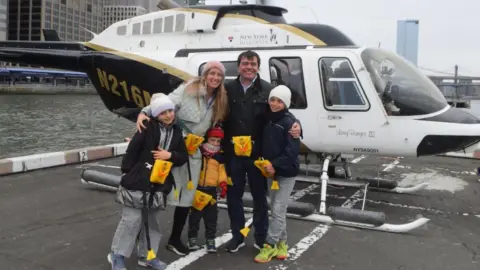
The helicopter, a Bell 206L-4 operated by New York Helicopter, departed from the Downtown Manhattan/Wall Street Heliport shortly before 3 p.m. on April 10, 2025. It was conducting an air-tour flight over New York City, a popular experience that gives visitors views of the Statue of Liberty, Manhattan’s skyline and the Hudson River.
The flight appeared routine during its opening minutes. According to preliminary flight-tracking information released by the NTSB, the helicopter flew south toward the Statue of Liberty before turning north along the Hudson River. It then continued north past the George Washington Bridge before making a U-turn and beginning its trip south along the New Jersey side of the river. (NTSB)
There were six people aboard: the pilot and five members of a family visiting from Spain. The passengers included three children. The family had been enjoying what was supposed to be an unforgettable aerial tour of New York City. Instead, the flight ended in a catastrophic breakup above one of the world’s busiest urban waterways.
The pilot was operating a Bell 206L-4, a widely used helicopter design with a long history in commercial and utility aviation. The aircraft had accumulated substantial operating time, and investigators initially examined numerous possibilities, including mechanical failure, rotor-system problems, maintenance issues and pilot-related factors.
At the time of the accident, however, there was no immediate explanation for why the helicopter suddenly began breaking apart.
The Final Moments
The helicopter had been airborne for less than 20 minutes when witnesses noticed something was seriously wrong.
The NTSB’s preliminary investigation found that the helicopter was flying at roughly 625 to 650 feet above the surface as it approached the area around Jersey City’s Holland Tunnel ventilation towers. Its altitude briefly increased before the aircraft entered a rapid descent. Flight-tracking data ended while the helicopter was still falling toward the river. (NTSB)
Eyewitnesses described hearing several loud bangs or popping sounds. Some people reported seeing the helicopter spinning or coming apart in the sky.
The aircraft did not simply descend as an intact helicopter. Instead, major components separated during the event. The fuselage, tail structure and main rotor system became separated, producing a violent and uncontrollable breakup.
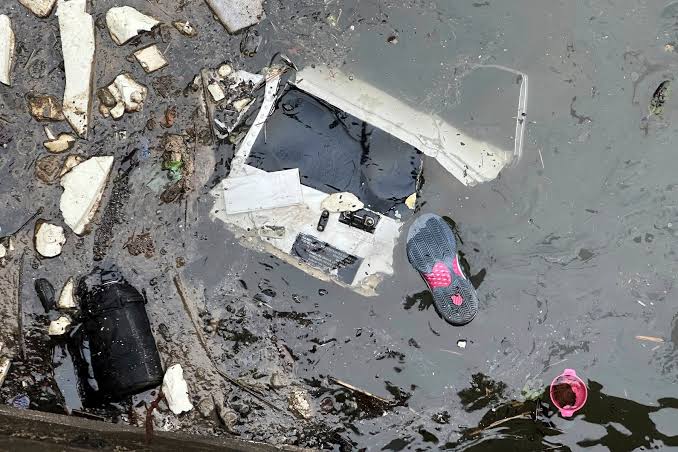
The helicopter ultimately struck the Hudson River upside down.
Emergency crews immediately rushed toward the crash site. Police boats, firefighters, divers and other emergency personnel began searching the water. Despite the rapid response, there was no successful rescue. All six people aboard died.
The tragedy shocked New York because the crash happened in a highly visible location surrounded by millions of people, major roads, skyscrapers and heavy river traffic.
The Bird-Strike Evidence
The investigation took a major turn when specialists began examining recovered wreckage for biological material.
Investigators found evidence consistent with birds striking the helicopter before the crash. According to the NTSB material released in 2026, bird remains were recovered from aircraft components and nearby debris. A severed bird wing was also found on the ground and rooftops roughly 2,000 feet from the principal wreckage area. (CBS News)
The Smithsonian Institution’s Feather Identification Lab assisted investigators in identifying the biological material. Their analysis indicated that large birds, including geese, were involved in impacts with parts of the helicopter.
This discovery is significant because a bird strike is not necessarily a minor event. When a relatively large bird collides with a helicopter traveling at significant speed, the impact can produce enormous forces. The danger becomes even greater when the bird strikes a critical component such as a rotor blade, stabilizer or flight-control surface.
In this accident, investigators found evidence that birds struck both rotor-related components and the horizontal stabilizer. (Good Morning America)
That raises a crucial question: Could the bird strikes have damaged the helicopter so severely that the aircraft became uncontrollable and ultimately broke apart?
The current evidence suggests that possibility is serious.
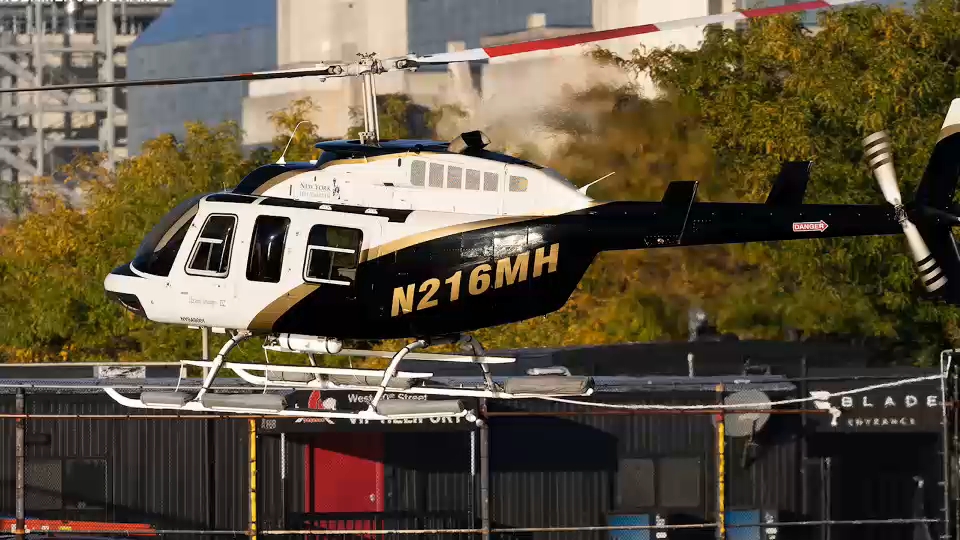
Why Birds Can Be So Dangerous to Helicopters
Bird strikes are a well-known aviation hazard. They are particularly concerning for helicopters because helicopters frequently operate at lower altitudes than commercial airliners.
At low altitude, helicopters can encounter birds at exactly the heights where birds commonly fly. Urban waterways can make the situation even more complicated because rivers and waterfront areas often attract large populations of waterfowl.
The Hudson River is a major migration corridor and habitat for many bird species. Large flocks can appear suddenly, creating a serious hazard for aircraft operating nearby.
A helicopter also has exposed rotating components. The main rotor turns at high speed, creating a large moving structure that can potentially collide with birds.
If a bird strikes a rotor blade, the consequences can range from relatively minor damage to severe structural failure. The outcome depends on the bird’s size, speed, impact location, rotor construction and the amount of damage sustained.
The Bell 206’s rotor system is critical to every aspect of flight. Damage to a rotor blade can create imbalance and vibration, while damage to other aerodynamic components can affect the helicopter’s stability and control.
A strike to the horizontal stabilizer could also have serious consequences, particularly during a high-speed maneuver or sudden change in aircraft attitude.
The Possibility of Multiple Impacts
One of the most important elements of the new investigation is that the evidence does not point simply to one isolated bird.
Investigators found remains associated with multiple birds, including geese. A witness also reported seeing a large flock of geese in the area shortly before the helicopter crash. (Reuters)
That means the helicopter may have encountered an entire group of birds rather than a single animal.
A collision with multiple large birds could create several simultaneous problems.
The first impact could damage a rotor blade. A second could strike the stabilizer. Additional impacts could affect the aircraft’s structure or other components.
If several critical components were damaged within seconds, the pilot could have had little or no time to respond.
This possibility helps explain why eyewitnesses described a sudden sequence of loud sounds followed by an uncontrolled breakup.
From Bird Strike to Structural Failure
The precise chain of events remains under investigation, but a possible scenario can be considered.
A helicopter encounters a flock of large birds while traveling along the Hudson River. One or more birds strike the aircraft’s main rotor system. Another bird strikes the horizontal stabilizer or another critical structure.
The impacts cause damage that changes the helicopter’s aerodynamic behavior.
The pilot may suddenly experience severe vibration, yaw, pitch or loss of control.
The damaged aircraft then begins moving unpredictably. If the rotor system or tail structure becomes compromised, the helicopter can rapidly lose stability.
At that point, the aircraft may begin rotating or yawing violently.
A structural component could then fail completely.
The preliminary evidence from the crash showed that the helicopter separated into major sections during flight. Previous investigators had considered the possibility that the tail boom failed or that the main rotor system struck another part of the helicopter during the breakup. (AP News)
A bird strike could potentially be the initiating event that led to such a sequence.
But it is important to distinguish between an initiating event and the final mechanism of structural failure.
The NTSB’s released material does not yet establish every step with certainty.

Why the NTSB Has Not Declared a Final Cause
Although the new evidence strongly points toward bird strikes, investigators have been careful not to call the case completely solved.
The documents released in July 2026 are not the final accident report and do not establish the official probable cause. (ABC News)
That distinction is important.
A bird strike may have occurred, but investigators must still determine whether it actually caused the chain of failures that destroyed the helicopter.
Investigators must establish exactly where each bird struck the aircraft, how much damage was produced, how the helicopter responded and whether another mechanical or structural problem contributed to the accident.
Aviation investigations are deliberately detailed because conclusions can influence future safety rules, aircraft design and pilot procedures.
The Recovery of the Wreckage
The investigation was complicated by the fact that the helicopter crashed into the Hudson River.
Important components sank into the water, requiring divers and specialized equipment to recover them.
Within days of the accident, investigators and recovery teams located major portions of the aircraft. The NTSB reported that divers recovered the main rotor system, transmission and other important components. (NTSB)
The wreckage became one of the most important sources of evidence.
Investigators examined rotor blades for impact damage, searched for fractures and deformation, inspected the transmission and analyzed structural components.
Because the helicopter did not have conventional flight recorders, investigators had to rely heavily on physical evidence, surveillance footage, radar and ADS-B information, witness accounts, maintenance records and recovered components. (NTSB)
This made every small piece of debris potentially important.
A fragment of a rotor blade, a piece of the stabilizer or even biological material could help investigators reconstruct the final seconds.
The Human Cost
Behind the technical investigation were six human lives.
The crash killed the pilot and a Spanish family of five, including three children. The family had traveled to New York and was taking part in a sightseeing flight that was expected to be a memorable experience.
Instead, relatives were left waiting for news that would never come.
The tragedy demonstrated how quickly an ordinary tourist activity can become a life-threatening emergency.
For the passengers, there was almost certainly no realistic opportunity to escape from a helicopter that was breaking apart hundreds of feet above the water.
The loss also affected people far beyond the immediate families. The crash was witnessed by people along both sides of the Hudson, emergency workers who responded to the scene and members of the public who watched the recovery operation.
A Difficult Environment for Aviation
The Hudson River is an extraordinary but challenging aviation environment.
The area around Manhattan contains skyscrapers, bridges, helicopters, airplanes, boats and densely populated waterfronts.
Sightseeing helicopters operate close to major landmarks, often at relatively low altitudes.
Birds are another factor.
Waterfront environments naturally attract birds, and seasonal migration can increase the number of large birds in the airspace.
That combination creates a unique aviation risk.
Pilots operating in such areas must constantly monitor traffic, weather, terrain, structures and potential wildlife hazards.
But even the most experienced pilot cannot always avoid a bird appearing directly in the flight path.
A large flock can move quickly, and the time available for evasive action may be extremely limited.
Lessons for Helicopter Safety
The Hudson River accident could have implications for helicopter operations well beyond New York.
If investigators ultimately determine that bird strikes caused or substantially contributed to the crash, operators may need to reconsider how they manage wildlife hazards during sightseeing flights.
Possible safety measures could include improved bird-hazard assessments, better pilot briefings, increased awareness of seasonal migration patterns and additional procedures for operating near known bird concentrations.
Aircraft equipment may also receive greater attention.
The investigation has already raised questions about bird-deterrent lighting and whether certain systems could help reduce the risk of bird collisions. Reports indicated that the helicopter did not have a control switch for certain bird-deterrent pulsing lights, although their use was not mandatory during daylight operations. (AP News)
However, there is no simple technological solution to the bird-strike problem.
Birds cannot reliably be predicted, and no system can guarantee that an aircraft will never encounter wildlife.
The best defense is a combination of aircraft design, pilot awareness, operational planning, wildlife management and effective emergency procedures.
A Reminder of Aviation’s Fragility
The Hudson River crash is a powerful reminder that aviation accidents rarely have simple explanations.
A helicopter can appear perfectly normal one moment and become uncontrollable seconds later.
The new evidence concerning bird strikes adds an unexpected dimension to the tragedy. What initially appeared to be a mysterious mechanical or structural failure may have begun with a collision involving wildlife.
Yet the investigation is not finished.
The NTSB must still determine the complete sequence of events and identify the precise relationship between the bird strikes, the damage to the helicopter and the eventual mid-air breakup.
That work matters because understanding what happened is the first step toward preventing another accident.
Conclusion
The April 10, 2025, Hudson River helicopter crash was a devastating accident that claimed six lives during what should have been a routine sightseeing flight.
The Bell 206L-4 suddenly broke apart in mid-air before plunging into the Hudson River. Early investigators examined mechanical and structural possibilities, but evidence released more than a year later has brought a new explanation into focus.
Bird remains were found on helicopter wreckage, including evidence associated with large birds such as geese. Investigators believe the helicopter likely suffered multiple bird strikes before the catastrophic breakup. (CBS News)
Even so, the NTSB has not yet issued a final probable-cause determination.
The significance of the investigation goes beyond this single crash. If large birds caused critical damage to the helicopter, the accident could become an important case study in wildlife hazards, low-altitude helicopter operations and aviation safety in urban environments.
For the families who lost loved ones, however, no investigation can change the outcome.
The six people aboard the helicopter left New York that afternoon expecting a short flight over one of the world’s most recognizable skylines. Instead, their aircraft fell from the sky and disappeared into the Hudson River.
The continuing investigation seeks to answer one fundamental question: how could a routine sightseeing flight turn into such a catastrophic failure in only a matter of seconds?
The answer may ultimately begin with something as unpredictable as a flock of birds—but understanding every step between that encounter and the final impact will be essential to ensuring that a similar tragedy does not happen again.