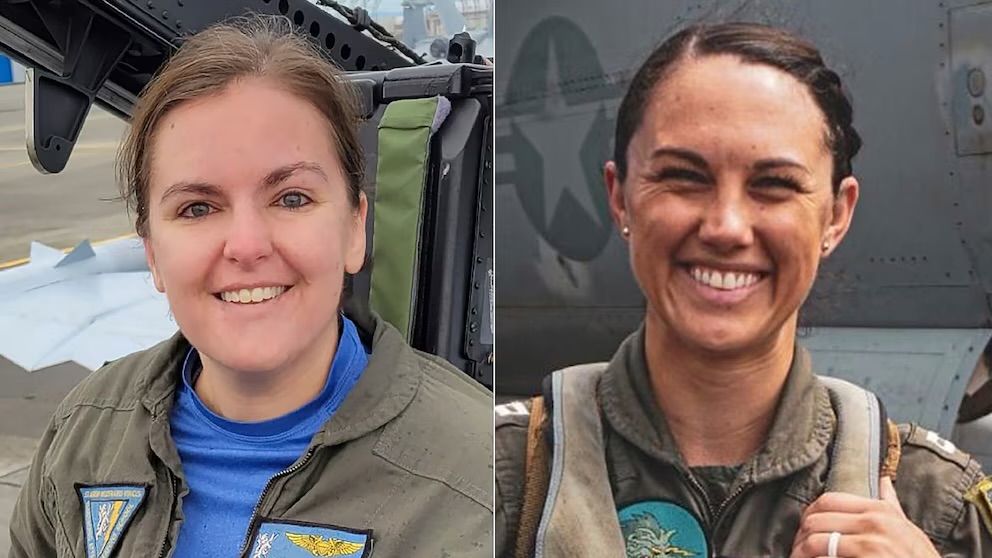
The loss of two U.S. Navy aviators in a military jet crash near Mount Rainier, Washington, in October 2024 sent shock waves through the naval aviation community and beyond. Lt. Cmdr. Lyndsay P. “Miley” Evans and Lt. Serena N. “Dug” Wileman, both 31 and California natives, were killed when their EA-18G Growler crashed during a training mission in the mountainous terrain of Washington state. The Navy later described the two women as highly skilled, combat-decorated aviators and “trailblazers” whose influence extended far beyond their aircraft and squadron. (ABC News)
The crash occurred on October 15, 2024, after the Growler departed Naval Air Station Whidbey Island for a training flight. At approximately 3:23 p.m., the aircraft went down roughly 30 miles west of Yakima, in an isolated mountainous region east of Mount Rainier. The difficult terrain, heavy forest, cloud cover and poor visibility complicated the search effort. Rescue teams eventually located the wreckage on a mountainside at an elevation of about 6,000 feet. (Good Morning America)
For several days, the fate of the two aviators remained unknown. Search-and-rescue personnel worked through challenging conditions to locate the aircraft and reach the crash site. Because the wreckage was in a remote area that could not easily be reached by road or on foot, specialized personnel were brought in to assist with the recovery operation. The discovery of the aircraft transformed a difficult search into a recovery mission and eventually confirmed the tragic loss of both Navy officers. (Stars and Stripes)
The Navy formally declared Evans and Wileman dead before publicly identifying them. Their deaths were especially painful for their squadron, Electronic Attack Squadron 130, commonly known as the “Zappers.” Cmdr. Timothy Warburton, the squadron’s commanding officer, expressed grief over the loss and emphasized that the immediate priority was supporting the families of the fallen aviators and the sailors who served alongside them.
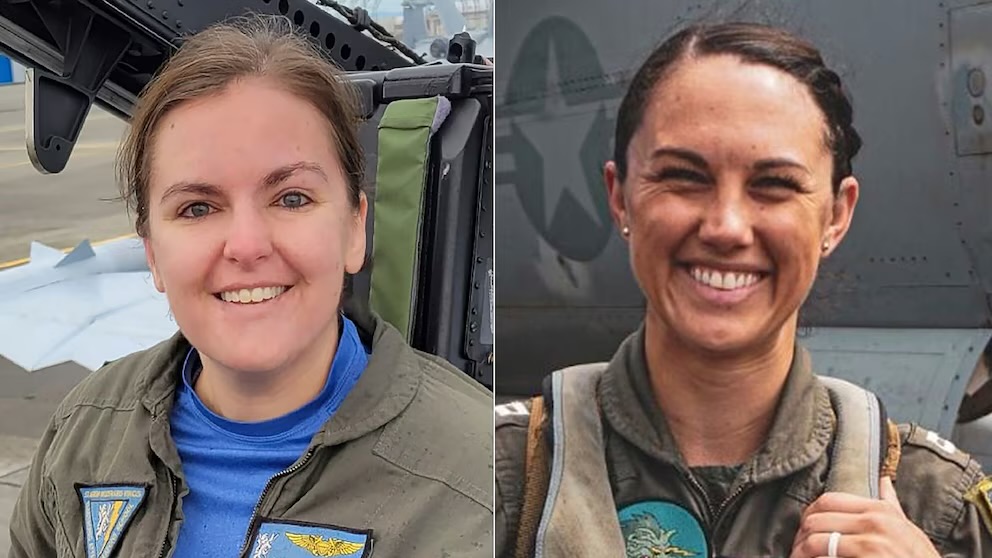
Evans and Wileman were not simply experienced military pilots. They represented a generation of women who had built careers in a demanding field once dominated overwhelmingly by men. Their accomplishments demonstrated how far women had advanced in U.S. military aviation and how deeply they had become integrated into some of the Navy’s most sophisticated operational communities.
Lt. Cmdr. Lyndsay “Miley” Evans
Lyndsay Evans was a Naval Flight Officer who had built a reputation for professionalism, leadership and technical expertise. She commissioned into the Navy in 2014 and eventually became part of the EA-18G Growler community. The Growler is an electronic warfare aircraft designed to disrupt, deceive and suppress enemy radar and communications systems while supporting other aircraft during military operations. (Stars and Stripes)
Evans was from Palmdale, California, and had demonstrated an interest in aviation and military service before beginning her Navy career. Her professional accomplishments eventually placed her in highly demanding operational environments.
One of the most notable moments in Evans’ career came in 2023, when she participated in an all-female Navy flyover during the Super Bowl at State Farm Stadium in Glendale, Arizona. The Navy described the event as a historic moment commemorating 50 years of women flying in the Navy. Evans’ participation gave her a visible role in highlighting the changing face of military aviation. (Good Morning America)
Her accomplishments continued in 2024, when she was named Growler Tactics Instructor of the Year. The recognition reflected her expertise in one of the Navy’s most technically demanding aviation communities. As a tactics instructor, Evans was not simply an aviator; she was also responsible for helping develop the skills and decision-making abilities of other members of the force.
That leadership role made her loss particularly significant to those who had trained and served with her.
Lt. Serena “Dug” Wileman
Serena Wileman was a Naval Aviator who joined the Navy through Officer Candidate School and was commissioned in 2018. She reported to Electronic Attack Squadron 130 in November 2022. Like Evans, she became part of the Growler community and participated in demanding operational and training missions. (Stars and Stripes)
Wileman earned recognition for her performance during military operations and received multiple awards, including Strike Flight Air Medals and the Combat Action Ribbon. Her decorations reflected her participation in operations during the Navy’s deployment to the Red Sea.
Those who served with Wileman remembered her as a disciplined and capable aviator who approached difficult missions with professionalism. Her career was shorter than Evans’ because she entered the Navy later, but her accomplishments demonstrated how quickly she had risen within a highly specialized aviation community.
Together, Evans and Wileman represented different paths into naval aviation, yet their careers ultimately converged in the same squadron, the same aircraft community and the same operational environment.
Their Combat Experience
The two women had recently returned from a deployment that lasted nearly nine months. They were part of Carrier Air Wing 3 and operated aboard the nuclear-powered aircraft carrier USS Dwight D. Eisenhower. The deployment placed them in the middle of intense military activity in the Red Sea and surrounding region. (Good Morning America)
During the deployment, the Growler squadron supported operations designed to protect maritime traffic and counter threats from Houthi forces. The squadron conducted hundreds of combat missions and participated in operations intended to reduce threats to shipping in the region. (ABC News)
Evans and Wileman were among the women who flew combat missions over land during operations in Yemen. The Navy highlighted this accomplishment because relatively few women had previously conducted such missions. Their combat experience demonstrated that women in modern naval aviation were not merely participating in support roles; they were operating directly within complex combat environments.

Their missions required precision, concentration and an understanding of rapidly changing battlefield conditions. Electronic warfare aviation can involve complicated coordination between aircraft, ships and other military forces. The crew must understand threats, identify electronic signals and support friendly forces while maintaining awareness of the surrounding airspace.
The fact that Evans and Wileman had successfully completed such missions made their subsequent deaths during a training flight especially tragic.
The EA-18G Growler
The aircraft involved in the crash was an EA-18G Growler, a specialized electronic warfare aircraft derived from the F/A-18 family. The aircraft is designed to provide electronic attack capabilities and protect friendly forces in environments where enemy radar, communications and other electronic systems may pose a threat.
The Growler is operated by a two-person crew. One member serves as the pilot, while the other is a Naval Flight Officer responsible for electronic warfare and mission systems. This division of responsibilities requires extensive training and close cooperation.
The aircraft involved in the Washington crash belonged to Electronic Attack Squadron 130. The squadron has a long history within U.S. naval aviation and adopted the “Zappers” nickname after its establishment in the late 1950s. (ABC News)
The EA-18G is considered one of the Navy’s most technologically sophisticated aircraft. Its mission is fundamentally different from that of a conventional fighter aircraft. Instead of relying primarily on air-to-air weapons, electronic warfare crews work to influence the electromagnetic environment in which a military operation takes place.
That makes training essential. Crews must repeatedly practice complicated procedures so they can respond quickly when confronted with unexpected conditions during real operations.
A Difficult Search Operation
The location of the crash made the rescue effort extremely challenging. The aircraft went down in mountainous terrain near Mount Rainier, an area known for steep slopes, thick vegetation and rapidly changing weather conditions.
Search crews initially faced difficulties determining the exact location of the aircraft. Clouds and limited visibility made aerial searches harder, while the rugged landscape prevented easy access from the ground.
When the wreckage was eventually located, military personnel had to carefully approach the site. Specialized forces with experience in mountaineering, high-angle rescue and technical communications were brought in to help reach the remote location. (Stars and Stripes)
The recovery operation illustrated the risks faced not only by military aviators but also by the personnel who respond when an aircraft goes down. Search-and-rescue missions in mountainous areas can be dangerous even under normal circumstances. When aircraft wreckage is involved, responders must also consider unstable terrain, debris and changing weather.

A Community in Mourning
The deaths affected far more people than the two women’s immediate families. Their squadron, carrier air wing and broader naval aviation community lost two experienced professionals and respected colleagues.
The Navy’s tribute emphasized that Evans and Wileman were more than their ranks or job titles. They were described as role models and women who had influenced people both on the flight deck and beyond. (DVIDS)
That description is significant because military aviation depends heavily on mentorship. Experienced aviators train younger officers, pass along knowledge and establish professional standards that can influence a squadron for years.
When an experienced aviator dies, the loss therefore affects institutional knowledge as well as personal relationships. Evans, particularly through her instructor role, had helped prepare other aviators for the demanding realities of Growler operations.
Wileman, meanwhile, had established herself as a capable operational aviator whose experience included combat missions. Both women had become examples for younger service members who hoped to pursue careers in naval aviation.
The Broader Meaning of Their Careers
The story of Evans and Wileman also reflects the changing role of women in the U.S. military.
Women have served in the U.S. Navy for generations, but opportunities in aviation expanded significantly over time. The careers of Evans and Wileman illustrate the modern reality in which women can serve as pilots, Naval Flight Officers, instructors and combat aviators.
Their achievements were not symbolic alone. They performed demanding operational duties and earned military decorations based on their performance.
For younger women considering military aviation, their careers demonstrated that advancement was possible through training, discipline and expertise. Their participation in the 2023 all-female Super Bowl flyover was one highly visible example of that progress, while their combat missions represented a much more operational expression of the same transformation.
Their legacy therefore extends beyond the circumstances of the crash. It is also connected to the opportunities they helped normalize for those who came after them.
The Investigation
The cause of the crash was not immediately established, and military officials said the accident remained under investigation. Determining why a military aircraft crashes can take considerable time because investigators must reconstruct the aircraft’s final moments using physical evidence, flight data, maintenance records, weather information and witness reports.
It is important not to assume a cause without verified evidence. Military accident investigations are designed to determine what happened, why it happened and whether changes should be made to prevent similar accidents.
For the families of Evans and Wileman, however, no investigation could change the central fact that two accomplished young officers had been lost.

Remembering Two Aviators
Lt. Cmdr. Lyndsay “Miley” Evans and Lt. Serena “Dug” Wileman were remembered not only for the tragic final flight but also for the years of service that came before it.
They had trained extensively, served aboard an aircraft carrier, participated in combat operations and contributed to the sophisticated world of electronic warfare. Evans became a tactics instructor and participated in a historic all-female flyover. Wileman earned combat-related decorations and established herself as a skilled Growler aviator.
Their final mission was supposed to be a training flight, part of the continuous preparation required to keep military crews ready for future operations. Instead, it became a devastating loss for their families and fellow sailors.
The Navy’s description of the two women as “trailblazers” reflects the broader impact of their careers. They were part of a generation that expanded the possibilities for women in military aviation while also carrying the full responsibilities of professional naval service.
Their story is ultimately one of courage, dedication and sacrifice. Behind the uniforms, aircraft and military titles were two young women who had earned the trust of their fellow sailors and demonstrated their abilities in some of the most demanding environments the Navy could offer.
The crash near Mount Rainier ended their lives, but it did not erase the record of what they accomplished. Their careers remain part of the history of modern U.S. naval aviation, and their influence continues through the people they trained, the colleagues they served beside and the future aviators who may follow the path they helped open.
For the Navy community, remembering Evans and Wileman means remembering more than the accident. It means recognizing the service that came before it, the missions they completed, the people they inspired and the example they set.
Their story serves as a reminder that military aviation is built on skill, teamwork and trust—and that behind every aircraft are people who dedicate years of their lives to serving others. Lt. Cmdr. Lyndsay “Miley” Evans and Lt. Serena “Dug” Wileman gave that service with distinction, and their legacy will remain an important part of the story of women in American naval aviation. (Good Morning America)