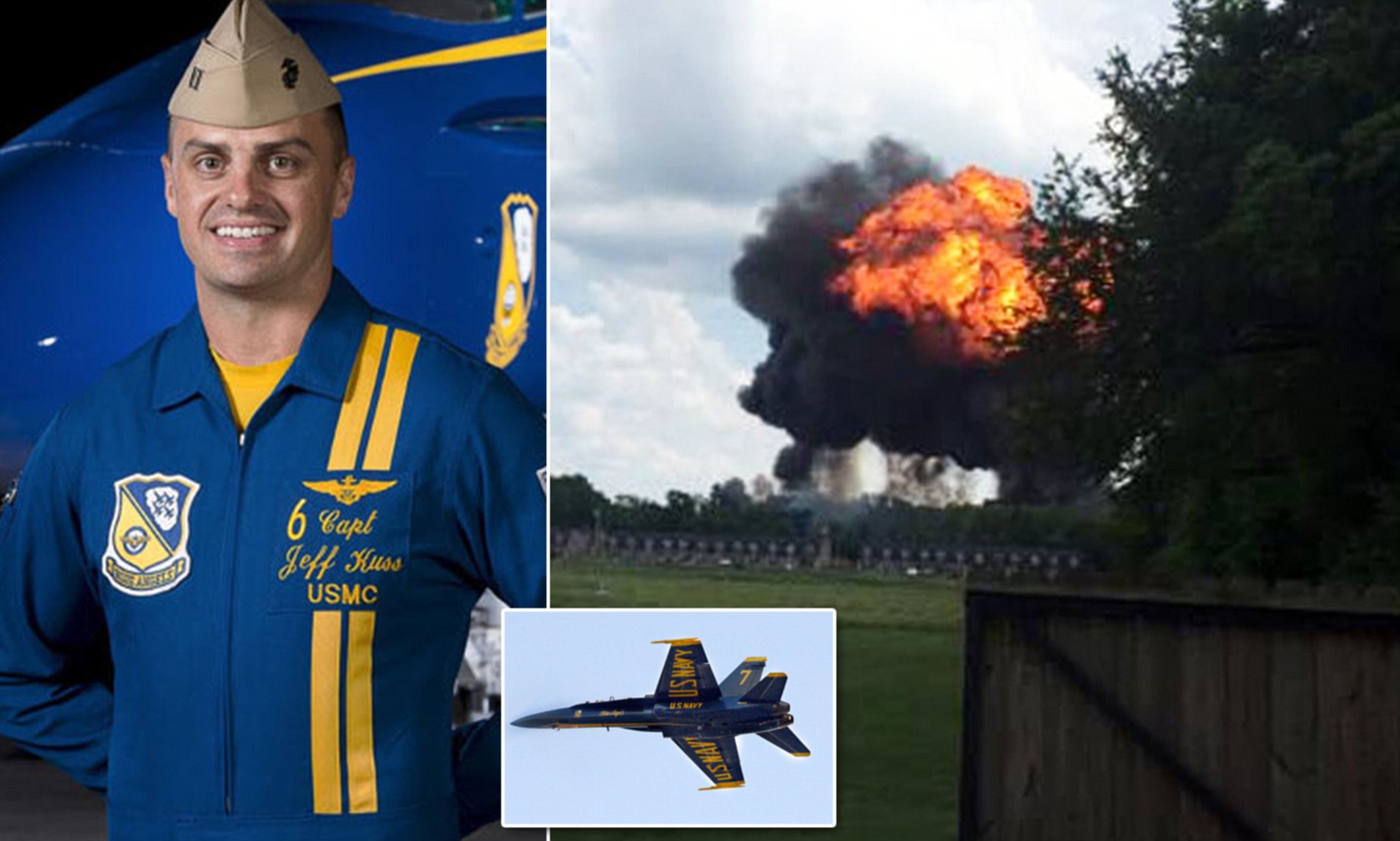

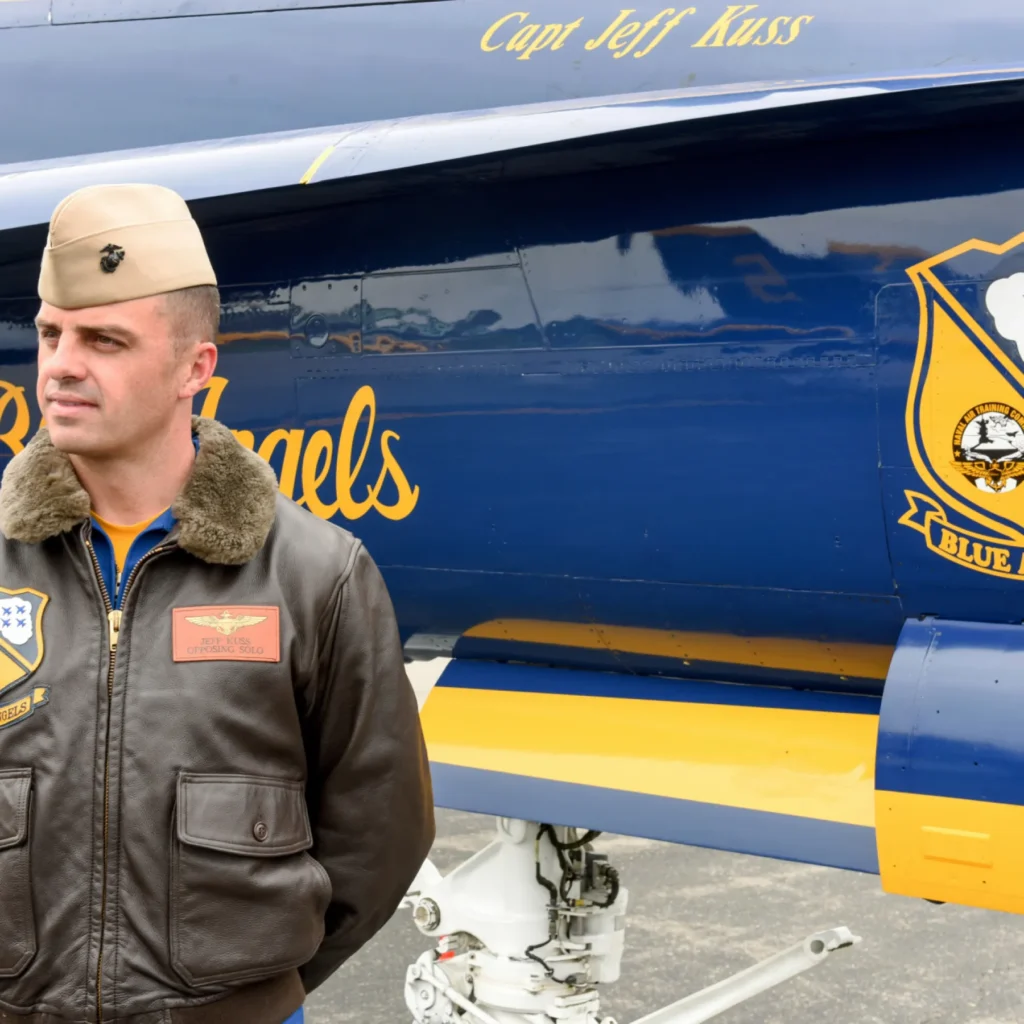
On June 2, 2016, the world of military aviation was shaken by the tragic death of U.S. Marine Corps Capt. Jeffery “Jeff” Kuss, a highly respected pilot and member of the U.S. Navy Blue Angels flight demonstration squadron. Kuss was flying an F/A-18C Hornet during a practice flight near Smyrna, Tennessee, in preparation for the Great Tennessee Air Show when the aircraft crashed approximately two miles from Smyrna Airport. The accident claimed his life and ended the career of an aviator who had earned a reputation for professionalism, skill, and dedication to naval aviation. (U.S. Navy)
Kuss was 32 years old and was serving as Blue Angel No. 6, the opposing solo pilot. He had joined the Blue Angels in 2014 and was in his second year with the team and first year as a demonstration pilot. His role required extraordinary flying ability, discipline, and precision because Blue Angels pilots routinely performed high-speed maneuvers at relatively low altitudes while maintaining extremely close coordination with other aircraft. (U.S. Navy)
A Passion for Aviation
Jeff Kuss was a native of Durango, Colorado. His interest in aviation eventually developed into a distinguished military career. Before becoming a Blue Angel, he served as a Marine fighter pilot and deployed to Afghanistan. His service included combat aviation experience, and his accomplishments earned him military decorations, including the Strike Flight Air Medal and the Navy and Marine Corps Achievement Medal. (smyrnaairport.com)
Joining the Blue Angels represented a significant achievement in his career. The Navy Flight Demonstration Squadron is one of the most visible symbols of American naval aviation. Its pilots are selected from among experienced military aviators and must demonstrate exceptional technical ability, discipline, judgment, and teamwork.
The Blue Angels are also expected to represent the professionalism of the Navy and Marine Corps whenever they appear before the public. For Kuss, the assignment was more than simply flying an advanced fighter jet. It was an opportunity to demonstrate the skill and dedication of military aviators to millions of spectators.
The F/A-18 Hornet
The aircraft Kuss was flying on June 2 was an F/A-18C Hornet, a twin-engine, supersonic fighter aircraft that had become a major part of U.S. naval aviation. The Hornet was designed for demanding missions and was capable of rapid acceleration, high-speed maneuvering, and powerful climbs.
For the Blue Angels, however, the aircraft was used in an entirely different environment from ordinary combat operations. Demonstration flying requires pilots to perform carefully choreographed maneuvers repeatedly and precisely.
Every movement has a purpose. Altitude, airspeed, aircraft attitude, engine power, and timing must remain within carefully established limits. A small deviation that might be recoverable at high altitude can become extremely dangerous close to the ground.
That reality played an important role in the investigation of Kuss’ final flight.
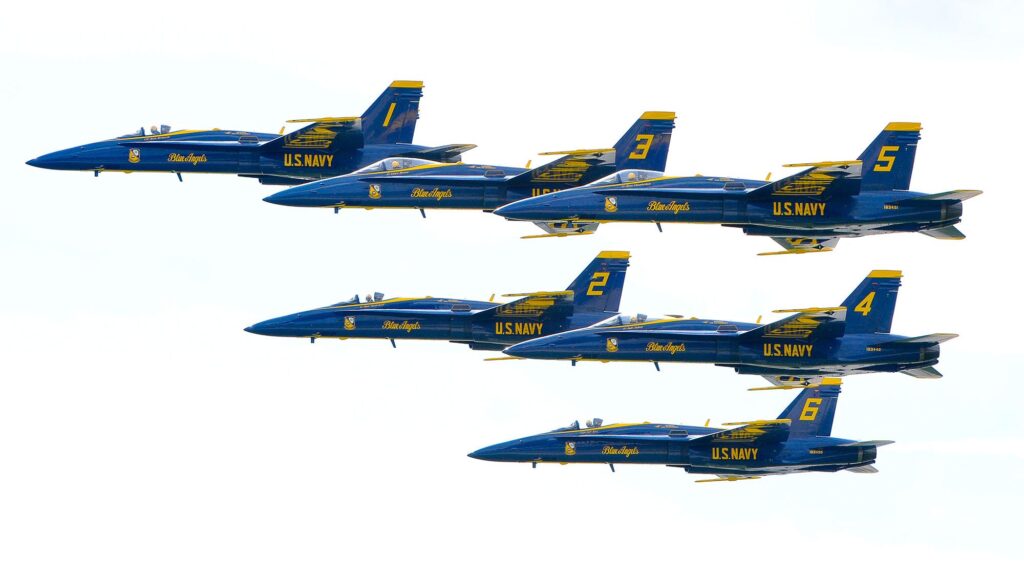
The Practice Flight
The Blue Angels were in Smyrna to prepare for the Great Tennessee Air Show. On the afternoon of June 2, the team began preparations for its practice performance.
At approximately 3:01 p.m. Central Daylight Time, Kuss took off in Blue Angel No. 6. The other five aircraft were also involved in the team’s operations, but they were not involved in the crash and landed safely after the accident. The Navy initially reported that the aircraft crashed during the early stages of the afternoon practice and that the accident occurred approximately two miles from the runway. (U.S. Navy)
The crash happened only moments into the flight.
For people on the ground, the event was sudden and shocking. A military fighter aircraft that had just taken off disappeared from the expected flight path and crashed. Emergency responders rushed toward the scene while the Blue Angels’ remaining aircraft returned safely.
The Navy immediately began an investigation into what had happened.
The Split-S Maneuver
The investigation eventually focused heavily on the first major maneuver of Kuss’ flight, known as the “Split S.”
A Split-S is a dramatic maneuver in which the aircraft rolls inverted and then enters a descending turn, eventually reversing its direction while losing substantial altitude. When properly executed, it requires careful management of altitude, speed, aircraft attitude, and engine power.
For the Blue Angels, the maneuver was performed according to established procedures and parameters designed to preserve a margin of safety.
According to the Navy investigation, the aircraft should have reached an optimum airspeed of approximately 125 to 135 knots and climbed to at least 3,500 feet above ground level before beginning the inverted maneuver. Investigators determined that Kuss reached a maximum altitude of about 3,196 feet and had reached a maximum speed of approximately 184 knots. (USNI News)
That difference was critical.
Kuss entered the maneuver lower and faster than the established parameters. The aircraft also remained in afterburner, which meant it continued accelerating instead of reducing power as required for the maneuver.
The combination of excessive speed, insufficient altitude, and continued engine power created a situation in which the aircraft descended toward the ground extremely rapidly.
Weather and Fatigue
The Navy’s investigations also examined environmental and human factors.
Weather conditions in the area included scattered clouds. Investigators found that Kuss and another Blue Angel pilot had discussed a cloud near the maneuver area before takeoff. The official JAGMAN investigation concluded that weather and fatigue were contributing causal factors, although the investigation determined that the primary cause was pilot error. (U.S. Navy)
The weather did not mean that the aircraft could not fly. Rather, investigators believed the cloud conditions may have influenced the decision-making involved in beginning the maneuver.
Fatigue was another factor considered by investigators. Military demonstration pilots operate under demanding schedules, and fatigue can affect concentration, reaction time, judgment, and situational awareness. Even highly experienced pilots are not immune to the effects of fatigue.
The investigation did not conclude that Kuss was careless or unqualified. Quite the opposite: he was described as a highly trained and qualified aviator.
The tragedy demonstrated how several relatively small factors can combine during high-performance aviation.
No Mechanical Failure
One of the most important findings was that the crash was not caused by a mechanical failure of the F/A-18C.
The investigation found no evidence that the aircraft suffered a material, maintenance, or mechanical problem that caused the accident. Kuss was properly qualified and authorized to fly. (U.S. Navy)
This distinction is important because fighter aircraft are enormously complex machines. When a military jet crashes, investigators examine everything from engines and flight controls to maintenance records, fuel systems, communications equipment, and pilot equipment.
In Kuss’ case, the evidence pointed away from an aircraft malfunction and toward the way the maneuver was executed.
The official findings concluded that the aircraft was simply too low and too fast by the time the situation became unrecoverable. (USNI News)
The Final Moments
As the aircraft entered the Split-S, the combination of altitude and airspeed left very little room for correction.
The investigation determined that Kuss did not attempt a dive recovery after the initial deviations. By the time the aircraft was descending toward the ground, there was insufficient altitude remaining to safely recover.
Kuss attempted to eject, but the ejection occurred too late to save his life. The aircraft struck the ground and was destroyed.
The crash was fatal.
The accident shocked the Blue Angels, the Marine Corps, the Navy, and the community of Smyrna.
For the other Blue Angels pilots, the loss was especially personal. They had flown alongside Kuss, trained with him, and relied upon him as a teammate. The Blue Angels’ performances depend heavily on trust because pilots operate aircraft at high speeds and close distances where even small mistakes can have catastrophic consequences.
The Cancellation of the Air Show
The Blue Angels had been scheduled to perform at the Great Tennessee Air Show that weekend.
Following the crash, the team canceled its participation in the event. The decision reflected both respect for Kuss and the enormous emotional impact of the accident. The Navy announced that the remaining Blue Angel aircraft were not involved in the mishap and had landed safely. (U.S. Navy)
For spectators who had expected to see the famous blue-and-gold jets in the sky, the cancellation was understandable. The air show was no longer simply an entertainment event. A member of the demonstration team had just lost his life.
The tragedy also served as a reminder that air shows, despite their carefully controlled nature, involve real aircraft operating at extreme speeds and demanding performance levels.

The Investigation
Following the crash, the Navy conducted a detailed investigation.
The investigation examined the aircraft, flight procedures, communications, environmental conditions, pilot qualifications, maintenance history, and other evidence. Investigators ultimately concluded that the accident was caused primarily by pilot error, with weather and fatigue identified as contributing factors in the JAGMAN investigation. (U.S. Navy)
Another investigation summary stated that Kuss failed to properly transition from the High Performance Climb into the Split-S maneuver. The aircraft entered the maneuver at excessive speed and below the required altitude. The continued use of afterburner further increased the aircraft’s speed. (USNI News)
Importantly, the Navy determined that Kuss’ death occurred in the line of duty and was not the result of misconduct. No punitive measures were taken. (U.S. Navy)
That finding reflects an important distinction between identifying the technical cause of an accident and assigning blame to an individual. Aviation investigations are intended to understand what happened, why it happened, and how future accidents might be prevented.
Remembering Jeff Kuss
Kuss was remembered not simply as a pilot who died in a crash, but as a Marine officer, husband, father, teammate, and member of the naval aviation community.
His family and friends described a man who had dedicated himself to aviation and military service. His community in Colorado mourned his death, while the people of Smyrna, Tennessee, where the accident occurred, also came together to honor him.
The town eventually created a memorial in his honor. The Capt. Jeff Kuss USMC Memorial became a lasting symbol of the relationship that developed between the community and the fallen Marine pilot. The memorial includes an F/A-18C Hornet and recognizes Kuss’ service and sacrifice. (smyrnaairport.com)
The memorial is significant because Kuss was not originally from Smyrna. Yet his final flight connected his name permanently with the community.
Residents who witnessed the tragedy and those who learned about it afterward wanted to ensure that his memory would not disappear.
A Lesson for Aviation
The crash of Jeff Kuss is one of the many tragedies that demonstrate the unforgiving nature of aviation.
Modern fighter aircraft provide pilots with extraordinary capabilities, but technology cannot eliminate every risk. Human judgment remains essential.
Kuss was an experienced military aviator who had flown complex missions and earned a place on one of the world’s most respected demonstration teams. Yet on that afternoon, a series of deviations from established parameters placed the aircraft beyond a point from which recovery was possible.
The accident also illustrates why aviation procedures are so precise.
A difference of several hundred feet in altitude or dozens of knots in airspeed can dramatically change the outcome of a maneuver. At low altitude, pilots may have only seconds to recognize a problem, correct it, and recover the aircraft.
For demonstration teams, those margins are even more important because pilots intentionally operate close to performance limits while performing in front of large crowds.
The Broader Meaning of His Service
Kuss’ death was not the only military aviation accident that occurred on June 2, 2016. On the same day, a U.S. Air Force Thunderbirds F-16 crashed near Colorado Springs, although that pilot survived. The two accidents involving America’s premier military demonstration teams highlighted the dangers faced by pilots whose mission is to demonstrate the capabilities of military aviation. (AOPA)
Military demonstration pilots accept risks that most people will never experience. Their performances are designed to inspire confidence, demonstrate professionalism, and showcase the skill of the armed forces.
Behind every performance, however, are highly trained men and women who understand that aviation is never completely without risk.
Jeff Kuss’ final flight is remembered because of that sacrifice.
A Lasting Legacy
Years after the crash, Kuss remains remembered by the Blue Angels community, the Marine Corps, and the people of Smyrna.
His story is also remembered as an aviation safety lesson. The official investigation did not find a simple mechanical explanation. Instead, it revealed how human factors, weather, fatigue, speed, altitude, and decision-making can interact within seconds.
The most important lesson is not simply that a mistake occurred. It is that even experienced professionals can find themselves in situations where the available time and altitude for recovery disappear rapidly.
For pilots, the accident reinforces the importance of respecting established parameters, maintaining situational awareness, managing fatigue, and recognizing when circumstances require a change in plan.
For the public, Kuss’ story offers a glimpse into the dedication and danger behind military aviation demonstrations.
Conclusion
Marine Corps Capt. Jeff Kuss died on June 2, 2016, while practicing with the Blue Angels in Smyrna, Tennessee. He was flying an F/A-18C Hornet as Blue Angel No. 6 when the aircraft crashed during the opening portion of a practice flight for the Great Tennessee Air Show. (U.S. Navy)

The Navy investigation determined that the aircraft had no mechanical failure. Instead, Kuss entered the Split-S maneuver too low and too fast, while continued afterburner use increased the aircraft’s speed. The investigation concluded that pilot error was the primary cause, while a separate JAGMAN investigation identified weather and fatigue as contributing factors. (USNI News)
Those findings do not erase the remarkable career that came before the accident.
Jeff Kuss was a Marine officer, combat aviator, Blue Angel, husband, father, and teammate. He had reached one of the most prestigious positions in military aviation and had dedicated his life to flying and serving his country.
His final flight ended in tragedy, but his legacy continued through the people who knew him and the community that chose to remember him.
The memorials, stories, and lessons associated with his name ensure that Jeff Kuss is remembered not only for how he died, but for how he lived: as a dedicated Marine, a skilled aviator, and a member of a team that represented the very best traditions of American naval aviation.
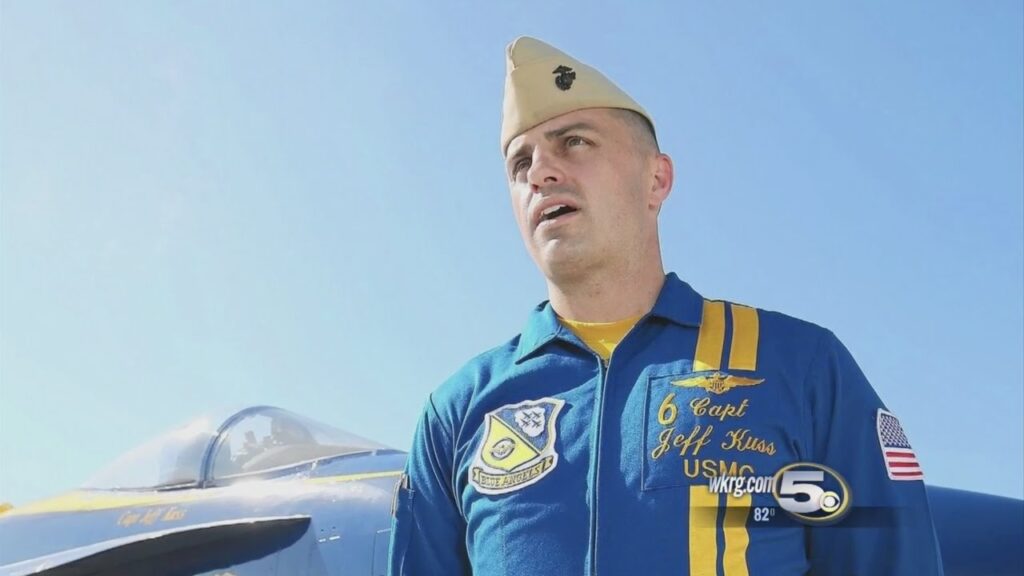
His story remains a solemn reminder that behind every military aircraft in the sky is a human being carrying enormous responsibility—and that the courage required to fly is matched by the responsibility to learn from every accident so that future pilots can return safely home.