The roar of aircraft engines filled the summer sky over southeastern Michigan as thousands of spectators gathered for the Selfridge Air Show in August 2011. Air shows are designed to inspire awe, combining precision flying, historic aircraft, aerobatic maneuvers, and highly specialized performances. But on August 21, 2011, the excitement suddenly turned into tragedy when experienced wingwalker Todd Green fell approximately 200 feet during a dangerous aerial transfer attempt and later died from his injuries. (Reuters)
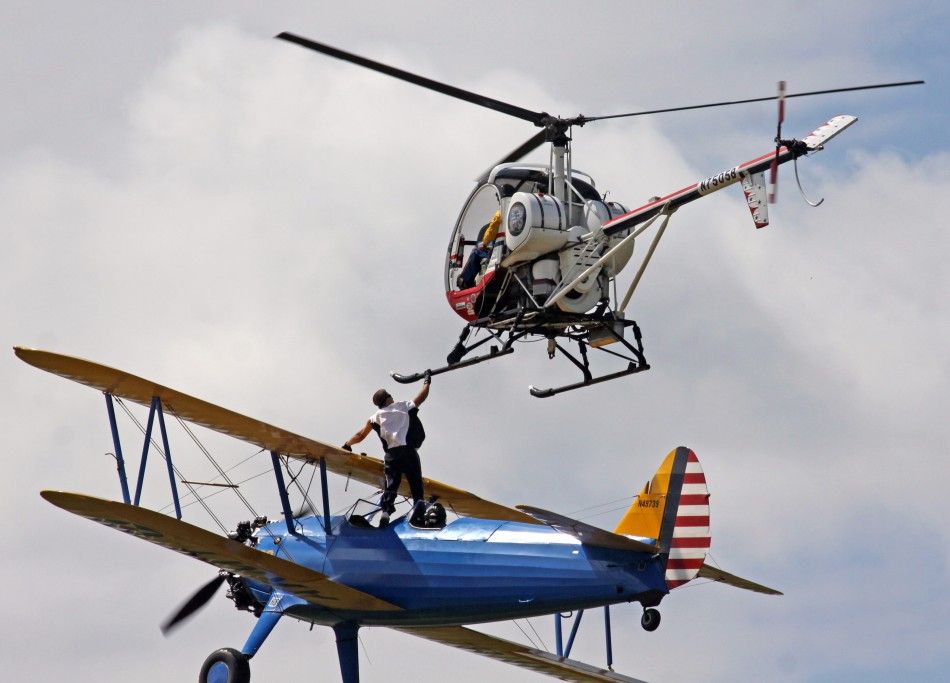
The accident occurred at Selfridge Air National Guard Base in Harrison Township, less than 30 miles from Detroit. Green was performing as part of a wingwalking act when he attempted to transfer from a biplane to a helicopter flying above it. The maneuver was one Green had performed before, but on this occasion something went terribly wrong. He lost his position and fell from the aircraft while the two machines were moving through the air. (Reuters)
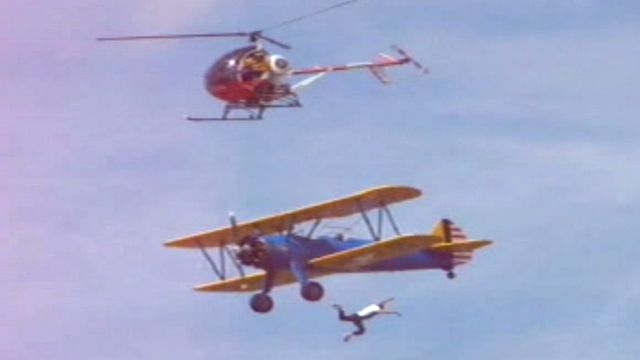
For spectators, the incident was almost impossible to comprehend. Only moments earlier, the crowd had been watching an extraordinary demonstration of aviation skill. The aircraft were moving together at relatively low altitude, with the biplane below and the helicopter positioned overhead. Then, suddenly, a person could be seen falling away from the aircraft.
Witnesses described the moment as shocking. Video recorded by a spectator later showed the aircraft flying while the helicopter moved above it. A figure could be seen falling from the airplane, followed by cries from people watching on the ground. (Reuters)
Green was immediately in grave danger. At an altitude of roughly 200 feet, there was almost no time to recover from a fall. Unlike a conventional aircraft emergency, there was no runway or aircraft cabin to protect him. Wingwalking is performed outside the aircraft, leaving the performer exposed to the airflow and relying on precise movements, timing, and specialized procedures.
The Dangerous World of Wingwalking
Wingwalking has a long and unusual history in aviation. The stunt involves a performer leaving the aircraft’s cockpit or cabin and moving onto the wings or other exterior portions of the airplane while it is airborne. Performers may stand, walk, hang from the aircraft, or execute carefully rehearsed transfers between aircraft.
To spectators, such performances can appear almost effortless. In reality, they require extensive preparation and coordination between the pilot and performer. Wind pressure, aircraft movement, turbulence, engine vibration, speed, altitude, and the precise positioning of another aircraft can all affect the stunt.
A small error can have catastrophic consequences.
Todd Green came from a family deeply connected to aerial performance. He was the son of aerial stuntman Eddie “The Grip” Green, according to information cited at the time of the accident. Todd had developed significant experience performing aerial stunts and had previously completed aircraft-to-helicopter transfers. (Reuters)
That background is important because the accident was not the result of an inexperienced performer simply attempting an impossible stunt. Green was an experienced professional operating in a highly specialized field. The tragedy demonstrated that even years of experience cannot eliminate the inherent risks associated with aerial performance.
The Final Maneuver
During the Selfridge performance, Green was positioned on a biplane while a helicopter approached above him. The goal was to make a transfer between the two aircraft.
Aircraft transfers are among the most visually dramatic forms of wingwalking because they require two separate flying machines to maintain carefully coordinated positions while the performer moves between them.
The pilot of each aircraft must maintain the correct speed, altitude, heading, and relative position. At the same time, the performer has to judge the distance between the aircraft and move at exactly the right moment.
According to reports, Green was attempting such a transfer when he fell. Reuters reported that he plunged approximately 200 feet while trying to climb onto the helicopter in mid-air. (Reuters)
The fall was witnessed by a large crowd attending the air show. Reports at the time described spectators reacting with shock as they realized that the performer had fallen.
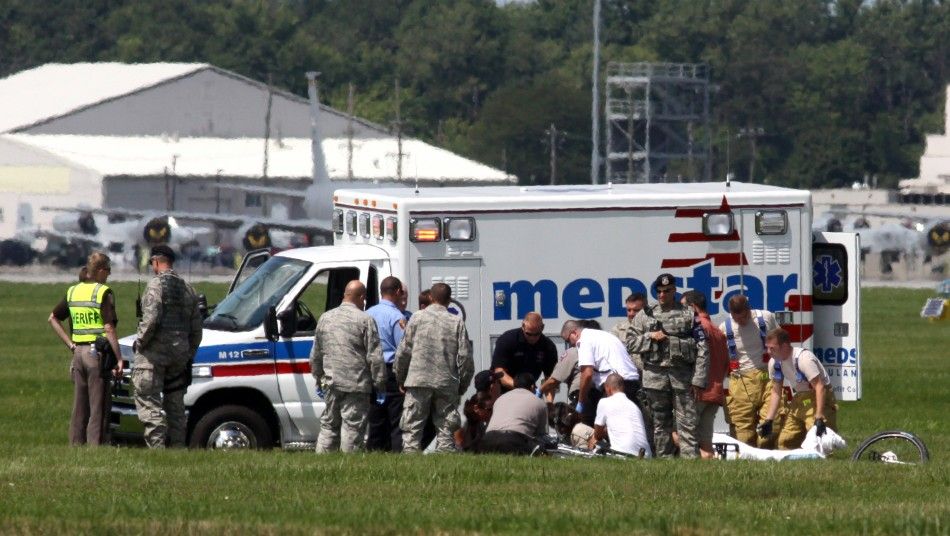
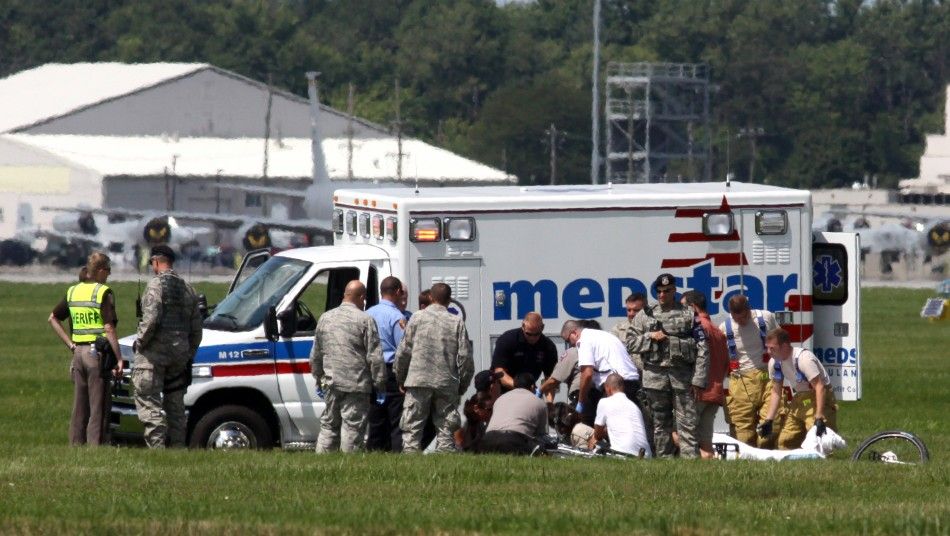
Emergency personnel rushed to Green’s aid. He was transported by ambulance to Mount Clemens Regional Medical Center. Despite the emergency response, his injuries were fatal, and he was pronounced dead at the hospital. (Reuters)
A Tragedy Witnessed by Thousands
Air shows create a unique environment. Spectators come expecting noise, speed, excitement, and danger—but they expect the danger to remain controlled.
Performers train extensively to make extraordinary maneuvers appear safe and precise. When something goes wrong, however, the audience can suddenly become a witness to a real aviation emergency.
That contrast made Green’s death particularly disturbing. People had gathered to watch an entertaining aviation demonstration. Instead, they watched a professional performer fall from an aircraft.
Video footage from the event circulated online after the accident. Reuters reported that footage apparently recorded by a witness showed the biplane and helicopter in the air before the fall. (Reuters)
For people watching from the ground, the sequence happened extremely quickly. The aircraft were already moving, and once Green lost contact with the airplane, there was very little that could be done.
The Human Side of the Story
Behind every air-show performer is a person with family, friends, colleagues, and a lifetime of experiences.
Todd Green’s connection to aviation was deeply personal. His father, Eddie “The Grip” Green, was also an aerial stunt performer. Todd followed that tradition and became an accomplished wingwalker himself. (Reuters)
For Green, aviation performance was more than simply an attempt to attract attention. It was a profession and a highly specialized craft.
Wingwalkers must develop an unusual combination of physical strength, balance, concentration, courage, and trust in their pilots and equipment. They operate in an environment where the margin for error is extremely small.
The danger is obvious, but the skill required is often underestimated by people watching from the ground.
Air Shows and the Risks of Spectacle
The Selfridge tragedy occurred during a particularly difficult weekend for the international air-show community. Reuters reported that Green’s death came one day after an aerobatic pilot died at an air show in Kansas City and a British Royal Air Force Red Arrows pilot died after a crash at an air festival in England. (Reuters)
Three fatal air-performance accidents occurring within the same weekend brought renewed attention to the dangers faced by professional air-show performers.
Air shows depend on carefully controlled environments. Flight paths are planned, aircraft are inspected, pilots are trained, and emergency crews are positioned nearby. But aviation remains unforgiving.
At high speed and low altitude, even a small mechanical problem, unexpected movement, misjudgment, or loss of position can develop into a fatal accident in seconds.
Wingwalking adds another layer of danger because the performer is outside the aircraft. Unlike a pilot sitting inside a cockpit, a wingwalker cannot simply close a canopy or strap into a seat if conditions suddenly change.
Why Wingwalking Is So Difficult
One of the greatest challenges is airflow.
An aircraft moving through the air creates powerful aerodynamic forces. A performer standing on a wing experiences wind that can push against the body with considerable force. The performer must maintain a stable position while also moving around the aircraft.
Aircraft transfers are even more difficult.
The two aircraft must maintain a very precise relationship. If the helicopter moves too far away, the performer may not be able to reach it. If it moves too close or changes position unexpectedly, the transfer can become dangerous.
The performer must also account for turbulence and changes in relative motion.
This explains why professional wingwalking acts involve extensive rehearsal. Every movement has to be planned. The pilot and performer must essentially operate as one team.
Yet no amount of preparation can completely remove risk.
The Importance of Experience
Green’s experience makes the accident particularly significant.
He had performed aerial transfers before, meaning that the basic maneuver was familiar to him. Reports also identified him as the son of a famous aerial stuntman and noted his involvement in professional wingwalking. (Reuters)
Experience reduces risk because professionals learn how to recognize dangerous situations, understand aircraft behavior, and coordinate with pilots.
But experience cannot change the physical laws governing flight.
Gravity remains constant. Airflow can change. Aircraft can move unexpectedly. A person standing on an aircraft has limited protection.
The accident serves as a reminder that experience should never be confused with invulnerability.
The Aftermath
Following Green’s fall, the air-show community was left mourning a performer who had spent much of his life around aviation.
The Selfridge Air Show itself had been organized as a major public aviation event at Selfridge Air National Guard Base. The base, located in Harrison Township, Michigan, has a long association with military aviation and public air events.
For attendees, however, the memory of the 2011 show would forever be connected with the accident.
Instead of remembering only the aircraft, formations, and performances, many spectators remembered the sudden silence and shock that followed Green’s fall.
Air shows are often family events. Children watch aircraft streak across the sky while parents take photographs and aviation enthusiasts study historic machines. A fatal accident can transform that atmosphere instantly.
A Legacy in Aviation
Todd Green’s death did not erase the history of wingwalking, nor did it eliminate the fascination people have with aerial performances.
Wingwalking remains one of the most visually striking forms of aviation entertainment. The sight of a performer standing on an aircraft thousands of feet above the ground represents an extraordinary combination of courage and technical skill.
But tragedies such as Green’s also remind audiences that these performances are not ordinary entertainment.
Every stunt has real physical consequences.
Every aircraft maneuver involves risk.
Every performer understands that the apparent simplicity of a stunt often hides years of training and preparation.
Remembering Todd Green
The story of Todd Green is ultimately more than a headline about a man falling 200 feet at an air show.
It is the story of an aviation professional who grew up around aerial performance, developed his own career, and participated in a form of flying that has fascinated audiences for generations.
On that August afternoon in Michigan, Green attempted a difficult transfer between a biplane and helicopter. Something went wrong, and he fell approximately 200 feet. He was transported to a nearby hospital but died from his injuries. (Reuters)
His death remains a sobering example of the risks associated with air-show performance.
For spectators, the lesson is perhaps the most important one: when an aerial stunt looks effortless, it is often because highly trained professionals have spent years mastering it.
But even the most experienced performers cannot eliminate every danger.
Todd Green’s final performance became one of the tragic moments remembered from the history of American air shows. His story continues to illustrate both the extraordinary skill of wingwalkers and the unforgiving nature of aviation.
The roar of an aircraft engine can inspire excitement, wonder, and admiration. But behind every spectacular maneuver is a professional accepting enormous responsibility—and, sometimes, extraordinary risk.
Green’s death is remembered not simply because of the dramatic circumstances, but because it reminds us that the people who make aviation look almost magical are human beings operating in an environment where there is little room for error.