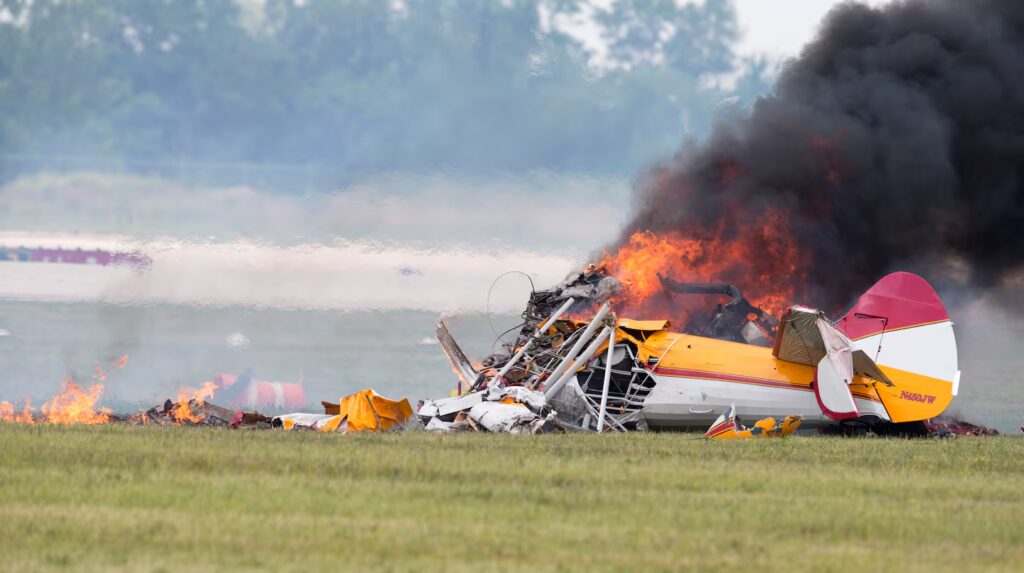
The excitement of an air show can change in a matter of seconds. On June 22, 2013, thousands of spectators gathered at the Vectren Dayton Air Show in Dayton, Ohio, expecting to watch daring aerial performances, vintage aircraft, military demonstrations, and skilled pilots challenge the limits of aviation. Instead, the crowd witnessed a devastating accident when a Boeing Stearman biplane carrying professional wing walker Jane Wicker crashed during a performance, killing both Wicker and her pilot, Charlie Schwenker. (ABC News)
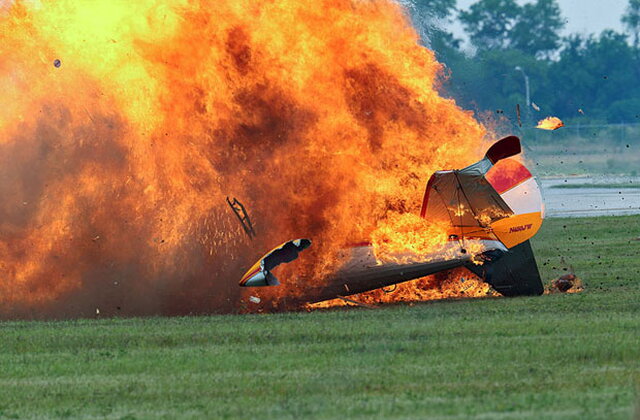
The accident occurred at Dayton International Airport during the afternoon performance. Wicker was positioned on the aircraft’s wing as part of a highly specialized wing-walking routine. The airplane was performing an inverted maneuver when it suddenly lost altitude and struck the ground. The aircraft erupted into flames almost immediately.
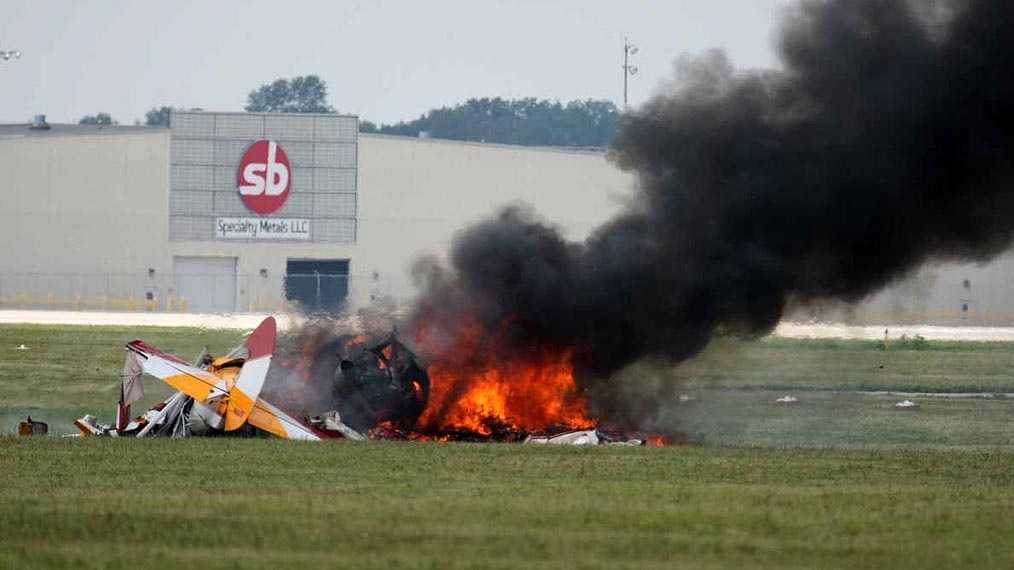
Although the crash was horrifying for the spectators who witnessed it, one important fact stood out: no people on the ground were reported injured. The aircraft came down in a grassy area away from the main spectator crowd, preventing what could have been an even larger tragedy. (Los Angeles Times)
A Performer Who Dedicated Her Life to Aviation
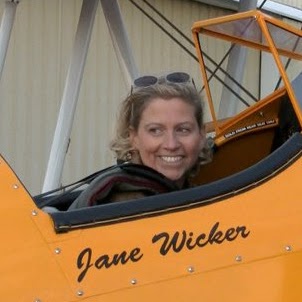
Jane Wicker was not an inexperienced performer. She had been involved in wing walking for more than two decades and had developed a reputation within the air-show community for her courage, professionalism, and distinctive performances.
According to biographies published about her career, Wicker began wing walking in 1990 after responding to an advertisement for a position with the Flying Circus Airshow. What initially attracted her as an exciting opportunity eventually became a major part of her life. She trained extensively and became one of the relatively small number of professional wing walkers performing in the United States. (ABC News)
Wicker was also a licensed pilot and worked as a budget analyst for the Federal Aviation Administration. Her professional connection to aviation extended far beyond her performances. She understood aircraft operations and the risks associated with flying, yet she was drawn to the freedom and excitement of performing on the outside of an aircraft in flight.
Wing walking is an unusual and demanding aviation discipline. Unlike a conventional passenger, the performer is exposed directly to the airflow and must move around the aircraft while it is flying. Every movement must be carefully coordinated with the pilot and the aircraft’s performance.
Wicker’s performances included dramatic positions underneath the wing and routines in which she remained on the aircraft while the airplane rolled inverted. Such maneuvers required extensive preparation, communication, and trust between the wing walker and pilot. (ABC News)
Charlie Schwenker: The Pilot Behind the Performance
Flying the aircraft was Charlie Schwenker, a veteran air-show pilot who had developed a professional relationship with Wicker. Schwenker was 64 years old at the time of the accident, while Wicker was reported as being 44 or 45 in contemporary reports. (ABC News)
The partnership between pilot and wing walker is fundamental to this type of performance. The pilot must control the aircraft while considering not only altitude, airspeed, wind, and maneuvering limitations but also the position and movement of the performer outside the cockpit.
Friends and colleagues described Wicker and Schwenker as highly professional performers who trusted one another. That relationship was particularly important because wing walking leaves very little room for mistakes. A seemingly small change in airspeed, altitude, or aircraft attitude can have serious consequences.
The pair had performed together before the Dayton show, and their routine was intended to entertain the large audience gathered at the airport.
The Final Performance
The accident happened during a stunt in which Wicker was positioned on the aircraft’s wing. Video recorded at the event showed the biplane flying over the air-show grounds with Wicker visible on the wing.
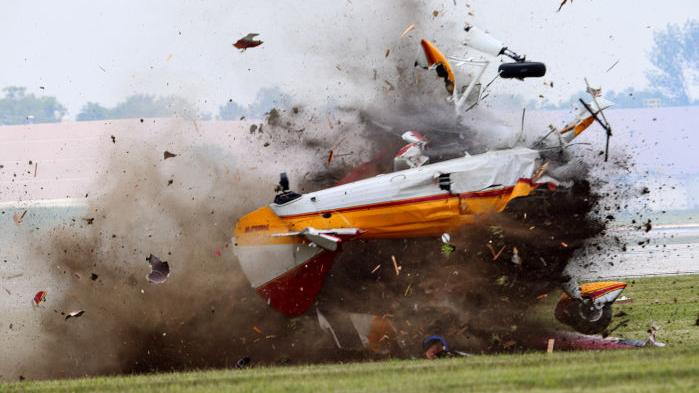
The aircraft then entered an inverted maneuver. Wicker remained with the airplane as it rolled upside down. The routine was designed to produce a dramatic visual effect for the audience, but the airplane suddenly descended toward the ground.
Witnesses described the aircraft as appearing too low and too slow before the crash. Aviation photographer and licensed pilot Ian Hoyt later said he had been taking photographs when he realized the airplane appeared to be dangerously low and slow. Moments later, it struck the ground. (Los Angeles Times)
The impact was devastating. The aircraft crashed into the grassy area and burst into flames. Spectators immediately understood that something had gone terribly wrong.
The air-show announcer had been describing the performance moments before the crash. The sudden transition from an exciting demonstration to a deadly accident shocked the crowd.
Emergency personnel responded rapidly, but neither Wicker nor Schwenker survived.
A Crowd Left in Shock
For spectators, the accident was extremely difficult to comprehend. People had arrived expecting entertainment and aviation excitement. Many had cameras pointed toward the sky when the aircraft went down.
Witness accounts described a moment of confusion followed by horror as the aircraft struck the ground and flames appeared. Some spectators initially struggled to understand what they had seen.
One witness, Ian Hoyt, said he had been preparing to take another photograph when he realized the aircraft was too low and slow. His account reflected the sudden nature of the accident: there was almost no time between recognizing that something was wrong and seeing the aircraft hit the ground. (Los Angeles Times)

Another witness described seeing concern on Wicker’s face shortly before the crash. Such observations illustrated how quickly the situation may have deteriorated.
The incident also placed an emotional burden on people close to the performers. Wicker’s fiancé was reportedly among those watching the performance when the crash occurred. (ABC News)
The Air Show Was Stopped
Following the crash, the remaining performances for the day were canceled. Officials needed to secure the accident scene, assist emergency responders, preserve evidence, and begin the investigation.
The cancellation was also a necessary response to the emotional impact of the accident. Thousands of people had witnessed the crash, and continuing the program immediately would have been difficult.
The following day, organizers resumed the air show with a moment of silence honoring Wicker and Schwenker. The decision reflected a long-standing tradition within the air-show community of continuing performances while remembering performers who lost their lives doing what they loved. (ABC News)
Investigators Search for the Cause
Immediately after the crash, the Federal Aviation Administration and National Transportation Safety Board began investigating.

At first, investigators could not determine whether the accident was caused by a mechanical failure, a problem associated with the stunt, pilot performance, or another factor. Investigators emphasized that a formal determination would require examination of the aircraft, witness accounts, video evidence, and other available information. (ABC News)
The investigation eventually provided a clearer explanation.
The NTSB determined that the probable cause was controlled flight into terrain. Investigators identified low airspeed and low altitude as contributing factors, along with a modification to the planned maneuver. (AOPA)
The finding was significant because the aircraft apparently remained under control rather than suffering a sudden catastrophic mechanical breakup. Instead, the airplane did not have sufficient altitude and airspeed to safely complete the maneuver before reaching the ground.
This distinction is important in aviation investigations. A crash does not always result from a single mechanical failure. Sometimes a combination of decisions, environmental conditions, aircraft performance, and maneuvering can create a situation from which recovery becomes impossible.

Why Airspeed and Altitude Matter
Airspeed is one of the most important factors in aircraft control. Every airplane has performance limitations, and an aircraft flying too slowly can approach a stall.
A stall occurs when the wing exceeds its critical angle of attack and can no longer produce enough lift to maintain normal flight. It does not necessarily mean the engine has stopped. Instead, the aircraft’s wings are no longer generating the required lift.
At low altitude, a stall can be especially dangerous because there may not be enough height available for the pilot to recover.
Air-show pilots therefore operate within carefully established performance parameters. Maneuvers are planned with specific airspeeds, altitudes, entry points, and recovery areas. Changing a maneuver can alter those calculations.
The NTSB’s findings concerning the Dayton accident emphasized how important those margins were during the fatal performance. (AOPA)

The Unique Risks of Wing Walking
Wing walking has a long history in American aviation. The practice became popular during the barnstorming era after World War I, when pilots and performers traveled from town to town demonstrating daring aerial stunts.
In the early days of aviation, wing walkers performed spectacular routines to attract crowds. Over time, the practice became much more organized and professional, but its fundamental danger remained.
A wing walker is exposed to powerful airflow, vibration, acceleration, and changes in aircraft attitude. Unlike a pilot sitting inside a cockpit, the performer is physically outside the aircraft.
Even with extensive training and safety procedures, the activity carries substantial risk.
Wicker understood those risks. She had spent years practicing and performing, and colleagues described her as an experienced professional. Her confidence came from preparation and familiarity with the aircraft and routine.
But aviation always contains uncertainty. A carefully practiced maneuver can still become dangerous if an aircraft’s energy state changes unexpectedly.
Trust Between Pilot and Wing Walker
One of the most remarkable aspects of wing walking is the level of trust required between the performer and pilot.
The wing walker cannot control the aircraft. The pilot cannot directly observe every movement of the performer. Both must rely on previously established procedures, communication, and timing.
A pilot must know exactly when the performer will move, where the performer will be positioned, and how the aircraft will respond during the routine.
The wing walker, meanwhile, must trust that the pilot will maintain the expected flight path and aircraft attitude.
People who knew Wicker and Schwenker described their professional relationship in positive terms. Kris Nuss, who had worked with them, expressed admiration for the trust between the two performers. (ABC News)
That trust makes a fatal accident especially tragic. Two people who had trained and performed together lost their lives during a routine intended to entertain an audience.
The Importance of Air-Show Safety
Air shows are carefully regulated because aircraft perform much closer to the ground and often at unusual attitudes compared with ordinary flight.
Pilots must follow established demonstration rules and maintain separation from spectators. Performance areas are designed to reduce risks to people on the ground.
The Dayton crash demonstrated why those safety measures matter.
Although the aircraft crashed in front of thousands of people, it did not strike the spectator area. The location of the crash prevented additional fatalities and injuries.
The incident also reminded the aviation community that safety margins are especially important when performing at low altitude. A maneuver that might be recoverable at several thousand feet can become unrecoverable when performed only a few hundred feet above the ground.

Remembering Jane Wicker and Charlie Schwenker
For the air-show community, Jane Wicker and Charlie Schwenker were remembered not simply as victims of a crash but as people who dedicated much of their lives to aviation.
Wicker’s career demonstrated a deep passion for flying and performance. She became known for a specialty that very few people were willing or able to pursue.
Schwenker shared that passion as an experienced pilot.
Their deaths were a painful reminder that the spectacular performances audiences see at air shows are the result of intense preparation and involve genuine danger.
The Vectren Dayton Air Show’s decision to hold a moment of silence the next day reflected the respect many in the aviation community had for the two performers. (ABC News)
A Lasting Lesson
The 2013 Dayton air-show crash remains a sobering example of the risks involved in aerobatic and stunt aviation.
The tragedy was not caused simply by the fact that a wing walker was standing on an airplane. Wing walking itself is a disciplined aviation activity requiring specialized training. Instead, investigators identified a combination involving low airspeed, low altitude, and a modified maneuver. (AOPA)
The accident also illustrates why aviation investigations are so important. By determining what went wrong, investigators can help pilots, performers, organizers, and regulators learn from the event.
Every air-show accident has the potential to influence future safety practices.
For spectators, an air show may look like pure entertainment. For the performers, however, every maneuver represents a carefully calculated sequence of decisions. The margin between a successful performance and disaster can be extremely small.
Jane Wicker and Charlie Schwenker died doing something that had become a central part of their lives. Their final performance ended in tragedy, but their careers also demonstrated the skill, dedication, courage, and passion required in the world of aviation.
The Dayton crash remains a powerful reminder that behind every spectacular aircraft performance are real people taking real risks. It is also a reminder that aviation safety depends on respecting limitations, maintaining adequate airspeed and altitude, carefully evaluating maneuvers, and never allowing entertainment objectives to override safety.
For the thousands who witnessed the accident, June 22, 2013, was a day that began with excitement and ended with grief. For the families, friends, and aviation colleagues of Jane Wicker and Charlie Schwenker, the memory of that day would last far beyond the air show itself.
Their story continues to be remembered as part of the history of American air shows—and as a solemn lesson about the unforgiving nature of aviation when altitude and airspeed margins disappear.