On June 24, 1994, a United States Air Force B-52H Stratofortress crashed at Fairchild Air Force Base near Spokane, Washington, during a practice flight for an upcoming air show. The accident killed all four men aboard the aircraft and became one of the most widely studied military aviation accidents in modern history. The bomber, carrying the call sign “Czar 52,” was destroyed after entering an aerodynamic stall during a steep, low-altitude turn. The accident was not simply the result of a mechanical failure or an unavoidable technical problem. Investigators concluded that pilot behavior, repeated violations of established safety limits, inadequate supervision, and failures within the chain of command all played important roles. (Fairchild Air Force Base)
The accident remains significant because it demonstrates how aviation disasters can develop from a chain of decisions rather than from a single mistake. It also became an important case study in crew resource management, leadership, professional discipline, and the responsibility of commanders to intervene when unsafe behavior becomes apparent.
The B-52 and Its Mission
The aircraft involved was a Boeing B-52H Stratofortress, a large, eight-engine strategic bomber that had become one of the most recognizable aircraft in the U.S. military. The aircraft involved carried serial number 61-0026 and was assigned to the 92nd Bomb Wing at Fairchild Air Force Base.
The mission on June 24 was not a combat operation. The crew was preparing for a demonstration at the upcoming Fairchild air show. The flight was intended to demonstrate the capabilities of the enormous bomber to spectators and military personnel.
Four senior officers were aboard the aircraft. Lieutenant Colonel Arthur “Bud” Holland was the aircraft commander and pilot. Lieutenant Colonel Mark McGeehan was serving as copilot. Colonel Robert Wolff, the vice commander of the 92nd Bomb Wing, was aboard as a safety observer, while Lieutenant Colonel Kenneth Huston served as the radar navigator. All four men were experienced Air Force officers. (Fairchild Air Force Base)
The presence of senior officers made the tragedy especially significant. These were not inexperienced airmen attempting a dangerous maneuver without understanding its consequences. They were highly trained professionals operating a sophisticated military aircraft. The accident therefore raised difficult questions about how an unsafe flight profile had been permitted to develop.
A Pilot With a History of Risk-Taking
One of the most important findings of the subsequent investigation concerned Holland’s previous flying behavior.
Holland had developed a reputation for aggressive flying. According to accounts surrounding the investigation, he had previously performed maneuvers that exceeded established limits and had generated concern among other aircrew members. Some of these incidents involved excessive bank angles, steep climbs, low-altitude maneuvering, and other forms of unsafe flying. (UPI)

The critical issue was not merely that Holland had made mistakes in the past. It was that his behavior had reportedly become known to other personnel, including members of the chain of command. The Air Force investigation later criticized leadership for failing to take adequate corrective action.
This created an important safety lesson: an organization can become vulnerable when repeated violations are treated as individual incidents instead of evidence of a larger problem.
A pilot who violates a safety limit once may make an isolated error. A pilot who repeatedly violates safety limits, however, presents a different risk. If commanders know about the behavior but continue allowing the pilot to operate without meaningful intervention, the organization itself becomes part of the risk-management failure.
The Final Flight
On June 24, Czar 52 departed Fairchild Air Force Base for the practice session. During the flight, Holland performed a series of maneuvers associated with the planned air-show demonstration.
The flight proceeded for approximately 18 minutes. According to historical accounts, several of the maneuvers performed during the sortie exceeded established operating limitations. (This Day in Aviation)
Eventually, the B-52 approached the runway to prepare for landing. Another aircraft was occupying the runway, so Czar 52 was instructed to go around rather than land. At that point, the bomber began positioning for another maneuver.
Holland requested a 360-degree turn around the control tower. The maneuver placed the aircraft at extremely low altitude while requiring a very steep bank. The B-52 was flying at roughly 250 feet above the ground. The Air Force Safety Center describes the aircraft as attempting a tight left turn around the tower before passing beyond 90 degrees of bank. (U.S. Air Force Safety Center)
For a large aircraft such as the B-52, such a maneuver at such a low altitude left virtually no margin for recovery.
The Aerodynamic Problem
Aircraft must maintain sufficient airspeed and lift to remain airborne. When an airplane banks steeply, the amount of lift required to maintain altitude increases. If the pilot does not compensate appropriately, the aircraft can lose the ability to maintain controlled flight.
During the final turn, Czar 52 became increasingly steeply banked. The aircraft passed through approximately 90 degrees of bank while remaining at very low altitude. At that point, the bomber entered an accelerated stall and lost controlled flight. (U.S. Air Force Safety Center)
The B-52 did not have enough altitude to recover.
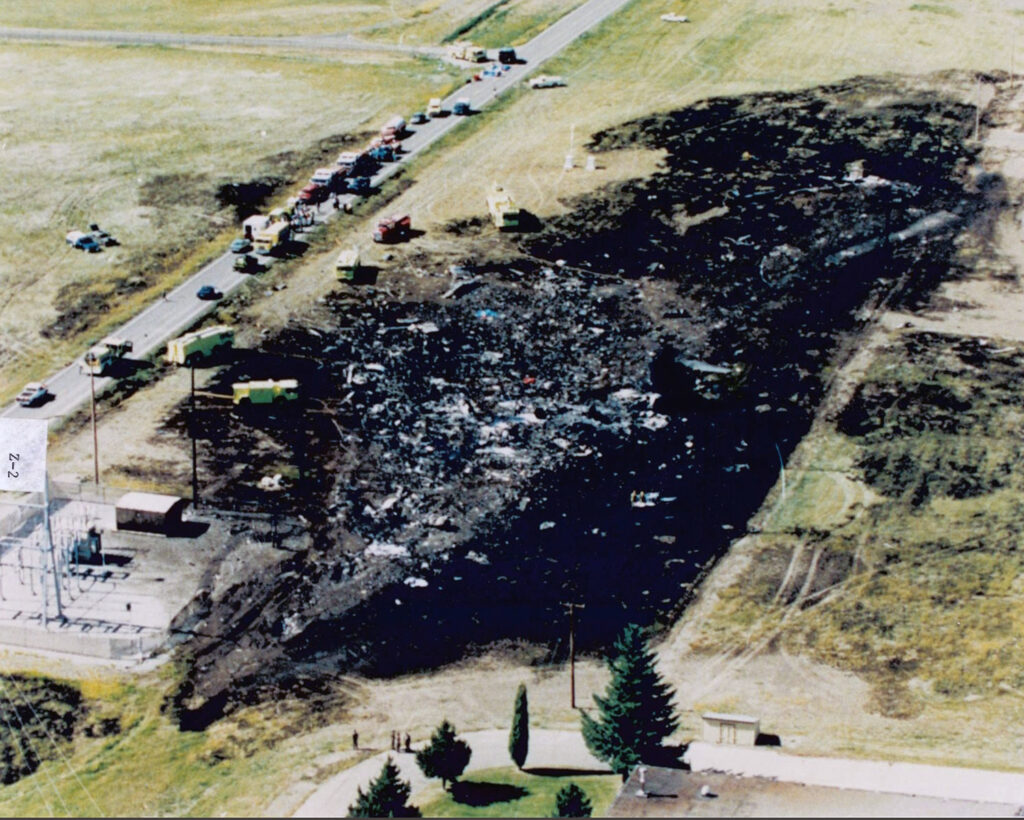
The bomber descended rapidly toward the ground. The enormous aircraft struck the ground and erupted into flames. The entire event unfolded in seconds.
There was no meaningful opportunity for the crew to escape.
All four crew members were killed.
The Crew
The loss of the four officers affected the Fairchild community deeply.
Arthur “Bud” Holland had spent many years in the Air Force and had extensive B-52 experience. Mark McGeehan was an experienced pilot and commander. Robert Wolff was a senior wing officer, while Kenneth Huston was an experienced radar navigator.
The tragedy was especially painful because the flight had been intended to support an air-show event rather than a combat mission.
The Fairchild Air Force Base later remembered the four officers as dedicated members of the service who lost their lives while preparing for the demonstration. (Fairchild Air Force Base)
The accident also had a profound effect on their families, colleagues, and friends. A memorial service was held at Fairchild Air Force Base several days after the crash, with hundreds of people attending. (HistoryLink)
The Crash Was Captured on Film
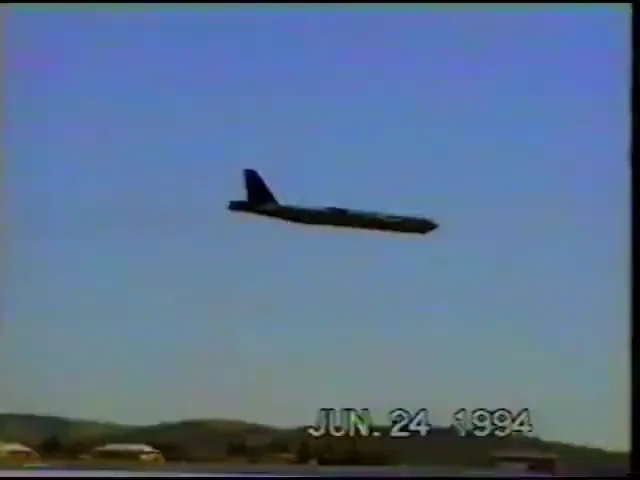
One of the unusual aspects of the Fairchild accident was that the crash was recorded on video.
Because the flight was an air-show practice session, photographers and spectators were positioned around the base. A recording captured the final moments of the B-52 as it entered the steep turn, lost control, and crashed.
The footage later became widely known because it provided investigators and aviation professionals with an unusually clear visual record of the accident sequence. The crash was also broadcast repeatedly by news organizations.
Unlike many accidents in which investigators must reconstruct the final moments from fragments of evidence, the Fairchild investigators had visual material showing the aircraft’s final maneuver. Historical accounts also note that the B-52 did not have a conventional commercial-style flight data recorder, meaning investigators relied heavily on other evidence, including radio communications, maintenance information, personnel records, flight planning documents, and video. (HistoryLink)
The video was disturbing, but it also became an important training resource because it demonstrated how quickly an aircraft can transition from apparently controlled flight to an unrecoverable situation.
The Investigation
Following the accident, the U.S. Air Force immediately began investigating what had happened.
Investigators examined the aircraft wreckage, communications, flight plans, maintenance records, witness statements, and the history of the crew. They also examined Holland’s previous flying record and the decisions made by commanders who had responsibility for supervising him.
The investigation ultimately went beyond the question of whether Holland had made an error. It examined why the circumstances that allowed the accident to happen had developed in the first place.
The findings identified several contributing factors. These included the sequence of events during the final flight, Holland’s personality and previous behavior, failures in supervision, mission planning and execution, and other human and organizational factors. (Jacaranda FM)
The investigation therefore presented the accident as a chain of failures rather than a single isolated act.

Leadership Failure
Perhaps the most important lesson from Fairchild was the role of leadership.
Investigators concluded that Holland’s previous behavior had been known to people within the organization. There had been earlier incidents involving unsafe flying. However, corrective measures were inadequate.
Some officers had reportedly expressed concerns about flying with Holland. The Air Force’s later safety literature specifically cited the accident as an example of what can happen when a pilot knowingly breaks rules and leadership fails to intervene effectively. (Torch)
This is one of the reasons the Fairchild accident became an important leadership case study.
A safety regulation is only effective if people are willing and able to enforce it. A rule that is repeatedly violated without consequence can gradually lose its authority. Other personnel may begin to believe that the rule is flexible or that experienced individuals are permitted to ignore it.
That kind of organizational culture can be extremely dangerous in aviation.
The Role of the Copilot
Another important issue was crew resource management.
McGeehan was not simply a passive passenger. He was an experienced officer who had previously expressed concerns about Holland’s flying behavior. Historical accounts indicate that McGeehan had attempted to take action concerning Holland’s flying, but those efforts did not prevent Holland from continuing to operate as an aircraft commander. (This Day in Aviation)
During the final maneuver, there was extremely little time available for intervention.
The B-52 was already at low altitude and in an increasingly steep turn. Once the aircraft entered an unrecoverable attitude, the crew had only seconds to respond.
The accident therefore became an example of why crew members must be empowered to challenge unsafe decisions before a situation becomes an emergency.

Why the B-52 Could Not Recover
The B-52 was a very large aircraft. Although it was capable of impressive performance, it was not designed to perform fighter-like aerobatic maneuvers at extremely low altitude.
Once the aircraft entered the steep turn, the combination of bank angle, altitude, airspeed, and increasing load factor created a situation from which recovery was essentially impossible.
The critical factor was altitude.
Even if the crew recognized the stall immediately, an aircraft requires sufficient height to lower the nose, regain airspeed, and restore controlled flight. At approximately 250 feet above the ground, the B-52 had virtually no recovery room.
The aircraft descended into the ground before the crew could regain control.
The Broader Context at Fairchild
The crash occurred during an extraordinarily difficult period for Fairchild Air Force Base.
Only four days earlier, on June 20, 1994, a mass shooting had occurred at the base, killing four people and injuring more than 20 others. The B-52 accident therefore came at a time when the Fairchild community was already experiencing profound grief and shock. (Wikipedia)
The two tragedies so close together made June 1994 an especially painful period in the base’s history.
The loss of the B-52 also had institutional significance because Fairchild’s B-52 era was nearing its end. The annual air show was subsequently canceled following the accident. (HistoryLink)
Changes in Safety Thinking
The Fairchild crash became much more than a historical accident.
It became a lesson used in aviation safety training to illustrate several important principles.
First, pilots must respect aircraft limitations. Experience does not make an aircraft immune to physics.
Second, commanders must act when they observe dangerous behavior. A talented or experienced pilot cannot be allowed to operate outside safety rules simply because of reputation, rank, or confidence.
Third, crew members must feel empowered to speak up.
Fourth, organizations must examine patterns rather than isolated incidents. If a pilot repeatedly violates safety rules, each violation should not be treated as an independent event. The pattern itself is a warning.

Finally, leadership must recognize that preventing accidents is not merely the responsibility of the person physically controlling the aircraft. Supervisors, commanders, instructors, planners, and other personnel all influence the safety environment.
A Lasting Aviation Case Study
The Fairchild B-52 crash has remained one of the classic examples of organizational and human factors in aviation.
The accident is often discussed alongside the concept of the “Swiss cheese” model of accident causation, in which multiple layers of defense contain weaknesses. In the Fairchild case, there were multiple opportunities to prevent the final accident: recognizing previous unsafe behavior, enforcing restrictions, controlling the air-show profile, questioning an unsafe maneuver, and intervening before the aircraft entered an unrecoverable attitude.
None of those safeguards proved sufficient.
The result was catastrophic.
The accident demonstrates that aviation safety depends not only on aircraft design and pilot skill but also on organizational culture.
Remembering the Four Airmen
Behind the technical investigation were four human lives.
Arthur Holland, Mark McGeehan, Robert Wolff, and Kenneth Huston were husbands, fathers, friends, colleagues, and members of the Air Force community. Their deaths affected families that had expected them to return from a routine training flight.
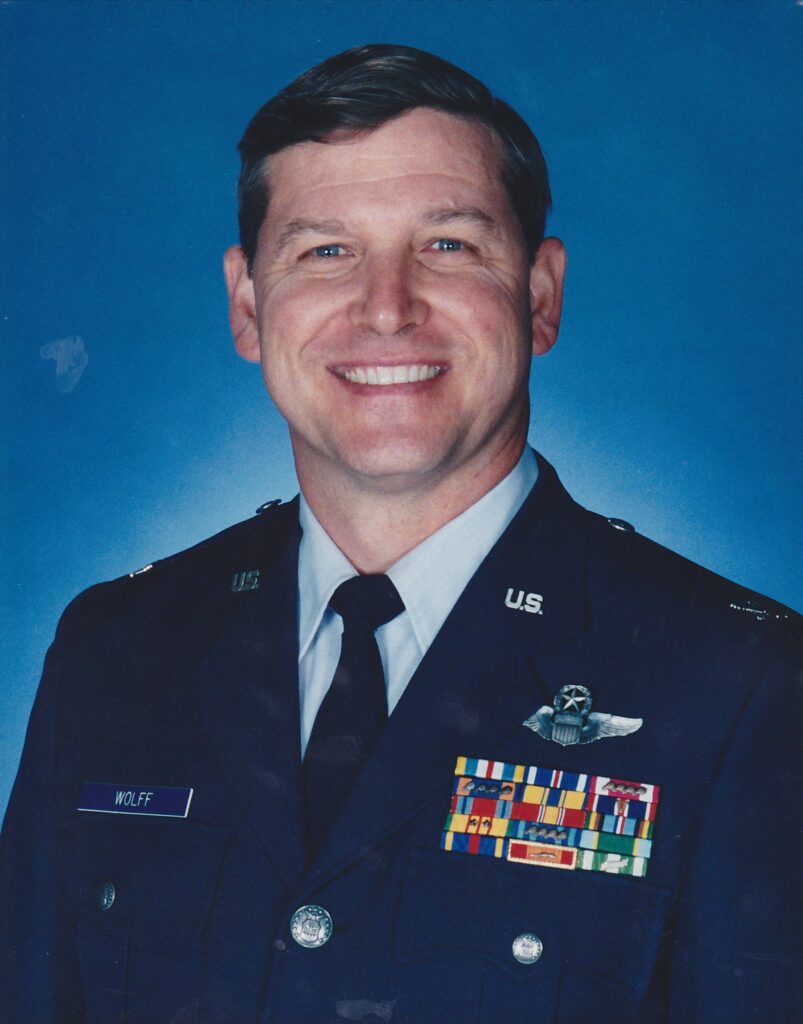
The official investigation was necessary to understand the accident, but the people involved should not be reduced merely to names in an accident report.
Their deaths also created a lasting responsibility for the military aviation community: to learn from what happened.
Conclusion
The June 24, 1994, Fairchild Air Force Base B-52 crash was one of the most consequential military aviation accidents of its era.
The Boeing B-52H Stratofortress known as Czar 52 crashed while practicing for an air show after entering a steep, low-altitude turn and losing controlled flight. All four crew members died. Investigators concluded that the immediate crash involved an aerodynamic stall, but the deeper causes extended beyond the final maneuver. Holland’s history of unsafe flying, inadequate corrective action, leadership failures, and weaknesses in organizational safety culture all contributed to the tragedy. (U.S. Air Force Safety Center)
The most enduring lesson is that aviation accidents rarely begin at the moment an aircraft strikes the ground. They often begin much earlier—with decisions, habits, warnings that are ignored, rules that are not enforced, and organizational cultures that gradually accept unacceptable risk.
Fairchild remains a powerful reminder that experience must never become an excuse for recklessness, and authority must never replace accountability.
For military aviation, the tragedy of Czar 52 continues to serve as a warning: when safety boundaries are repeatedly crossed, the responsibility to intervene belongs to everyone in the chain of command.
The four airmen who died that day cannot be brought back. But the lessons learned from their final flight can continue to protect other crews, provided those lessons are remembered and applied.