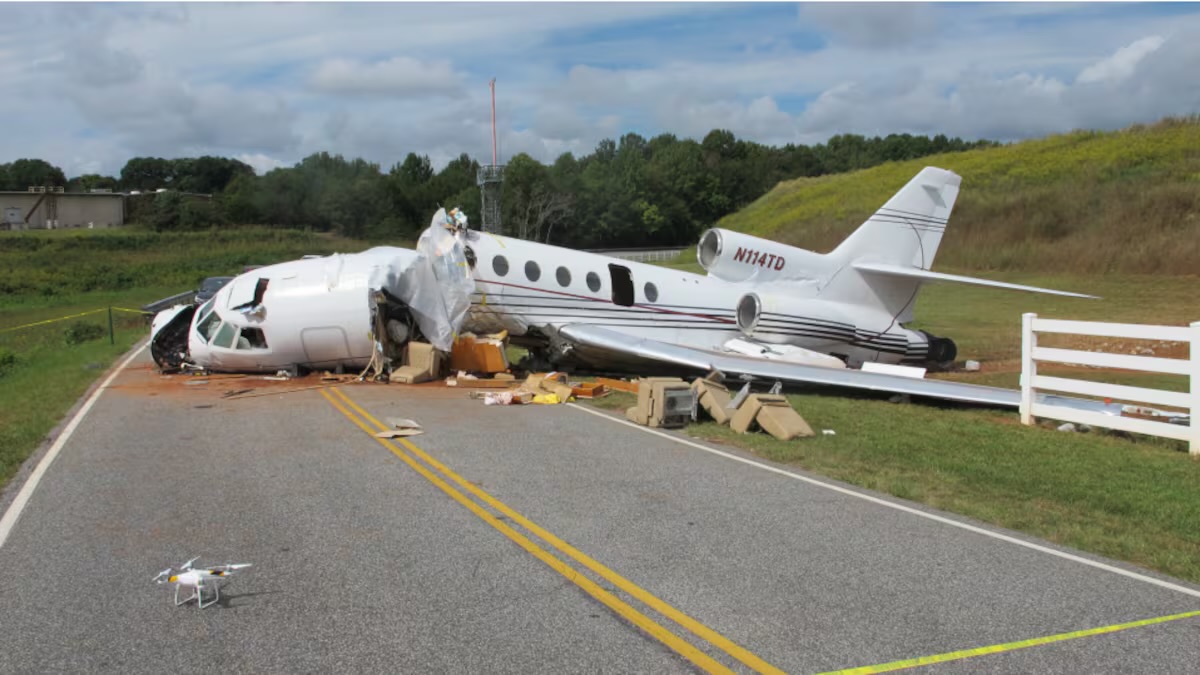
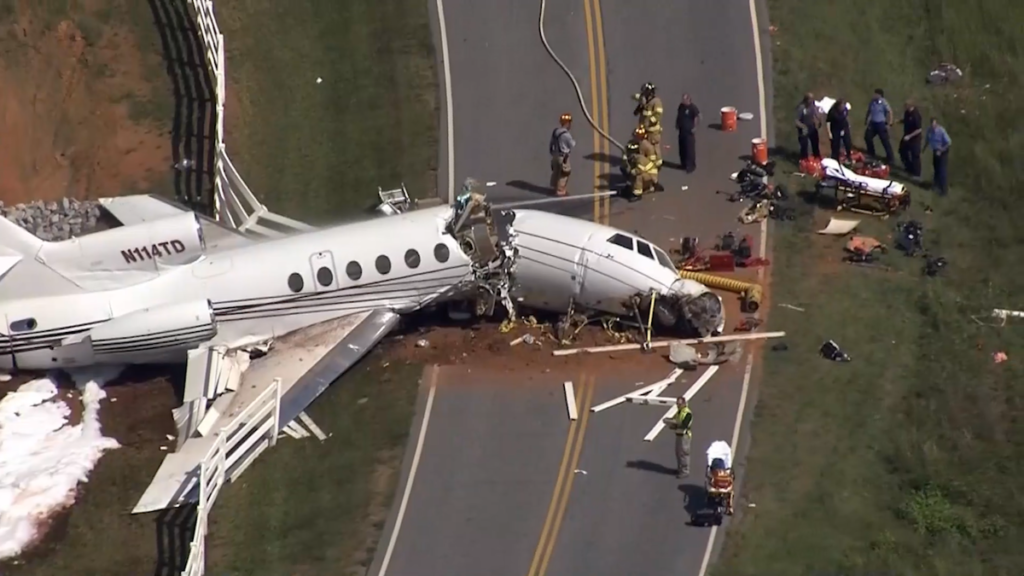
A tragic aviation accident in South Carolina claimed the lives of two pilots from Florida, leaving families, friends, and members of the aviation community mourning the sudden loss of two experienced professionals. The jet crash has drawn attention to the risks faced by pilots every time they take to the skies and has prompted investigators to examine every detail surrounding the flight.
According to reports, the aircraft was involved in a serious accident in South Carolina, and both pilots aboard were killed. Authorities and aviation investigators began working to establish what happened during the final moments of the flight. As with most major aviation accidents, determining the cause can take time because investigators must carefully reconstruct the aircraft’s movements, examine wreckage, review weather conditions, and analyze communications and maintenance records.
The loss of two pilots is particularly difficult for the aviation community because pilots spend years developing the skills and judgment required to operate aircraft safely. Flying a jet involves constant decision-making, from monitoring engine performance and weather conditions to managing fuel, navigation, communications, and aircraft systems. Even when everything appears normal, a rapidly developing emergency can leave a crew with only seconds or minutes to respond.
The Crash
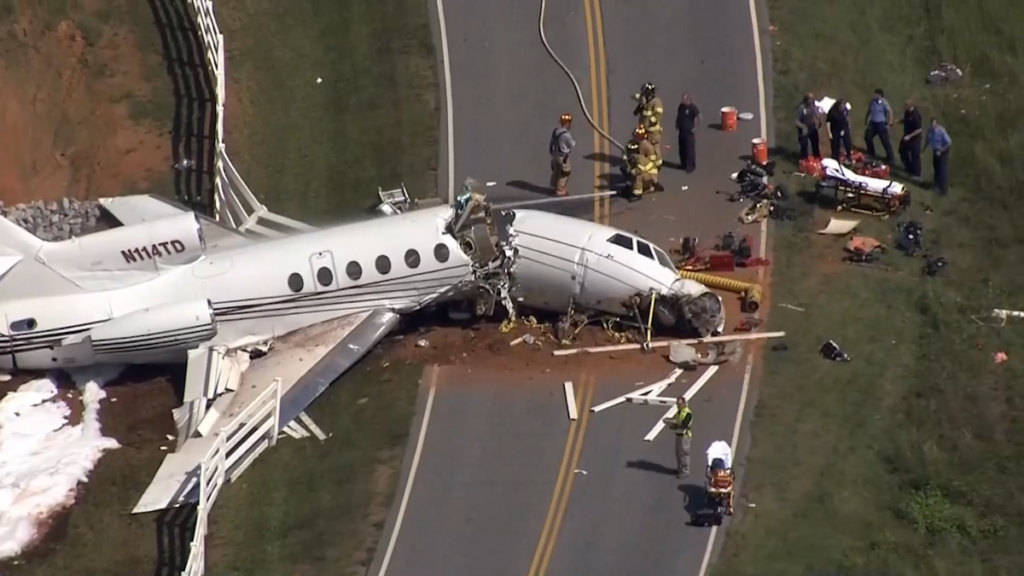
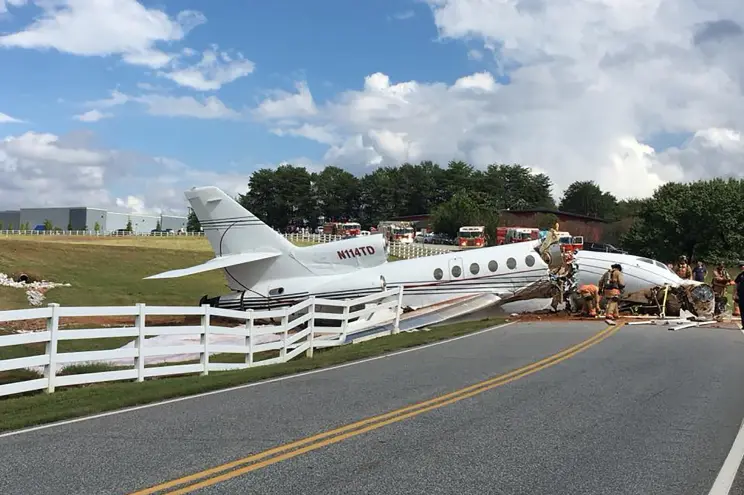
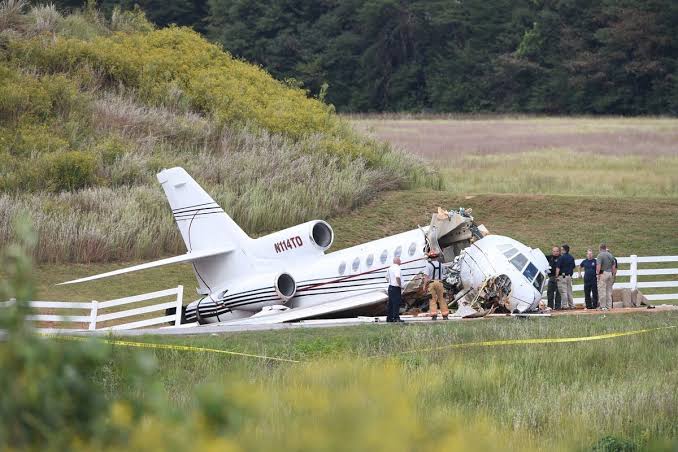
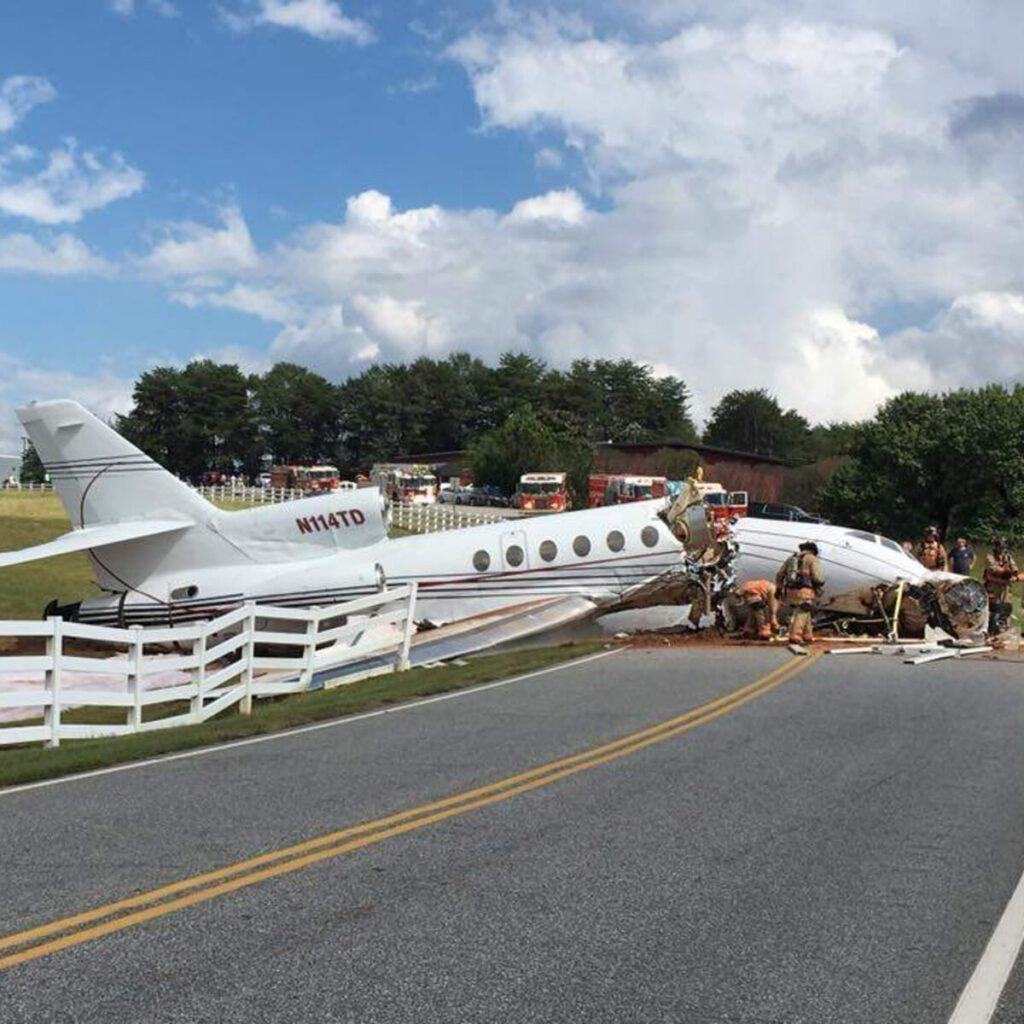
The South Carolina crash immediately triggered an emergency response. First responders, law-enforcement officers, firefighters, and other emergency personnel worked at the crash site while authorities established a secure perimeter.
Aircraft crashes can create difficult and dangerous environments for emergency crews. Jet fuel, damaged aircraft components, hot engines, electrical systems, and unstable wreckage can all present hazards. Investigators therefore generally allow trained recovery teams to document the scene before significant debris is moved.
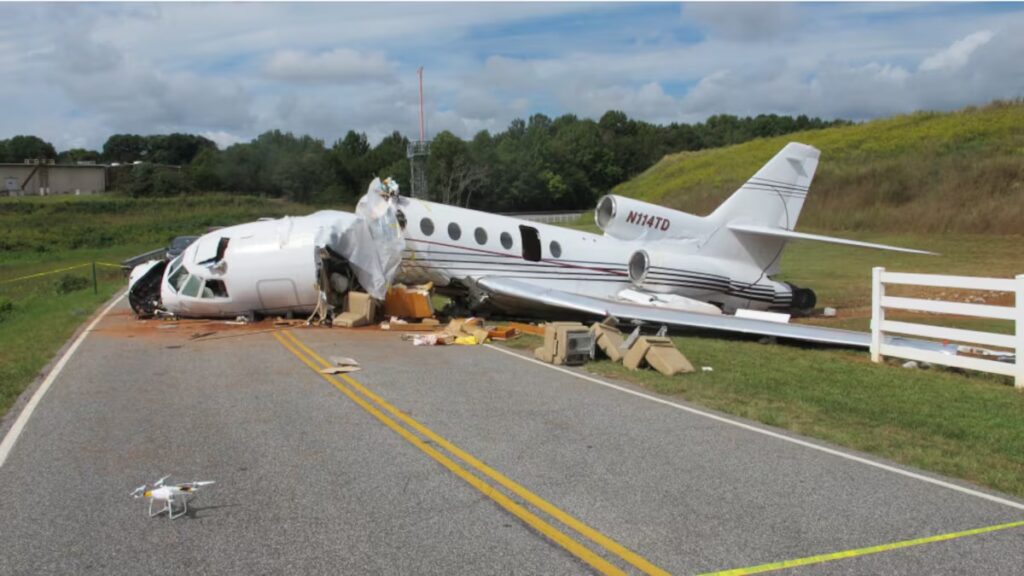
The location of the wreckage can provide important clues. Investigators examine the distribution of debris, the condition of the engines, flight-control components, cockpit instruments, and structural sections of the aircraft. They also look for evidence of fire, mechanical failure, impact damage, or other abnormalities.
One of the most important questions investigators must answer is what happened during the final portion of the flight. Did the pilots experience a mechanical problem? Was there an unexpected change in weather? Did the aircraft lose control? Was there an issue during takeoff, approach, or another phase of the flight?
At the beginning of an investigation, it is important not to assume a cause before the evidence has been analyzed.
The Pilots
The two pilots came from Florida, but their deaths were felt far beyond their home state. Aviation communities are often closely connected, and pilots, instructors, mechanics, flight schools, charter operators, and aircraft enthusiasts frequently know one another or share professional connections.
Pilots dedicate substantial portions of their lives to aviation. Before operating sophisticated aircraft, they must complete extensive training and demonstrate their ability to handle normal and abnormal situations. Depending on the aircraft and operation, pilots may also undergo recurrent training and proficiency checks.
Behind the professional qualifications, however, are individuals with families, friends, colleagues, and communities. A pilot who leaves home for a flight is not simply a name on a flight plan. They are someone expected home at the end of the journey.
That makes aviation accidents especially painful for those who knew the victims personally.
Investigators Begin Searching for Answers
After a fatal aircraft accident, investigators typically begin by collecting as much evidence as possible. The process can involve multiple agencies and specialists.
Investigators may examine:
- The aircraft’s maintenance history
- Pilot qualifications and training records
- Weather information
- Air traffic control communications
- Radar and tracking data
- Flight-plan information
- Engine and component condition
- Aircraft loading and fuel status
- Witness statements
- Cockpit or flight-data recordings, if available
- Evidence recovered from the crash site
Each piece of information can help reconstruct the flight.
Modern aircraft investigations often benefit from digital data. Tracking systems, radar records, onboard avionics, GPS information, and other electronic equipment may provide investigators with a timeline of the aircraft’s final minutes.
However, technology is only one part of an investigation. Physical evidence remains extremely important. Components that appear damaged after a crash may have failed before impact, or they may have been destroyed by the impact itself. Investigators must distinguish between those possibilities.
Why Determining the Cause Takes Time
People who hear about a plane crash often want to know immediately what caused it. Investigators, however, must resist the temptation to reach conclusions before the evidence is complete.
A crash can result from a chain of events rather than a single failure.
For example, a mechanical problem might occur at the same time as difficult weather conditions. A crew may then respond to the problem, creating additional workload. A navigation or communication issue could complicate the situation further.
Investigators therefore examine not only the final event but also what happened in the minutes and hours leading up to it.
They may reconstruct the aircraft’s flight path and determine its altitude, speed, direction, and rate of descent. They may also examine whether the aircraft was operating within expected parameters.
The Human Element
While technical details are essential, fatal aviation accidents also have a deeply human dimension.
Families may suddenly find themselves receiving devastating news that they never expected. Friends and colleagues may struggle to understand how experienced pilots could be lost during what may have appeared to be an ordinary flight.
For the aviation community, these tragedies can lead to reflection about safety.
Pilots routinely train for emergencies that may never happen during their careers. They practice engine failures, instrument problems, loss of communications, abnormal approaches, emergency landings, and other scenarios. The purpose of such training is to make the correct response more instinctive when a real emergency occurs.
Yet aviation remains a complex environment, and not every emergency is survivable.
The Importance of Aviation Safety
Every major crash can provide lessons that potentially prevent future accidents. That is one of the most important purposes of aviation accident investigations.
Investigators do not simply seek to determine who was responsible. Their broader objective is to understand what happened and identify safety improvements.
If investigators discover a mechanical problem, manufacturers may examine whether similar aircraft could be affected. If maintenance procedures played a role, operators may review their inspection programs. If weather contributed, pilots and operators may reconsider operational practices.
If human factors contributed to an accident, the aviation industry can use the findings to improve training, cockpit procedures, communication, or workload management.
The ultimate goal is prevention.
The Challenge of Flying Jets
Jets are remarkable machines capable of traveling at high speeds and operating across long distances. However, their performance also means that situations can develop quickly.
Pilots must continuously monitor numerous systems while maintaining awareness of their surroundings. They may need to communicate with air traffic controllers, navigate according to instruments, monitor weather, manage aircraft configuration, and make decisions about altitude and speed.
During an emergency, the workload can increase dramatically.
This is why professional pilots train repeatedly. Procedures must become familiar enough that pilots can perform them under pressure. Crews also use checklists to reduce the possibility of forgetting critical steps.
Even with training and technology, aviation accidents can occur.
Remembering the Victims
The most important part of the story is not simply the aircraft or the investigation. It is the two people who lost their lives.
The pilots had careers, relationships, memories, and plans for the future. Their deaths leave an absence that cannot be measured by statistics.
For families, the investigation may provide important answers, but it cannot undo the loss. The process of mourning can take years, and anniversaries of the accident may bring back painful memories.
Friends and colleagues may remember the pilots through stories about their personalities, professionalism, humor, dedication, and love of aviation.
In this way, aviation communities often honor fallen pilots not only by remembering how they died, but by remembering how they lived.
The Investigation Continues
As authorities continue examining the South Carolina jet crash, investigators are expected to focus on the evidence rather than speculation. The final explanation may depend on information that is not immediately available to the public.
Crash investigations can take months or longer, particularly when investigators must reconstruct an aircraft from heavily damaged wreckage or analyze complex mechanical and electronic evidence.
The public may hear preliminary information during the investigation, but preliminary findings should not necessarily be interpreted as the final conclusion.
Aviation safety depends on careful investigation, accurate evidence, and lessons that can be applied to future flights.
A Tragic Reminder
The deaths of the two Florida pilots are a painful reminder that aviation, despite its extraordinary safety record and technological advances, still carries inherent risks.
Thousands of pilots safely operate aircraft every day, and commercial and general aviation systems rely on layers of training, maintenance, procedures, technology, and oversight. When a fatal accident occurs, investigators work to understand which layers failed and why.
The tragedy in South Carolina will therefore be examined not only as an individual accident but also as an opportunity to learn.
Every detail matters: the aircraft’s condition, the pilots’ decisions, the weather, the flight path, communications, maintenance, and the sequence of events leading to the crash.
For the families and friends of the two pilots, however, the investigation is only one part of what follows. Their lives have changed permanently.
The aviation community will remember the two Florida pilots as members of a profession that demands skill, discipline, courage, and dedication. Their deaths are a profound loss to everyone who knew them.
As investigators continue their work, the hope is that the facts will eventually provide a clear understanding of what happened and, most importantly, that any lessons learned can help make future flights safer.
Aviation history has repeatedly shown that tragedy can lead to meaningful improvements. Investigations into past accidents have resulted in changes to aircraft design, pilot training, maintenance procedures, air traffic control, emergency response, and operational standards.
That process is one of the ways the aviation community honors those who are lost.
The two pilots who died in the South Carolina jet crash will not be forgotten. Their families and friends will carry their memories forward, while investigators and aviation professionals continue the difficult work of understanding the accident and learning from it.
In the end, the story is about more than a crashed aircraft. It is about two lives lost, families forever changed, and a community left asking difficult questions. Until investigators complete their examination, the exact circumstances behind the crash should be treated carefully and responsibly.
What can be said with certainty is that two Florida pilots lost their lives in a devastating aviation accident in South Carolina. Their deaths represent a profound personal tragedy and another reminder of the responsibility carried by everyone involved in aviation.
The investigation will continue, and its findings may eventually provide answers. Until then, the focus remains on remembering the pilots, supporting their families, and ensuring that every possible lesson from the accident contributes to safer skies in the future.