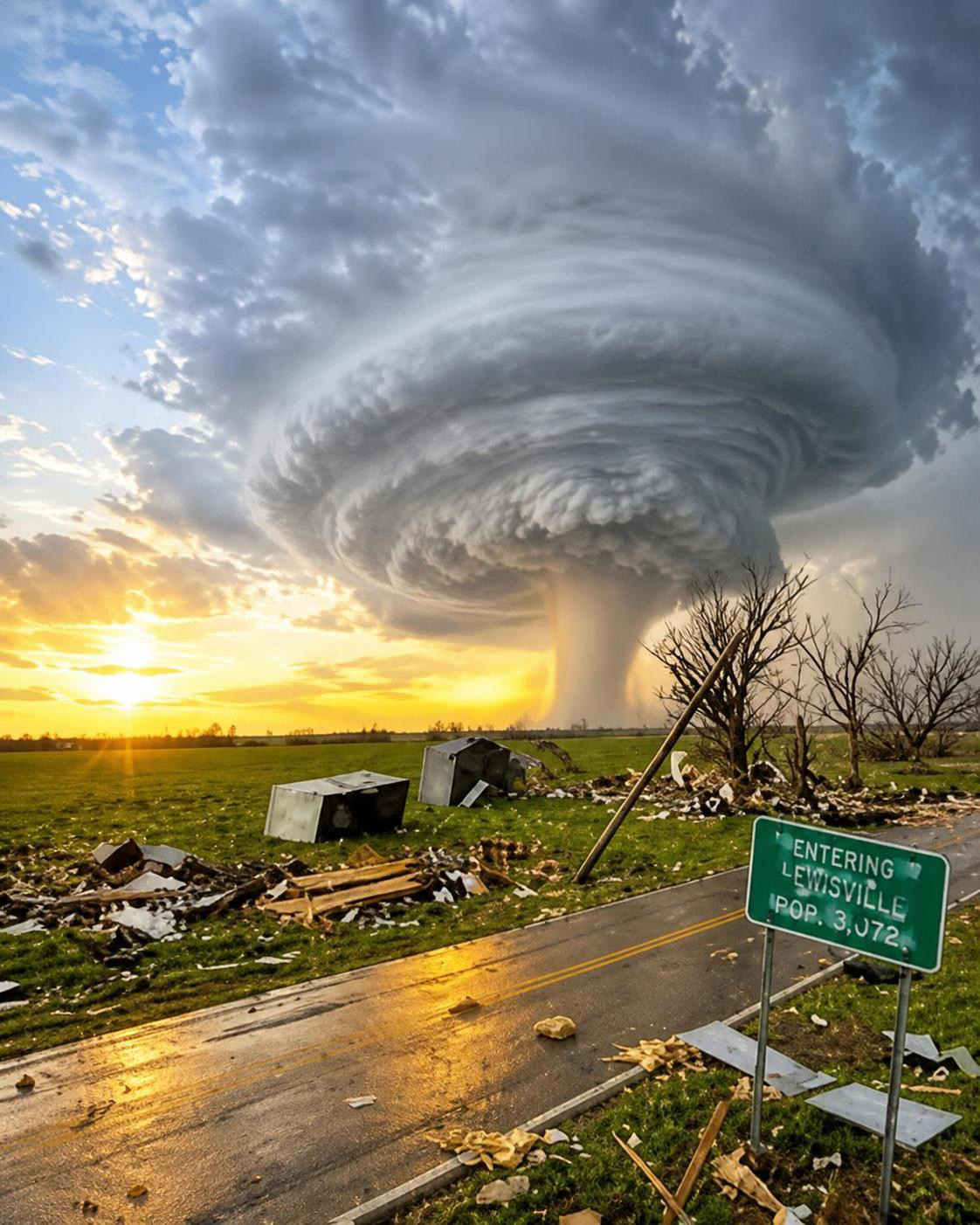
The World May Face the Unthinkable: Why a New Era of Global Uncertainty Is Taking Shape
The world is entering a period of profound uncertainty.
Across continents, governments are confronting geopolitical tensions, technological disruption, economic pressure, climate-related challenges, and rapidly changing security conditions. While no single event can predict the future, the combination of these forces is creating a global environment in which unexpected developments could have consequences far beyond their original location.
For millions of people, the biggest question is simple: What happens next?
The answer is impossible to know with certainty. History has repeatedly demonstrated that major turning points are often difficult to recognize before they happen. Events that initially appear limited can sometimes trigger consequences that spread across borders, financial markets, military alliances, and international institutions.
That does not mean the world is inevitably heading toward disaster. Instead, it means that governments, businesses, and ordinary people are operating in an era where preparation and reliable information have become increasingly important.
A World Under Increasing Pressure
One of the most important factors shaping the global outlook is the changing balance of power.
Major countries are competing for influence in areas ranging from military capabilities and advanced technology to trade, energy, and access to strategic resources. Alliances are evolving, defense spending is receiving renewed attention, and governments are increasingly concerned about protecting critical infrastructure.
At the same time, regional conflicts continue to demonstrate how quickly local crises can attract international attention.
A conflict that begins in one region can affect energy prices, shipping routes, food supplies, financial markets, and diplomatic relationships elsewhere. This interconnectedness means that geopolitical developments are no longer isolated events.
A major development in one part of the world can become a global story within minutes.
The Risk of Miscalculation
Perhaps one of the greatest concerns facing the international community is not necessarily a deliberate decision to start a major conflict, but the possibility of miscalculation.
When countries operate under intense pressure, military movements, political statements, cyber incidents, or unexpected accidents can be interpreted differently by opposing governments.
Modern communication makes the situation even more complicated.
A statement made by a political leader can reach millions of people almost instantly. A video posted online can spread around the world before authorities have time to verify its authenticity. A false report can create confusion and potentially influence public opinion.
For this reason, communication between governments remains extremely important.
Diplomatic channels, military hotlines, international organizations, and negotiations can help prevent misunderstandings from escalating into larger crises.
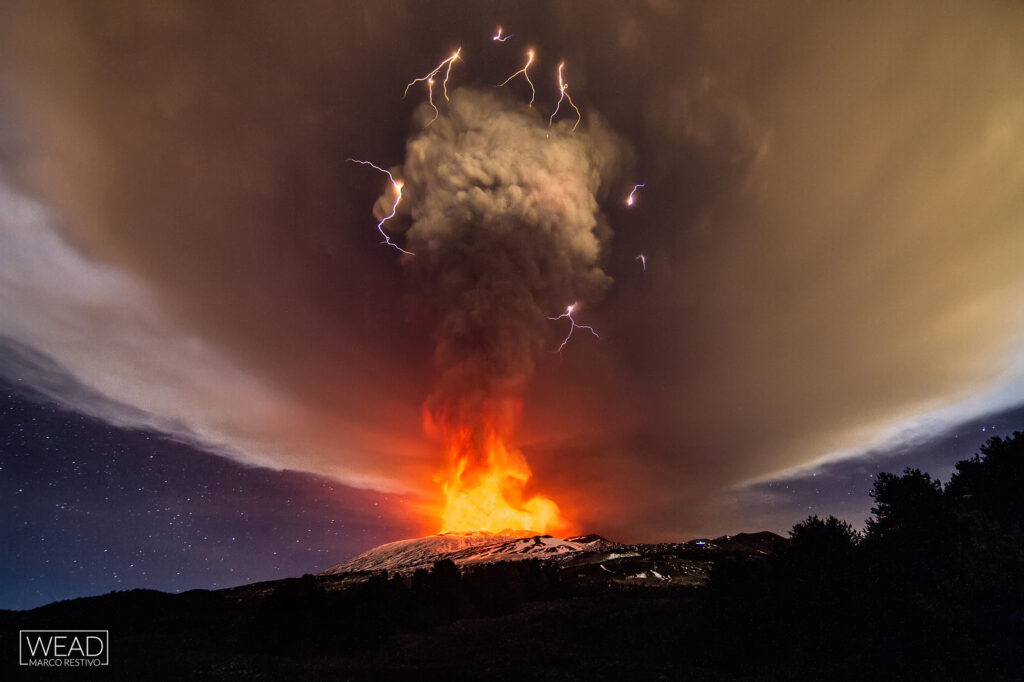
Technology Is Changing the Rules
Another major source of uncertainty is technology.
Artificial intelligence is developing rapidly and is already changing industries, workplaces, education, communications, and national security.
AI systems can analyze enormous amounts of information, generate content, assist with scientific research, and automate tasks that previously required human labor.
But technological progress also creates new risks.
Governments and technology companies are increasingly concerned about misinformation, cyberattacks, privacy, digital manipulation, and the potential misuse of advanced systems.
The challenge is finding a balance between innovation and responsible control.
The technology of the future could provide enormous benefits to humanity, but its impact will depend heavily on how governments, businesses, and individuals choose to use it.
Cybersecurity Could Become More Important
The global economy now depends heavily on digital infrastructure.
Banks, hospitals, transportation systems, communications networks, government agencies, energy facilities, and businesses all rely on computer systems.
This creates a new category of vulnerability.
A major cyber incident could potentially disrupt services without a traditional military attack. Even when physical damage does not occur, a serious digital disruption could create economic losses and public confusion.
For governments, cybersecurity is therefore becoming an important part of national security.
Countries are investing in stronger networks, digital defenses, intelligence capabilities, and emergency-response systems.
The future of international security may increasingly involve both physical and digital battlefields.
Economic Uncertainty
The global economy is another area that could produce unexpected developments.
Modern economies are deeply interconnected. A disruption in energy supplies can influence transportation costs. Higher transportation costs can affect consumer prices. Changes in interest rates can influence investment, housing, and business activity.
Global trade also depends on complicated supply chains.
Manufacturing companies may rely on raw materials from one country, components from another, and customers located thousands of miles away.
When a major disruption occurs, the effects can spread rapidly.
This is why governments and companies are increasingly discussing supply-chain resilience and economic diversification.
The goal is not necessarily to eliminate global trade, but to reduce dependence on a single source for critical goods and resources.
Energy Remains a Strategic Issue
Energy continues to play a central role in global affairs.
Oil and natural gas remain important to the world economy, while renewable energy, batteries, nuclear power, and other technologies are becoming increasingly significant.
Energy security can influence diplomatic relationships and national strategies.
A major change in energy production or transportation can affect countries far beyond the region where it occurs.
This is one reason why energy infrastructure is considered strategically important.
As nations transition toward cleaner energy sources, the global energy landscape could change significantly over the coming decades.
That transition could create new opportunities, but it could also produce new competition for minerals, technologies, and industrial capacity.
Climate and Natural Disasters
Another factor that cannot be ignored is the changing environmental environment.
Extreme weather events, droughts, floods, wildfires, and other natural disasters can cause significant economic and humanitarian consequences.
Even when a disaster remains geographically limited, it can affect food production, insurance markets, transportation networks, and migration patterns.
Governments are therefore investing in emergency preparedness, infrastructure resilience, early-warning systems, and disaster-response capabilities.
The challenge is that natural disasters are inherently difficult to predict with absolute certainty.
Preparation can reduce the consequences, but it cannot eliminate risk entirely.
The Possibility of a Major Scientific Breakthrough
Not every unexpected development would necessarily be negative.
The world could also experience breakthroughs that dramatically improve human life.
Advances in medicine, artificial intelligence, robotics, space technology, energy storage, biotechnology, and materials science could transform society.
A scientific discovery that appears small at first could eventually become extremely important.
History is full of examples where new technologies changed everyday life in ways that earlier generations could barely imagine.
The next major breakthrough may already be under development in a laboratory somewhere in the world.
The difficulty is that nobody can know exactly when it will arrive or what form it will take.
Space Is Becoming More Important
Space exploration is also entering a new era.
Governments and private companies are developing new launch systems, satellites, lunar missions, and technologies designed to support future exploration.
Satellites already play an essential role in communications, navigation, weather forecasting, agriculture, scientific research, and national security.
As humanity becomes increasingly dependent on space-based infrastructure, protecting those systems will become more important.
At the same time, new space capabilities could create opportunities for scientific discovery and economic growth.
The coming decades may therefore see space become a much more important part of international competition and cooperation.
Information Could Become the Most Valuable Resource
In the modern world, information moves faster than ever.
Social media platforms can turn an unknown event into an international headline within minutes.
This creates enormous opportunities for communication, but it also creates challenges.
False information, manipulated images, misleading headlines, and AI-generated content can make it difficult for people to distinguish between genuine events and fabricated stories.
As technology improves, the ability to verify information will become increasingly important.
Readers should consider the source of a claim, look for independent confirmation, and avoid sharing dramatic information simply because it appears shocking.
A headline that says “the world will never be the same” may attract attention, but the real story is often more complicated.
What Could Happen Next?
Nobody can accurately predict every major event that will occur in the coming months or years.
There may be diplomatic breakthroughs.
There may be new conflicts.
There may be economic shocks.
There may be technological breakthroughs that change entire industries.
There may also be developments that nobody is currently discussing because they have not yet occurred.
This uncertainty is precisely why responsible analysis is important.
The future should not be presented as predetermined.
Instead, people should understand the major forces shaping the world and recognize that several different outcomes remain possible.
Preparation Is More Important Than Prediction
The most useful response to uncertainty is not panic.
It is preparation.
Governments can strengthen emergency systems and diplomatic communication.
Businesses can diversify supply chains and improve cybersecurity.
Communities can develop disaster-response plans.
Individuals can improve their ability to identify reliable information and avoid misinformation.
The goal is not to predict every possible crisis.
It is to become more resilient when unexpected events occur.
A Turning Point or Simply Another Chapter?
The world has experienced periods of uncertainty many times throughout history.
Wars, financial crises, pandemics, technological revolutions, political transformations, and natural disasters have all changed the direction of societies.
Looking back, many of these events appear obvious.
But while they were happening, the future was far less certain.
Today may eventually be remembered as another major transition period.
The combination of geopolitical competition, artificial intelligence, economic transformation, environmental pressures, and technological innovation is creating conditions that could shape the next generation.
Whether those changes produce greater cooperation or greater instability will depend on decisions made by governments, institutions, companies, and individuals.
Final Thoughts
The phrase “the world may face the unthinkable” sounds dramatic, but uncertainty itself is not proof that a catastrophe is coming.
What is clear is that the international system is changing.
New technologies are emerging. Old alliances are evolving. Economic relationships are shifting. Security challenges are becoming increasingly complex.
The next major global development could come from politics, technology, economics, science, or an event that is currently impossible to predict.
That is why the most important lesson is not to live in fear of the unknown.
It is to remain informed, question unverified claims, prepare for reasonable risks, and recognize that the future is shaped by human decisions.
The world may indeed experience something unexpected.
But whether that unexpected development becomes a crisis, a breakthrough, or a turning point toward greater cooperation remains one of the biggest questions of the years ahead.