The release of police body camera and dashcam footage has once again drawn public attention to the dangers officers face during encounters with armed suspects. In a dramatic incident in Chicago, video recordings captured a tense confrontation between police officers and a suspected carjacker that quickly escalated into an exchange of gunfire. The footage provides a rare and sobering look at how rapidly a routine law enforcement response can transform into a life-threatening situation.
While every officer hopes to resolve dangerous incidents peacefully, encounters involving armed suspects often leave little time for negotiation. The Chicago incident has sparked discussions about police tactics, public safety, violent crime, and the challenges of responding to carjackings in large metropolitan areas.
A Dangerous Crime With Serious Consequences
Carjacking remains one of the most dangerous forms of vehicle theft because it involves direct confrontation with victims. Unlike traditional auto theft, carjackings often occur while the owner is inside or near the vehicle. Suspects may threaten victims with firearms or other weapons, creating situations that can escalate within seconds.
In recent years, many major cities across the United States have invested additional resources into preventing violent vehicle thefts through specialized investigative units, surveillance technology, and community partnerships. Police departments continue encouraging citizens to remain aware of their surroundings and immediately report suspicious activity.
The Initial Police Response
According to authorities, officers responded after receiving information regarding a suspected carjacking involving a stolen vehicle. Law enforcement personnel quickly began searching the area in an effort to locate the suspect before additional crimes could occur.
Modern police patrol vehicles are equipped with advanced communication systems, allowing officers to receive real-time updates from dispatchers while coordinating with nearby units. These technologies can significantly improve response times during rapidly developing incidents.
As officers identified a vehicle believed to be connected to the investigation, they attempted to stop the driver. What followed became the focus of the bodycam and dashcam footage later released to the public.
The Situation Escalates
Video recordings show officers attempting to approach the suspect while issuing clear verbal commands. Rather than peacefully surrendering, the suspect allegedly refused to comply.
Within moments, the encounter escalated dramatically.
Gunfire erupted during the confrontation, forcing officers to react instantly to protect themselves and nearby members of the public. The exchange lasted only a short period, but every second carried significant risk for everyone involved.
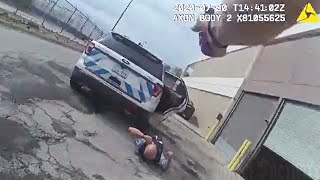
Such incidents demonstrate why law enforcement officers undergo extensive firearms and scenario-based training throughout their careers. Officers are trained to rapidly evaluate threats while attempting to minimize danger to innocent bystanders.
What the Cameras Captured
Police body cameras have become an important tool for documenting officer interactions with the public. Unlike eyewitness testimony alone, body-worn cameras provide visual and audio records that investigators can later review frame by frame.
The released footage captured several critical moments, including:
- Officers locating the suspect.
- Commands given by responding officers.
- The rapid escalation of the confrontation.
- The exchange of gunfire.
- Officers moving to secure the scene.
- Immediate requests for medical assistance.
Dashcam footage from patrol vehicles also provided additional viewing angles, helping investigators reconstruct the sequence of events more accurately.
Although video evidence can answer many questions, investigators typically combine camera footage with witness interviews, forensic evidence, ballistic examinations, and radio communications before reaching official conclusions.
Split-Second Decision Making
One of the most challenging aspects of policing is making life-or-death decisions within fractions of a second.
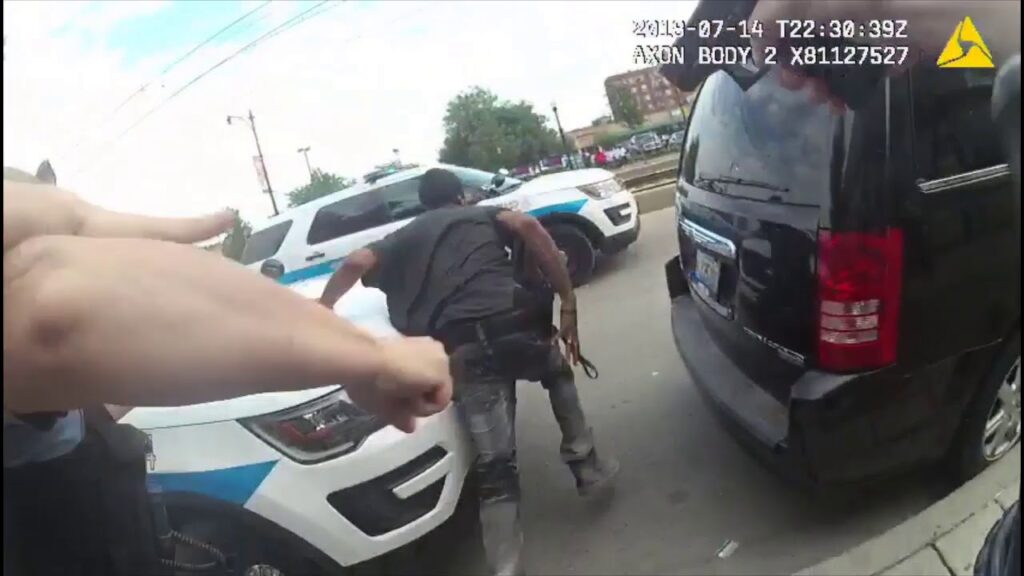
Unlike carefully planned operations, street encounters often unfold unpredictably. Officers may have only moments to determine whether a suspect presents an immediate deadly threat.
Training emphasizes several priorities:
- Protecting innocent civilians.
- Communicating clearly with fellow officers.
- Seeking cover whenever possible.
- Assessing threats continuously.
- Rendering medical aid once the scene is secure.
Even with extensive preparation, every critical incident presents unique circumstances that cannot be perfectly predicted.
Medical Response
After the shooting ended, officers immediately secured the area and requested emergency medical personnel.
Standard law enforcement procedures require officers to provide or facilitate emergency medical care as soon as it is safe to do so. Firefighters and paramedics typically enter only after police determine the immediate threat has ended.
The suspect received medical attention at the scene before being transported for further treatment. Authorities also evaluated officers and others involved for injuries.
Medical response has become an increasingly important component of police training, with many departments providing officers with trauma kits capable of treating severe bleeding before paramedics arrive.
Investigating the Shooting
Officer-involved shootings receive extensive review to ensure transparency and accountability.
Investigations commonly include:
- Collection of all physical evidence.
- Firearms examinations.
- Ballistics analysis.
- Review of body camera recordings.
- Review of dashcam recordings.
- Radio communication analysis.
- Witness interviews.
- Officer interviews.
- Crime scene reconstruction.
Independent oversight agencies or specialized investigative teams may also participate depending on local laws and department policies.
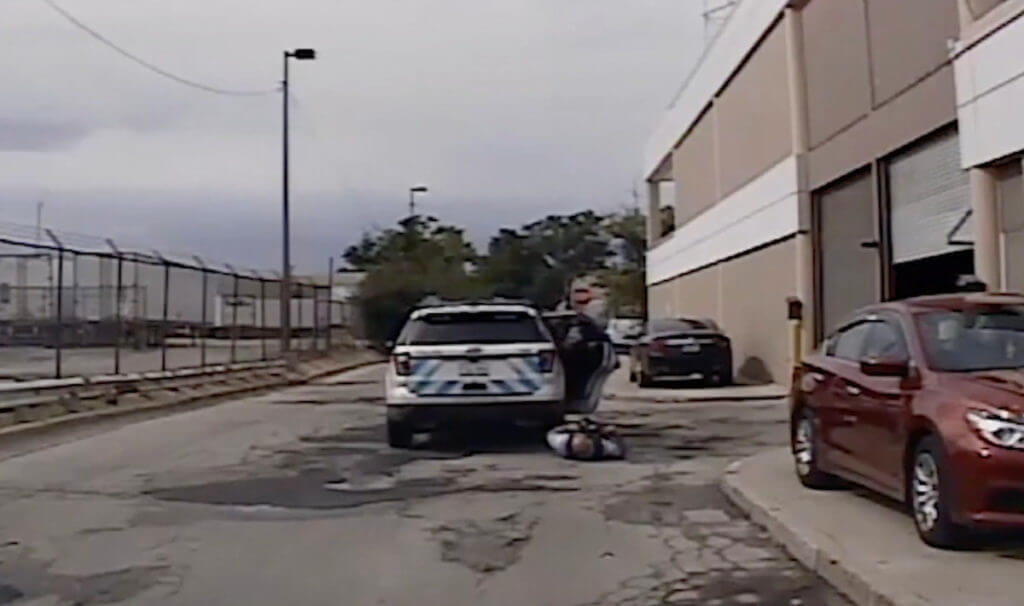
The purpose of these investigations is to establish a complete factual record rather than rely solely on initial observations.
The Value of Body-Worn Cameras
Body cameras have significantly changed how critical incidents are documented.
Supporters argue they provide:
- Greater transparency.
- Objective documentation.
- Improved public trust.
- Better evidence in criminal investigations.
- Valuable material for officer training.
Departments across the country have expanded body camera programs because the technology benefits both officers and community members by preserving an objective record of events.
Although cameras cannot capture every angle or detail, they frequently provide important evidence unavailable in previous decades.
The Growing Challenge of Carjackings
Law enforcement agencies nationwide continue adapting strategies to address violent vehicle thefts.
Modern investigations often involve:
- Automated license plate readers.
- Surveillance camera networks.
- Crime analysis software.
- GPS tracking technology.
- Cooperation among neighboring jurisdictions.
- Intelligence sharing between agencies.
Investigators emphasize that stolen vehicles are sometimes connected to additional crimes, making quick recovery especially important.
Officer Safety
Police officers routinely respond to unpredictable situations without knowing exactly what they will encounter.
A seemingly routine traffic stop or vehicle investigation can unexpectedly become dangerous if a suspect is armed or unwilling to surrender peacefully.
Departments therefore emphasize:
- Tactical positioning.
- Effective communication.
- Team coordination.
- Continuous training.
- De-escalation whenever feasible.
- Proper use-of-force decision making.
These principles are reinforced through realistic training exercises designed to simulate high-pressure encounters.
Community Reaction
Incidents involving exchanges of gunfire naturally attract significant public attention.
Community members often seek answers regarding:
- What occurred before police arrived.
- Whether officers followed department policy.
- The actions of the suspect.
- The timeline of events.
- The outcome of official investigations.
The release of body camera footage can help clarify portions of an incident while also prompting broader discussions about crime prevention and public safety.
Officials typically encourage patience while investigators complete their work and review all available evidence.
The Role of Technology
Advances in law enforcement technology continue improving both investigations and officer safety.
Today’s patrol vehicles may include:
- High-definition dash cameras.
- Automatic license plate recognition.
- GPS tracking.
- Digital evidence management systems.
- Secure communication networks.
- Real-time mapping software.
Meanwhile, body cameras provide investigators with synchronized recordings from multiple responding officers, allowing a more comprehensive reconstruction of events.
Lessons From Critical Incidents
Every major law enforcement incident becomes an opportunity to review procedures and identify potential improvements.
Departments frequently analyze:
- Tactical communication.
- Response times.
- Equipment performance.
- Training effectiveness.
- Medical response.
- Coordination between responding units.
Lessons learned from one incident may influence future training designed to reduce risks for officers and civilians alike.
Public Safety Remains the Priority
Authorities continue urging residents to report suspicious activity promptly and avoid confronting individuals suspected of committing crimes.
If confronted during a carjacking, safety experts generally recommend prioritizing personal safety over protecting property. Vehicles can often be recovered, but preventing injury or loss of life is far more important.
Police also encourage drivers to remain alert when entering or exiting vehicles, particularly during nighttime hours or in isolated parking areas.
Conclusion
The Chicago police shooting involving a suspected carjacker serves as a reminder of the unpredictable and dangerous situations officers may encounter while responding to violent crimes. The released body camera and dashcam footage offers valuable insight into how quickly events can unfold and underscores the importance of thorough investigations following any officer-involved shooting.
As investigators continue reviewing every aspect of the incident, the footage will likely remain an important piece of evidence in understanding exactly what occurred. Regardless of the final findings, the incident highlights the continuing challenges faced by law enforcement agencies as they work to protect communities while responding to rapidly evolving threats.
For the public, the event reinforces the importance of transparency, accountability, and careful investigation whenever force is used. Through comprehensive evidence review—including video recordings, forensic analysis, and witness testimony—authorities aim to establish an accurate account of the confrontation and ensure that the facts, rather than speculation, guide public understanding.