On February 4, 2021, a routine traffic stop on Interstate 10 near Deming, New Mexico, turned into one of the most tragic incidents in the history of the New Mexico State Police. Officer Darian Jarrott, a 28-year-old state trooper and father, lost his life while attempting to stop a pickup truck connected to an ongoing federal narcotics investigation. The incident, captured by dashcam footage and later reviewed by investigators, shocked law enforcement agencies across the United States and sparked important discussions about officer safety, interagency communication, and operational planning.
Officer Jarrott had been serving with the New Mexico State Police since 2015 after previously working as a transportation inspector. Colleagues described him as a dedicated professional who was committed to protecting the public. On the afternoon of February 4, he received information regarding a suspect vehicle that was traveling eastbound on Interstate 10. Acting on the information provided through law enforcement channels, he located the vehicle and initiated a traffic stop.
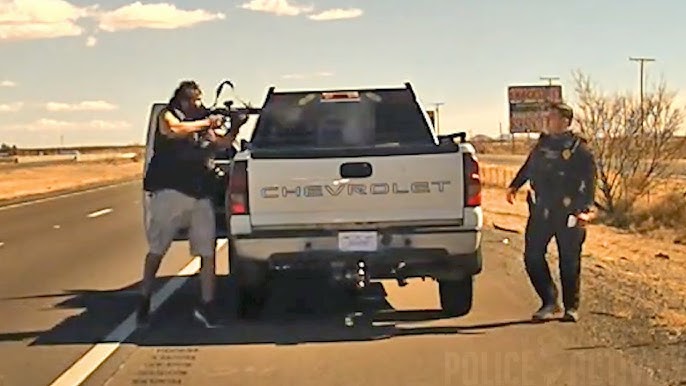
Initially, the stop appeared routine. Officer Jarrott approached the pickup truck and spoke with the driver in a calm and professional manner. During the conversation, he requested the driver to exit the vehicle. Within moments, however, the encounter escalated into an unexpected and deadly attack. Authorities later identified the driver as Omar Felix Cueva, who was allegedly connected to a federal narcotics investigation. According to investigators, the suspect unexpectedly produced a rifle and opened fire, fatally wounding Officer Jarrott before fleeing the scene.
Following the shooting, multiple local, state, and federal law enforcement agencies immediately responded. A lengthy pursuit followed across southern New Mexico. During the chase, officers attempted to stop the suspect using various tactics while also protecting motorists traveling on the interstate. The pursuit ultimately ended near Las Cruces, where an exchange of gunfire occurred. The suspect was fatally wounded, and one law enforcement officer sustained non-life-threatening injuries.
The dashcam footage from Officer Jarrott’s patrol vehicle later became an important part of the investigation. Rather than simply documenting a tragic event, the recording provided investigators with valuable information about the sequence of events, officer positioning, communication, and decision-making during the traffic stop. The footage was carefully reviewed as part of a broader effort to understand what happened and how similar tragedies might be prevented in the future.

In 2024, the New Mexico State Police released an extensive internal incident review examining the circumstances surrounding Officer Jarrott’s death. The report concluded that while the suspect was solely responsible for the murder, several operational issues contributed to placing the officer in an extremely dangerous situation. Investigators identified shortcomings in communication, planning, and coordination between participating agencies involved in the investigation.
One of the central findings involved communication between federal investigators and state police personnel. The review found conflicting accounts regarding exactly how much information was shared before the traffic stop. Questions centered on whether Officer Jarrott and his supervisors had been fully informed about the suspect’s criminal history, access to firearms, and the overall operational plan. According to the report, the lack of complete situational awareness reduced the ability of responding officers to prepare for a high-risk encounter.
The review also examined tactical considerations during the stop itself. Investigators emphasized that traffic stops involving potentially dangerous suspects require constant risk assessment and flexible decision-making. The report discussed opportunities for different positioning, additional backup, and alternative arrest strategies. Importantly, the review stressed that these observations were intended as learning tools rather than criticism of an officer who faced an extraordinarily dangerous and rapidly evolving situation.

Following the review, the New Mexico State Police implemented several policy changes designed to improve officer safety during joint operations with other agencies. These changes focused on enhanced information sharing, improved operational briefings, better communication procedures, and clearer command structures whenever multiple agencies participate in high-risk investigations.
Officer Jarrott’s death also renewed discussions nationwide about the unpredictable nature of traffic stops. Law enforcement professionals frequently describe traffic enforcement as one of the most dangerous aspects of policing because officers often have limited information about the occupants of stopped vehicles. Every stop presents unique risks, requiring officers to balance professionalism, public safety, and personal security while making rapid decisions based on incomplete information.
The incident further highlighted the importance of interagency cooperation. Modern criminal investigations often involve local police departments, state agencies, and federal organizations working together. Successful coordination depends on timely intelligence sharing, clearly defined responsibilities, and comprehensive operational planning. The Jarrott case demonstrated how even small communication gaps can have significant consequences during rapidly unfolding situations.
The case also generated legal proceedings involving the officer’s family and questions about government responsibility. Several lawsuits were filed alleging negligence related to the planning and communication surrounding the operation. While courts addressed various legal issues, the broader public conversation continued to focus on improving officer safety rather than assigning blame alone.
Within the law enforcement community, Officer Jarrott’s sacrifice has become a powerful reminder of the risks officers face every day. Training academies and police organizations have referenced the incident during discussions about officer survival, communication protocols, and tactical awareness. Many agencies have used lessons from the review to reinforce the importance of treating potentially high-risk vehicle stops with the highest level of caution.
Beyond law enforcement, the tragedy resonated with communities across New Mexico. Memorial services honored Officer Jarrott’s dedication to public service, while colleagues, family members, and community leaders remembered him as a devoted husband, father, and public servant. His death represented not only the loss of an officer but also the loss of a family member, friend, and respected member of the community.
Technology also played a significant role in understanding the incident. Dash cameras and body-worn cameras have become valuable investigative tools, providing objective records of critical incidents. While such footage can never erase tragedy, it helps investigators establish timelines, evaluate tactics, improve training, and maintain transparency. In this case, the recordings became an essential component of the comprehensive incident review conducted by New Mexico State Police.
Today, Officer Darian Jarrott is remembered for his commitment to serving the people of New Mexico. His death prompted meaningful discussions about operational planning, communication, and officer safety that continue to influence law enforcement practices. The lessons learned from the incident emphasize that effective coordination, thorough intelligence sharing, and careful preparation are essential components of high-risk law enforcement operations.
The tragedy serves as a solemn reminder that public safety professionals often work in unpredictable and dangerous circumstances. While no policy or procedure can eliminate every risk, continuous training, honest review of critical incidents, and a commitment to learning from past events can help improve safety for officers and the communities they serve.
Officer Darian Jarrott’s legacy lives on not only through the memories of those who knew him but also through the reforms inspired by the investigation into his death. His service and sacrifice continue to influence conversations about law enforcement safety, operational excellence, and the responsibility shared by all agencies working together to protect the public.