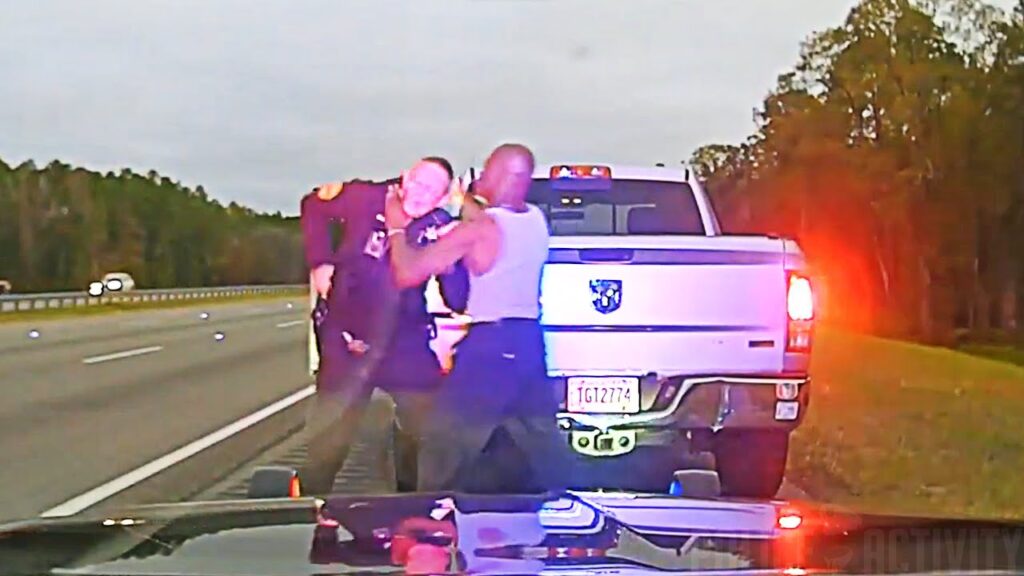
A routine traffic stop in Georgia ended in tragedy when a confrontation between a sheriff’s deputy and a motorist escalated into a deadly struggle. According to law enforcement officials, the encounter rapidly transformed from what initially appeared to be a standard roadside investigation into a life-threatening situation after the suspect allegedly grabbed the deputy by the neck, forcing the officer to respond with deadly force.
The incident has once again drawn attention to the unpredictable dangers officers face during traffic stops while also raising important questions about the use of force, officer safety, and how quickly seemingly ordinary encounters can spiral into violent confrontations.
Authorities have emphasized that the investigation remains ongoing and that all available evidence—including body camera footage, witness statements, and forensic findings—will be carefully reviewed before final conclusions are reached.
A Routine Stop Takes an Unexpected Turn
Traffic stops are among the most common interactions between police officers and the public. Every day, thousands of motorists are stopped across the United States for speeding, equipment violations, reckless driving, or other traffic-related offenses. In the overwhelming majority of cases, these encounters conclude peacefully with a warning or citation.
However, law enforcement agencies have long acknowledged that traffic stops can also be among the most unpredictable situations officers encounter. Deputies and police officers never know who they are approaching, whether the individual has outstanding warrants, possesses illegal weapons, or intends to resist arrest.
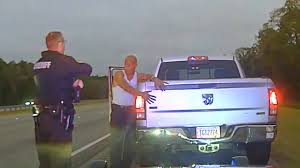
In this Georgia incident, investigators say the deputy initiated a lawful traffic stop before approaching the vehicle. At first, the interaction appeared relatively routine, but investigators say the situation changed dramatically within moments.
Officials reported that the suspect became physically aggressive during the encounter, leading to a violent struggle beside the roadway.
Physical Confrontation Escalates
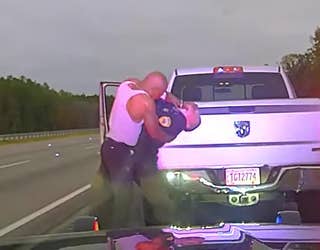
According to preliminary findings released by investigators, the confrontation intensified after the suspect allegedly grabbed the deputy around the neck.
Law enforcement officials describe neck restraints or attacks targeting an officer’s airway as potentially deadly encounters because they can rapidly limit breathing, impair consciousness, and reduce an officer’s ability to defend themselves.
Investigators say the deputy attempted to regain control during the struggle but ultimately discharged his service weapon when the confrontation reached what authorities described as a critical point.
Emergency medical personnel were dispatched immediately after the shooting.
Despite life-saving efforts at the scene, the suspect was pronounced dead.
The deputy was not reported to have suffered life-threatening injuries, although officials indicated he received medical evaluation following the confrontation.
Immediate Response
Following any officer-involved shooting, standard procedures require the scene to be secured while investigators begin documenting evidence.
Crime scene specialists photographed the area, collected physical evidence, examined the deputy’s firearm, and documented the positions of vehicles and other relevant items.
Investigators also searched for surveillance footage from nearby businesses, dashboard camera recordings, and body-worn camera video that could provide a comprehensive timeline of the incident.
Authorities additionally interviewed witnesses who may have observed portions of the confrontation.
Every piece of evidence is expected to become part of the official investigative file.
Body Camera Evidence
Modern policing increasingly relies on body-worn cameras to document encounters between officers and members of the public.
If body camera footage exists from the incident, investigators will carefully review every second of the recording.
Body camera evidence can help establish:
- The sequence of events.
- Commands issued by the deputy.
- The suspect’s actions.
- The timing of the physical struggle.
- Whether additional de-escalation options were available.
- The moment deadly force was used.
Investigators often synchronize body camera footage with radio transmissions, dispatch recordings, and forensic evidence to reconstruct the entire incident as accurately as possible.
Understanding Use of Force
Police officers in the United States operate under legal standards governing when force may be used.
Generally, officers are authorized to use force that is objectively reasonable based on the circumstances confronting them at the time.
Deadly force is typically considered legally justified when an officer reasonably believes there is an imminent threat of death or serious bodily injury to themselves or another person.
Every use-of-force incident is evaluated individually.
Investigators examine factors including:
- The severity of the threat.
- Whether the suspect was actively resisting.
- Whether the suspect attempted to flee.
- The officer’s available alternatives.
- The totality of circumstances during the encounter.
Importantly, investigators assess the situation from the perspective of an officer making split-second decisions under rapidly evolving conditions rather than with hindsight.
Why Traffic Stops Are High Risk
Although traffic stops appear routine to many motorists, law enforcement agencies consistently classify them among the most dangerous police duties.
Officers often approach vehicles without knowing:
- Who is inside.
- Whether weapons are present.
- Whether occupants are under the influence.
- Whether someone has violent intentions.
- Whether the driver is wanted for other crimes.
Because of these unknowns, officers receive extensive training on vehicle approaches, positioning, communication, and tactical awareness.

Even with this training, encounters can escalate unexpectedly within seconds.
Investigative Process
Officer-involved shootings typically trigger multiple independent investigations.
These often include:
- The local sheriff’s office.
- A state investigative agency.
- Prosecutors.
- Internal affairs investigators.
Evidence gathered during these investigations commonly includes:
- Body camera footage.
- Dash camera recordings.
- Radio communications.
- Medical reports.
- Ballistic analysis.
- DNA evidence.
- Fingerprint examinations.
- Witness interviews.
- Autopsy findings.
Only after reviewing all available evidence will investigators determine whether the deputy’s actions complied with department policy and state law.
Community Reactions
Incidents involving deadly force frequently generate strong reactions within local communities.
Some residents emphasize the dangers officers face and argue deputies must make immediate decisions when confronted with potentially life-threatening attacks.
Others call for careful independent investigations to ensure transparency and accountability.
Community leaders often encourage patience while investigators complete their work rather than drawing conclusions before all evidence has been reviewed.
Maintaining public trust depends heavily on transparent investigative processes and the timely release of factual information whenever legally appropriate.
Officer Safety Training
Law enforcement officers undergo continuous training focused on surviving violent encounters.
Training scenarios often include:
- Assaults during traffic stops.
- Weapon retention.
- Ground fighting.
- Defensive tactics.
- De-escalation techniques.
- Emergency medical care.
Despite extensive preparation, no training scenario can perfectly replicate the stress and unpredictability of real-life confrontations.
Experts note that physical attacks targeting an officer’s neck or airway are treated as especially dangerous because they can quickly become life-threatening.
The Importance of De-Escalation
Across the country, police departments increasingly emphasize de-escalation whenever circumstances safely allow.
Officers are encouraged to use verbal communication, maintain distance when possible, and employ less-lethal options if they can safely resolve a situation without deadly force.
However, experts also recognize that some encounters evolve so rapidly that officers have only seconds to respond.
Whether de-escalation was feasible in this case will likely become one of the questions investigators carefully examine.
Family and Community Impact
Every fatal police encounter leaves lasting consequences for everyone involved.
The family of the deceased faces the loss of a loved one.
The deputy involved may experience emotional and psychological effects despite acting in the line of duty.
Witnesses can also be affected, particularly if the incident occurred in a public setting.
Communities often seek answers, transparency, and reassurance that investigations are conducted fairly.
Awaiting Final Findings
Officials continue urging the public to avoid speculation until investigators complete their work.
Body camera footage, forensic analysis, medical examinations, and witness interviews will all contribute to determining exactly how the confrontation unfolded.
Investigators stress that preliminary information may change as additional evidence is reviewed.
The findings will ultimately determine whether the deputy’s actions were consistent with Georgia law, departmental policy, and established standards governing the use of deadly force.
Conclusion
The deadly Georgia traffic stop serves as another reminder of how quickly ordinary roadside encounters can become life-threatening. While traffic stops are among the most routine duties performed by law enforcement, they can also present some of the greatest risks, requiring officers to make critical decisions in moments of extreme uncertainty.
As investigators continue gathering evidence, reviewing body camera footage, interviewing witnesses, and analyzing forensic findings, the focus remains on establishing a complete and accurate account of what occurred. Until that process is complete, officials continue to urge patience and caution against premature conclusions.
The outcome of the investigation will not only determine whether the deputy’s actions were legally justified but may also provide valuable lessons for law enforcement agencies, policymakers, and communities seeking to improve both officer safety and public trust.