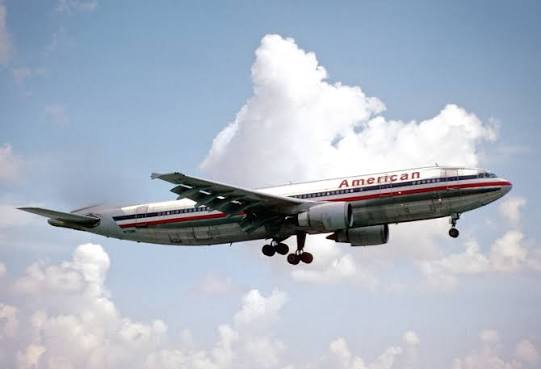
On the morning of 12 November 2001, American Airlines Flight 587 climbed out of Kennedy Airport into a clear sky. The Airbus A300 was bound for Santo Domingo with 260 people aboard. Many were Dominican New Yorkers going home. In the cockpit were 2 men: Captain Edward States, 42, and First Officer Sten Molin, 34, who was flying.
A Japan Airlines Boeing 747 had lifted off from the same runway about a minute and 40 seconds earlier. A jet that large leaves powerful, tornado-like vortices in its wake, known as wake turbulence. They are invisible and can remain in the air for some time, which is why aircraft are kept apart after takeoff. That morning, ATC had provided the separation required by FAA rules.
Flight 587 caught the edge of them anyway. The airplane rocked.
Molin worked the rudder pedals to hold it steady. He swung the tail hard one way. Then the other. Then back again.
“You all right?” the captain asked.
“Yeah, I’m fine.”
“Hang onto it,” States said. “Hang onto it.”
Every swing drove the air harder against the fin. The load reached twice what the tail was built to take. Then it tore off the airplane and fell into Jamaica Bay.
“We’re stuck in it,” Molin said.
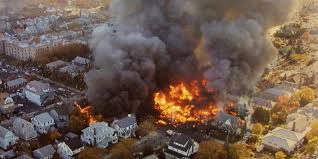
Without its tail, the airplane could not hold a straight line. It swung sideways and went out of control. The forces were violent enough to tear both engines off the wings in mid-air, and they fell separately into the streets below. 103 seconds after takeoff, the A300 came down on Beach 131st Street in Belle Harbor, Queens. It destroyed 3 houses. All 260 aboard were killed. 5 more died on the ground.

There had been no distress call. Nobody knew why it fell.
So the city assumed the worst. It had been 2 months and a day since the towers came down. Fighter jets were scrambled over New York. Bridges and tunnels closed. The Empire State Building emptied. The United Nations locked its doors. All 3 airports shut. 8 million people waited to learn whether it was starting again.
A woman 2 blocks away was taping Thanksgiving decorations to her window when she heard the explosion. “Oh no, not again,” she said.
The street it fell on made it worse. Belle Harbor is a neighborhood of firefighters. More of its people had died in the September 11 attacks than in any other neighborhood in the city. Those families had been going to funerals for 2 months.
Rudy Giuliani, the mayor who had carried New York through those 2 months, arrived while the houses were still burning. “Be brave,” he told the city. “Stay calm.”
By that afternoon the FBI had stepped back and the NTSB had taken over. It was not an attack.
The full explanation took almost 3 years. Molin’s rudder inputs were “unnecessary and excessive,” investigators found, and they had torn the tail off a healthy airplane. But the report did not stop there. The A300’s rudder was unusually sensitive at speed. American’s own training program had taught its pilots to answer a wake encounter exactly the way he did.
He flew the way he was trained.
265 people died that morning. It is the 2nd deadliest air crash in American history.