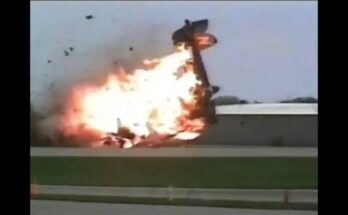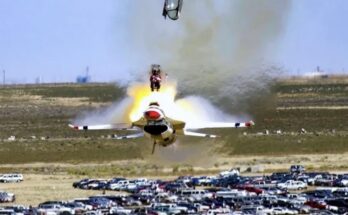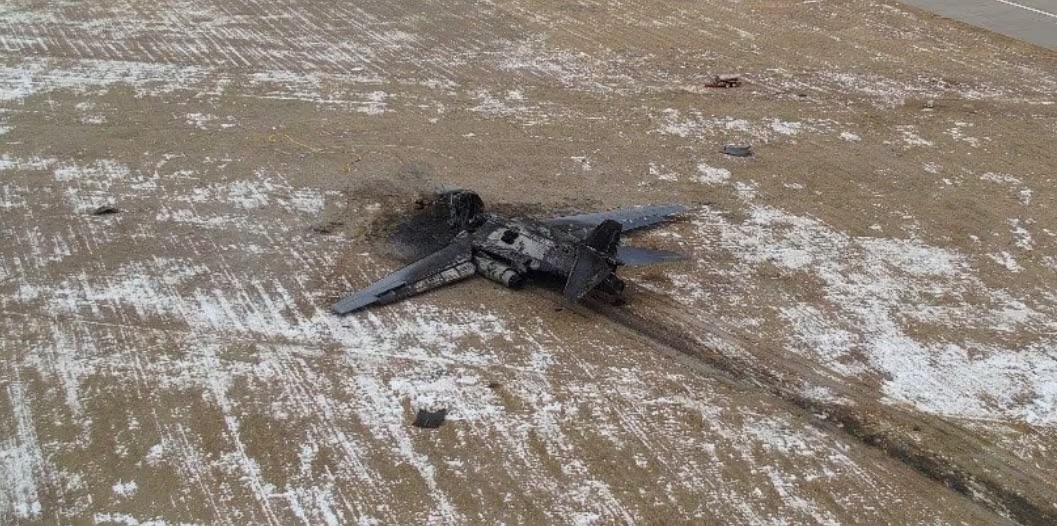

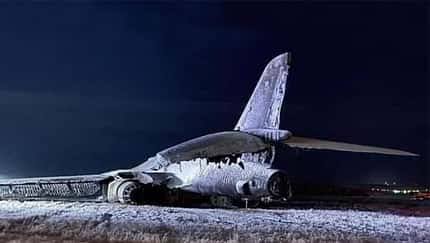
A B-1B Lancer bomber assigned to Ellsworth Air Force Base, South Dakota, was destroyed in a dramatic landing accident on January 4, 2024. The aircraft crashed while attempting to land during a training mission in extremely poor visibility, with dense fog and freezing temperatures affecting conditions around the airfield. All four members of the crew successfully ejected from the bomber, although two suffered injuries during the ejection sequence. The aircraft was subsequently consumed by fire and declared a total loss. (AFJAG)
The accident attracted considerable attention because the B-1B is one of the United States Air Force’s most capable long-range bombers. The aircraft involved, tail number 85-0085, was assigned to the 28th Bomb Wing at Ellsworth. The eventual investigation concluded that the crash was not caused by a single mechanical failure. Instead, investigators identified a combination of aircrew mistakes, difficult weather, communication problems, inadequate situational awareness, and broader organizational issues.
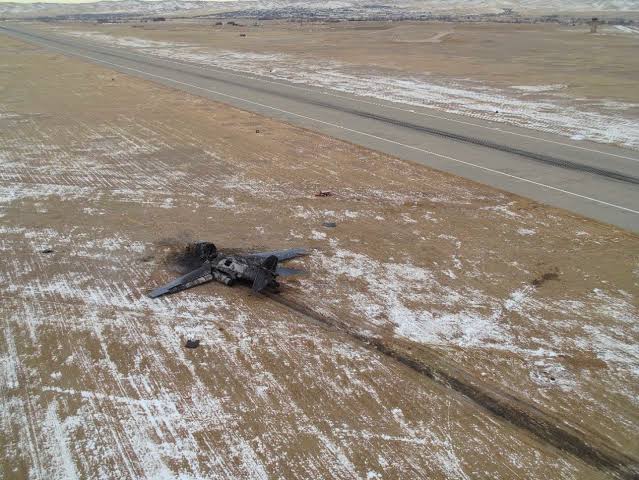
The B-1B Lancer
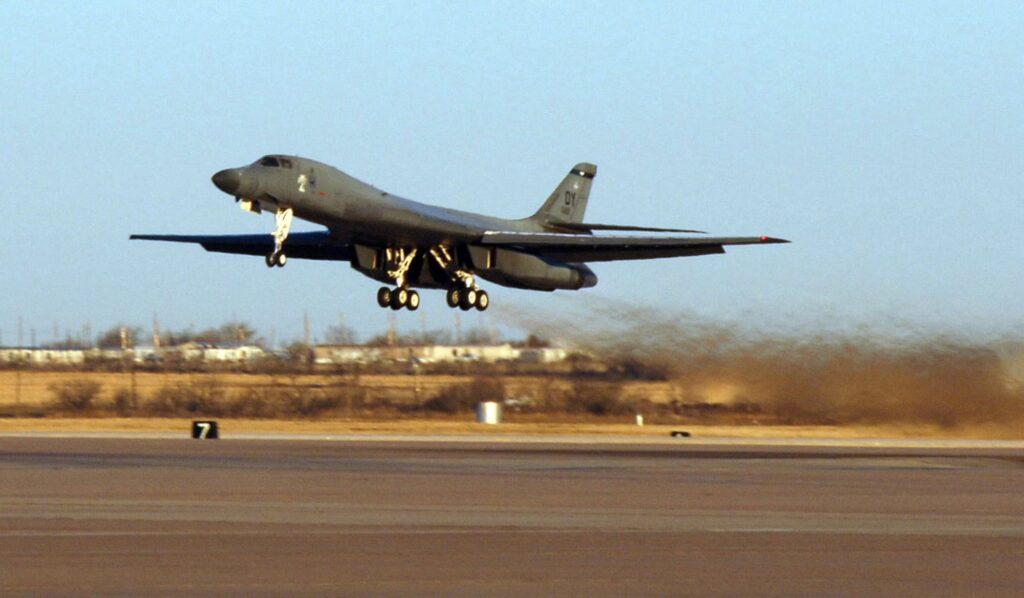
The B-1B Lancer is a supersonic, long-range bomber designed to provide the United States with a highly flexible strike capability. Developed during the Cold War, the aircraft became an important component of America’s bomber force and later evolved into a conventional weapons platform.
Unlike the B-52, which has a more traditional fixed-wing configuration, the B-1B features variable-sweep wings. The wings can move between different positions depending on the aircraft’s speed and mission requirements. This gives the bomber a combination of long-range efficiency and high-speed performance.
The aircraft is also equipped with four afterburning turbofan engines. These engines provide the power required for a large aircraft to operate at high speed and altitude. Its size, speed, range, and weapons capacity make the B-1B a valuable platform for long-range conventional strike missions.
Ellsworth Air Force Base has historically been one of the principal homes of the B-1B fleet. The 28th Bomb Wing operates the aircraft and trains crews for a variety of missions, including long-range bomber operations.
The January 4, 2024 Training Mission
On January 4, 2024, the B-1B involved in the accident was participating in a training mission with another B-1B based at Ellsworth. After completing the training activity, the aircraft began returning to the base.
The weather was already a significant challenge. Dense fog covered the airfield, and visibility was poor. Temperatures were below freezing, creating an environment in which pilots had to rely heavily on instruments and accurate information from the aircraft and airfield.
The first B-1B in the formation successfully landed. The second aircraft, however, encountered problems during its approach.
According to the official investigation, the aircraft eventually touched down approximately 100 feet short of Runway 13. The rear radome struck the ground, followed by the main landing gear striking the approach lighting system. The bomber then entered the runway environment and skidded for approximately 5,000 feet. (AFJAG)
The aircraft eventually moved toward the left side of the runway and came to rest in the infield between two taxiways.
A fire developed during the accident sequence, and the B-1B was ultimately destroyed.
A Narrow Escape for the Crew
Perhaps the most important part of the accident was that all four crew members were able to escape the aircraft.
A B-1B normally operates with a four-person crew consisting of two pilots and two weapons systems officers. The crew relies heavily on coordination because of the complexity of the aircraft and its missions.
During the crash, the crew initiated the ejection sequence. All four members successfully departed the aircraft, but two suffered injuries related to the ejection. The Air Force later reported that they received medical treatment.
The successful ejection demonstrated the importance of the B-1B’s escape system. A crash involving a large bomber traveling at significant speed can be extremely dangerous, particularly when the aircraft catches fire.
The survival of all four crew members was therefore a critical outcome of the accident.
What Happened During the Approach?
The Air Force investigation provided a much clearer picture of the final moments of the flight.
The crew was conducting an instrument approach in dense fog. Because visibility was extremely limited, the pilots had to use the aircraft’s instruments and the Instrument Landing System, or ILS, to maintain the correct approach path.
During the approach, the crew made several engine throttle reductions in an effort to control airspeed and remain aligned with the ILS glideslope.
However, changing wind conditions created an additional challenge.
The investigation found that local wind direction changed during the landing sequence. The crew needed to respond to those changes by making appropriate throttle adjustments and maintaining sufficient airspeed.
Instead, the aircraft’s airspeed fell below the level required to maintain a safe approach.
The investigation ultimately identified improper management of airspeed and angle of approach as the primary cause of the accident. (Kirtland Air Force Base)
The Importance of Airspeed
Aviation safety depends heavily on maintaining appropriate airspeed during landing.
When an aircraft is too fast, it may have difficulty touching down safely or stopping within the available runway. When it becomes too slow, however, the aircraft can lose the energy needed to maintain its flight path.
For a large bomber such as the B-1B, maintaining the correct approach speed is particularly important.
The aircraft is extremely heavy, and its response to changes in power and configuration must be carefully managed. In poor weather, pilots have fewer visual references outside the cockpit, making accurate instrument flying and disciplined crew coordination even more important.
The accident investigation concluded that the B-1B descended below the appropriate energy state during the approach. Once the aircraft was too low and too slow, the crew had limited opportunity to recover before reaching the runway.
Dense Fog Made the Situation More Difficult
Weather was one of the major contributing factors.
The crash occurred during a period of dense fog and freezing conditions. Visibility was low enough that the crew could not depend on normal visual references while approaching the runway.
Instrument approaches are specifically designed to allow aircraft to land safely in poor visibility. However, an instrument approach still requires precise execution.
The crew must monitor altitude, airspeed, descent rate, heading, glidepath, runway alignment, and other information simultaneously.
The official investigation identified poor weather as a substantial contributing factor. It also found that the crew lacked adequate awareness of certain airfield conditions. (Kirtland Air Force Base)
Weather alone did not cause the accident, but it increased the difficulty of the landing and reduced the margin for error.
Crew Resource Management
Another important issue identified by investigators was crew resource management.
Modern military aircraft require more than simply flying the airplane. Every crew member has specific responsibilities, and effective communication is essential.
The B-1B’s four-person crew must work together continuously. Pilots control the aircraft while weapons systems officers manage defensive and offensive systems and provide additional information and support.
During a difficult instrument approach, effective communication becomes even more important.
The investigation found problems with crew resource management and communication. Investigators concluded that the crew did not effectively recognize and correct the developing airspeed problem.
A warning from one crew member, a more aggressive correction by the pilots, or a decision to discontinue the approach could potentially have changed the outcome.
Situational Awareness
Situational awareness was another major factor.
Pilots must constantly understand what the aircraft is doing, where it is in relation to the runway, what the weather is doing, and whether the current approach remains safe.
In the Ellsworth accident, investigators determined that the crew did not maintain adequate awareness of the developing situation.
As the aircraft approached the runway, its energy state deteriorated. The crew needed to recognize that the approach was becoming unstable and take corrective action.
The accident illustrates why military aviation emphasizes stabilized approaches. A pilot should not continue an approach indefinitely when the aircraft is outside safe parameters.
The Aircraft Struck the Ground Before the Runway
The final impact occurred approximately 100 feet before the runway.
The B-1B’s rear radome hit the ground first. Shortly afterward, the main landing gear struck the approach lighting system.
The aircraft then skidded across the runway for approximately 5,000 feet.
This sequence caused extensive structural damage. Because of the aircraft’s high mass and momentum, the impact energy was enormous.
The bomber eventually came to rest between two taxiways.
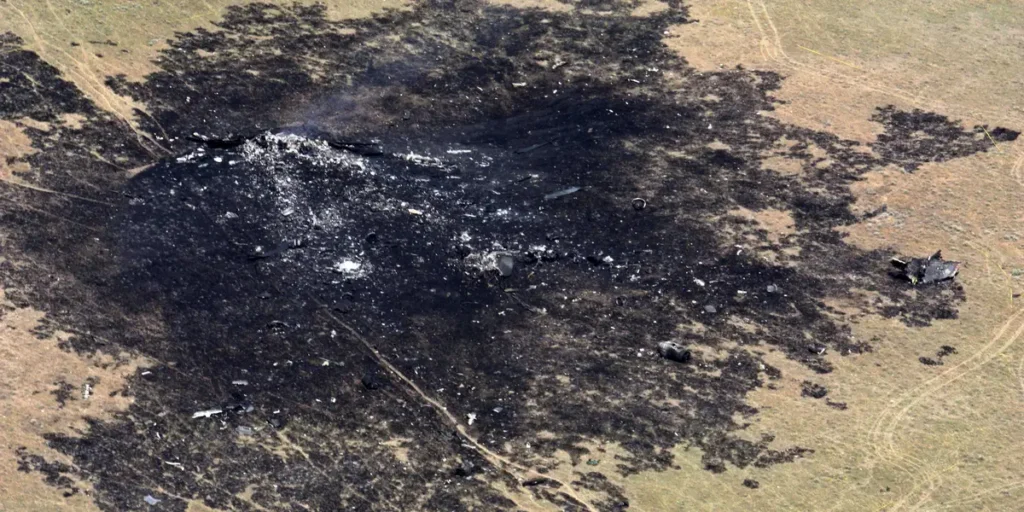
Fire then consumed much of the aircraft.
The investigation concluded that the B-1B was a total loss. The estimated loss was approximately $456.25 million. (AFJAG)
Why the Accident Was So Expensive
The B-1B is a sophisticated aircraft incorporating advanced engines, avionics, electronic warfare equipment, navigation systems, communications systems, structural components, and weapons-related systems.
Replacing such an aircraft is extraordinarily expensive.
The Air Force investigation estimated the total loss at $456,248,485. This figure represents the enormous value of the aircraft and associated government losses.
Beyond the financial cost, the loss of a B-1B also affects operational capacity.
The Air Force operates a relatively limited fleet of B-1Bs. Every aircraft represents a significant portion of the nation’s long-range strike capability.
The crash therefore had consequences beyond the physical destruction of one bomber.
The Investigation’s Broader Findings
One of the most significant aspects of the accident investigation was that investigators did not simply blame the weather or a single pilot mistake.
Instead, the report identified a broader combination of factors.
These included poor crew resource management, poor weather, ineffective flight operations supervision, inadequate awareness of airfield conditions, and organizational problems.
The investigation also identified concerns about a culture that had allowed declining airmanship standards, weak discipline, poor communication, and inadequate attention to regulations. (Kirtland Air Force Base)
This is important because aviation accidents are rarely the result of one isolated mistake.
A pilot may make an error, but organizational systems are supposed to provide layers of protection. Training, supervision, standard procedures, checklists, crew coordination, weather information, and operational oversight are all designed to prevent one mistake from becoming a disaster.
In the Ellsworth accident, investigators concluded that several of those protective layers were not functioning as effectively as they should have.
Lessons for Military Aviation
The B-1B crash provides several important lessons for military aviation.
The first is the importance of maintaining stabilized approaches.
Pilots should continuously monitor airspeed, altitude, descent rate, alignment, and other parameters. If the aircraft becomes unstable, the safest decision may be to discontinue the approach and try again.
The second lesson concerns communication.
Every crew member must be willing to identify a problem and communicate it clearly. In high-pressure environments, silence can be dangerous.
The third lesson involves weather.
Modern aircraft can operate in extremely poor conditions, but technological capability does not eliminate risk. Fog, wind changes, freezing temperatures, and low visibility can quickly reduce the margin of safety.
The fourth lesson involves training and organizational culture.
Aviation organizations must continually reinforce professional standards. If poor habits become accepted, they can eventually contribute to serious accidents.
What Happened After the Crash?
Following the accident, the Air Force investigated the circumstances surrounding the crash and took steps to understand whether other B-1B operations might face similar risks.
The crash also prompted renewed attention to training standards and operational procedures at Ellsworth.
The investigation report provided recommendations intended to address the problems identified during the accident.
The purpose of an accident investigation is not simply to assign blame. It is also to identify weaknesses and prevent future accidents.
In that sense, the loss of B-1B 85-0085 became an important case study for the Air Force.
The B-1B’s Continued Importance
Despite the loss of one aircraft, the B-1B remains an important part of America’s long-range bomber capability.
The aircraft has participated in missions and exercises around the world and has demonstrated its ability to carry large conventional weapon loads over long distances.
Its high speed and range make it particularly useful for rapidly responding to emerging threats.
B-1B crews therefore undergo extensive training to maintain their skills.
The Ellsworth accident demonstrates why this training is so important.
A bomber may spend hours completing a mission successfully, but the final minutes of a flight can still present significant danger.
Landing is one of the most demanding phases of flight because the aircraft is close to the ground and has limited time to recover from errors.
A Reminder About the Human Element
The B-1B Lancer is equipped with sophisticated technology, but the accident demonstrates that technology cannot replace sound aviation judgment.
Modern aircraft have advanced navigation systems, digital avionics, weather information, and automated flight aids.
Nevertheless, pilots must still interpret the information correctly.
They must recognize when conditions are deteriorating and make decisions before the situation becomes unrecoverable.
In the Ellsworth crash, the crew was dealing with poor visibility and changing winds while attempting an instrument approach.
The investigation showed that the aircraft’s approach became unsafe because the crew did not adequately manage airspeed and approach angle.
That finding reinforces a basic principle of aviation: technology is most effective when combined with disciplined procedures, communication, training, and sound judgment.
Conclusion
The January 4, 2024 crash of a B-1B Lancer at Ellsworth Air Force Base was a serious military aviation accident, but it could have ended with the loss of four lives.
Instead, all four crew members successfully ejected, although two were injured during the escape sequence.
The aircraft itself was destroyed after touching down approximately 100 feet short of the runway, striking the approach lighting system, skidding for roughly 5,000 feet, and catching fire. The estimated loss exceeded $456 million. (AFJAG)
The Air Force investigation ultimately determined that the primary cause was the crew’s failure to properly manage airspeed and the aircraft’s approach angle. Poor weather, communication problems, crew resource management issues, inadequate situational awareness, ineffective supervision, and broader organizational weaknesses also contributed to the accident. (Kirtland Air Force Base)
The crash serves as a powerful reminder that military aviation is a complex combination of technology, training, teamwork, discipline, and human decision-making.
For the B-1B community, the loss of aircraft 85-0085 was costly. But the survival of its four-person crew and the lessons identified by the investigation provide an opportunity to improve training, procedures, communication, and operational safety.
Ultimately, the most important lesson from the Ellsworth accident is that preventing aviation disasters requires more than advanced aircraft. It requires crews who communicate effectively, leaders who enforce standards, and an organizational culture that treats safety and professional airmanship as non-negotiable priorities.