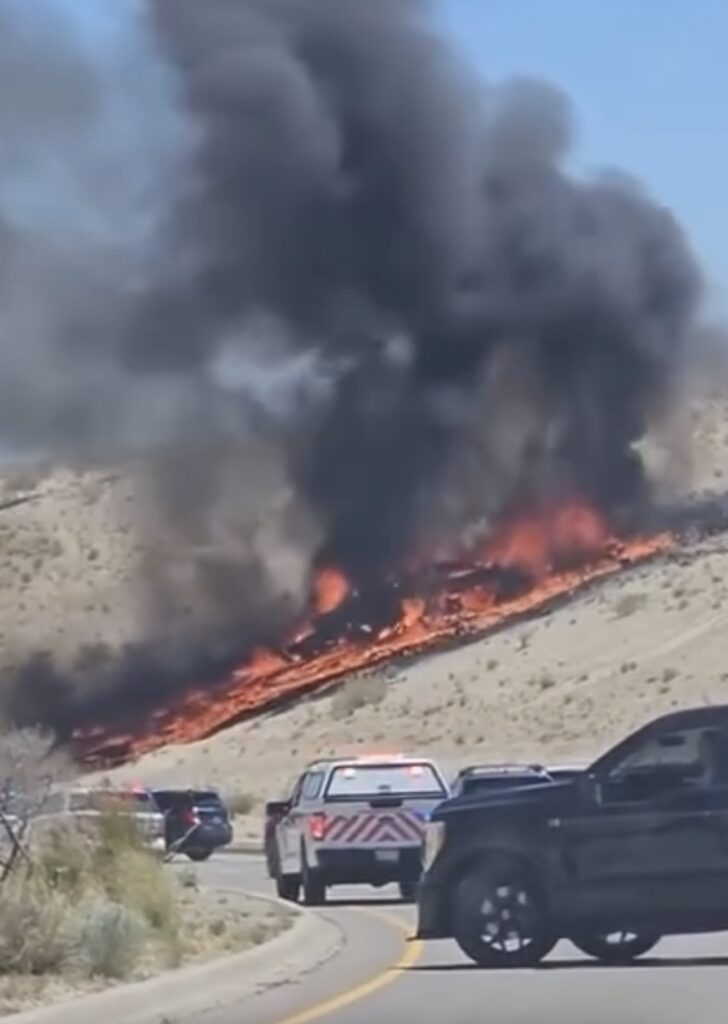
An F-35 Lightning II fighter jet crashed into a hillside near Albuquerque, New Mexico, on May 28, 2024, in an accident that drew significant attention from military officials, aviation experts, and the public. The aircraft, one of the world’s most advanced fifth-generation stealth fighters, went down shortly after taking off from Kirtland Air Force Base following a scheduled refueling stop. Although the aircraft was destroyed in the crash, the pilot successfully ejected and survived with serious injuries, highlighting the effectiveness of the F-35’s advanced safety systems. The incident is now part of an extensive military investigation aimed at determining exactly what caused the accident.
According to official statements, the aircraft was an F-35B Lightning II, the short takeoff and vertical landing (STOVL) variant designed primarily for the U.S. Marine Corps. Unlike operational combat missions, this aircraft was being transferred from Lockheed Martin’s production facility in Fort Worth, Texas, to Edwards Air Force Base in California for additional testing and equipment modifications. The aircraft stopped at Kirtland Air Force Base in Albuquerque to refuel before continuing its journey west. Shortly after departing, however, the jet encountered difficulties and crashed just outside the airport boundary into a hillside southwest of the runway.
The pilot, who was flying on behalf of the Defense Contract Management Agency, recognized the emergency and activated the aircraft’s Martin-Baker ejection seat at extremely low altitude. Emergency responders quickly reached the scene after witnesses reported a massive explosion followed by thick black smoke rising from the crash site. The pilot suffered serious injuries but remained conscious and was transported to the University of New Mexico Hospital, where medical staff performed surgery before reporting that his condition was stable.
Firefighters from Bernalillo County Fire Rescue, Albuquerque Fire Rescue, and the Kirtland Air Force Base Fire Department responded immediately. Their rapid actions prevented the fire from spreading further into the surrounding desert terrain and secured the hazardous crash site. Emergency crews also ensured that nearby roads and airport facilities remained safe while investigators began collecting evidence. Officials praised the coordinated response between military personnel and local emergency agencies, noting that their teamwork helped minimize further damage and protect nearby communities.
The exact cause of the crash has not yet been officially determined. Standard procedure following any military aircraft accident involves a comprehensive investigation examining every possible factor, including aircraft systems, engine performance, maintenance history, weather conditions, pilot actions, and flight data recordings. Investigators will also inspect debris from the wreckage and analyze electronic flight information to determine whether mechanical failure, software malfunction, human factors, or another issue contributed to the accident. Until the investigation is completed, officials have avoided speculation regarding the cause.
The F-35 Lightning II represents one of the most sophisticated combat aircraft ever developed. Built by Lockheed Martin, the aircraft combines stealth technology, advanced sensors, powerful computing systems, and networked battlefield capabilities. The F-35 family includes three primary variants: the F-35A for conventional Air Force operations, the F-35B capable of short takeoffs and vertical landings, and the carrier-based F-35C used by the U.S. Navy. These aircraft serve not only the United States but also numerous allied nations around the world, making the program one of the largest international defense projects in history.
Despite its impressive capabilities, the F-35 program has experienced several accidents and technical challenges over the years. While such incidents remain relatively rare compared with the size of the global fleet, each crash receives significant attention because every aircraft represents an investment worth well over $100 million depending on its configuration and equipment. Every accident also provides valuable information that helps engineers improve aircraft reliability, pilot training, and operational safety.
Military aviation experts emphasize that modern fighter aircraft are incredibly complex machines operating under demanding conditions. Even with rigorous maintenance and extensive pilot training, unexpected failures can occasionally occur. Fortunately, advanced ejection seat technology has dramatically improved pilot survival rates. In this incident, the pilot’s successful escape demonstrated how critical these life-saving systems remain during emergencies occurring at very low altitude.
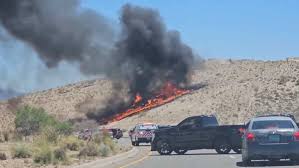
The New Mexico crash serves as a reminder that even the world’s most advanced military aircraft are not immune to accidents. While the loss of the aircraft represents a significant financial setback, the pilot’s survival stands as the most important outcome. As investigators continue examining every aspect of the incident, the findings will likely influence future maintenance procedures, testing protocols, and operational guidance across the entire F-35 fleet. Lessons learned from the investigation will contribute to improving safety while ensuring that the F-35 continues to play its vital role in modern air power for decades to come.