The war between Russia and Ukraine has become one of the most intense and technologically advanced conflicts in modern history. Alongside artillery, drones, tanks and missiles, another type of warfare continues to play an important role on the battlefield: sniper operations.
Ukrainian snipers operate in difficult conditions, often from concealed positions near the front line. Their missions can involve surveillance, reconnaissance and precision attacks against military personnel and equipment. Because sniper operations are usually conducted secretly, determining exactly how many Russian soldiers have been killed by Ukrainian snipers is extremely difficult.
A Dangerous Role on the Battlefield
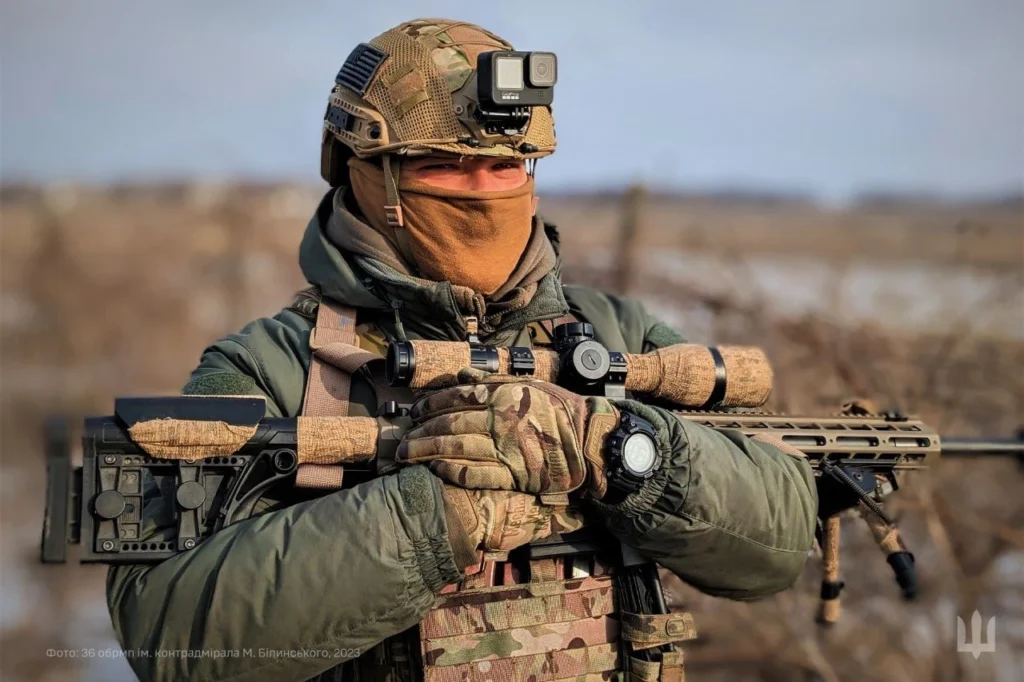
Snipers are trained to operate independently or in small teams. Their advantage comes from concealment, patience and the ability to observe enemy movements without revealing their own position.
In Ukraine, sniper teams have operated in forests, ruined buildings, trenches and other locations where they can remain hidden. Modern equipment has also changed the role of snipers. Thermal imaging systems, advanced optics, drones and encrypted communications can allow sniper teams to identify and track targets from significant distances.
The battlefield, however, is extremely dangerous. A sniper who fires a shot may immediately attract attention from artillery, drones or enemy reconnaissance teams.
The “Ghosts of Bakhmut”
One of the Ukrainian sniper units that has received international attention is the group commonly known as the “Ghosts of Bakhmut.”
The unit became particularly well known during the fighting around Bakhmut, where Russian and Ukrainian forces engaged in some of the war’s most intense battles.
Members of the unit have claimed responsibility for hundreds of Russian casualties. However, battlefield claims made by either side should be treated carefully because independent verification is often impossible.
This distinction is important when reporting casualty figures. A number published by a military unit may represent its own operational assessment rather than an independently verified count.
Why There Is No Reliable Sniper Death Toll
Unlike total military casualties, deaths specifically attributed to sniper fire are rarely published in a comprehensive database.
A soldier killed during combat could have been struck by artillery, a drone, a missile, small-arms fire or a sniper. In many cases, investigators cannot determine the exact weapon responsible for a death.
For this reason, there is no reliable public figure showing the total number of Russian soldiers killed by Ukrainian snipers since the full-scale invasion began in February 2022.
Social media posts sometimes circulate large numbers claiming that a particular sniper killed dozens or even hundreds of Russian soldiers. Some may be based on genuine military reports, but others may be exaggerated, incomplete or impossible to independently verify.
Snipers and Modern Technology
The traditional image of a sniper hiding with a rifle remains relevant, but modern sniper warfare is increasingly connected to technology.
Drones can be used to observe areas around enemy positions and provide information about troop movements. Thermal optics can help identify people in low-light conditions. Modern rifles and ammunition can also improve accuracy.
At the same time, Russian forces use similar technologies. Both sides have invested heavily in drones, electronic warfare and surveillance systems.
This has made remaining undetected increasingly difficult.
Psychological Pressure
Snipers can also have a psychological effect on opposing forces. Soldiers who believe they are being watched by an unseen marksman may become more cautious when moving between positions.
However, the psychological impact is difficult to measure. Military operations are influenced by many factors, including artillery attacks, drone surveillance, minefields and the overall tactical situation.
Snipers are therefore only one component of a much larger battlefield system.

The Bigger Picture of Russian Casualties
The number of Russian military casualties in the war is substantially larger than the number that can be attributed specifically to sniper operations.
Independent organizations, intelligence agencies and media investigations have produced different estimates of Russian military deaths. These estimates vary because Russia does not provide a continuously updated, independently verifiable casualty database.
Some investigations have identified large numbers of individual Russian soldiers by name through public records, obituaries, regional announcements and other sources. Such projects provide valuable evidence but still cannot necessarily capture every death.
Therefore, claims about the total number of Russian soldiers killed—and especially claims about how many were killed by snipers—should always be presented with appropriate uncertainty.
A Battle of Patience
Sniper warfare is fundamentally different from large artillery battles. A sniper may spend hours observing an area without firing a single shot.
The mission can involve gathering intelligence, identifying important movements and waiting for a suitable opportunity. A successful sniper operation may therefore have value beyond the number of casualties recorded.
The presence of a sniper team can force opposing troops to change their behavior, use additional cover or alter movement routes.
Conclusion
Ukrainian snipers have become an important part of the country’s defensive operations during the war with Russia. Units operating around heavily contested areas such as Bakhmut have attracted international attention because of their precision and battlefield missions.
However, there is no independently verified total for the number of Russian soldiers killed by Ukrainian snipers throughout the war. Individual units have reported their own figures, sometimes numbering in the hundreds, but those claims should not be confused with a comprehensive casualty database.
The broader conflict continues to demonstrate how traditional military skills and modern technology have combined to create a highly complex battlefield. Snipers, drones, artillery and intelligence systems all contribute to the fight, while the true human cost of the war remains difficult to measure precisely.